
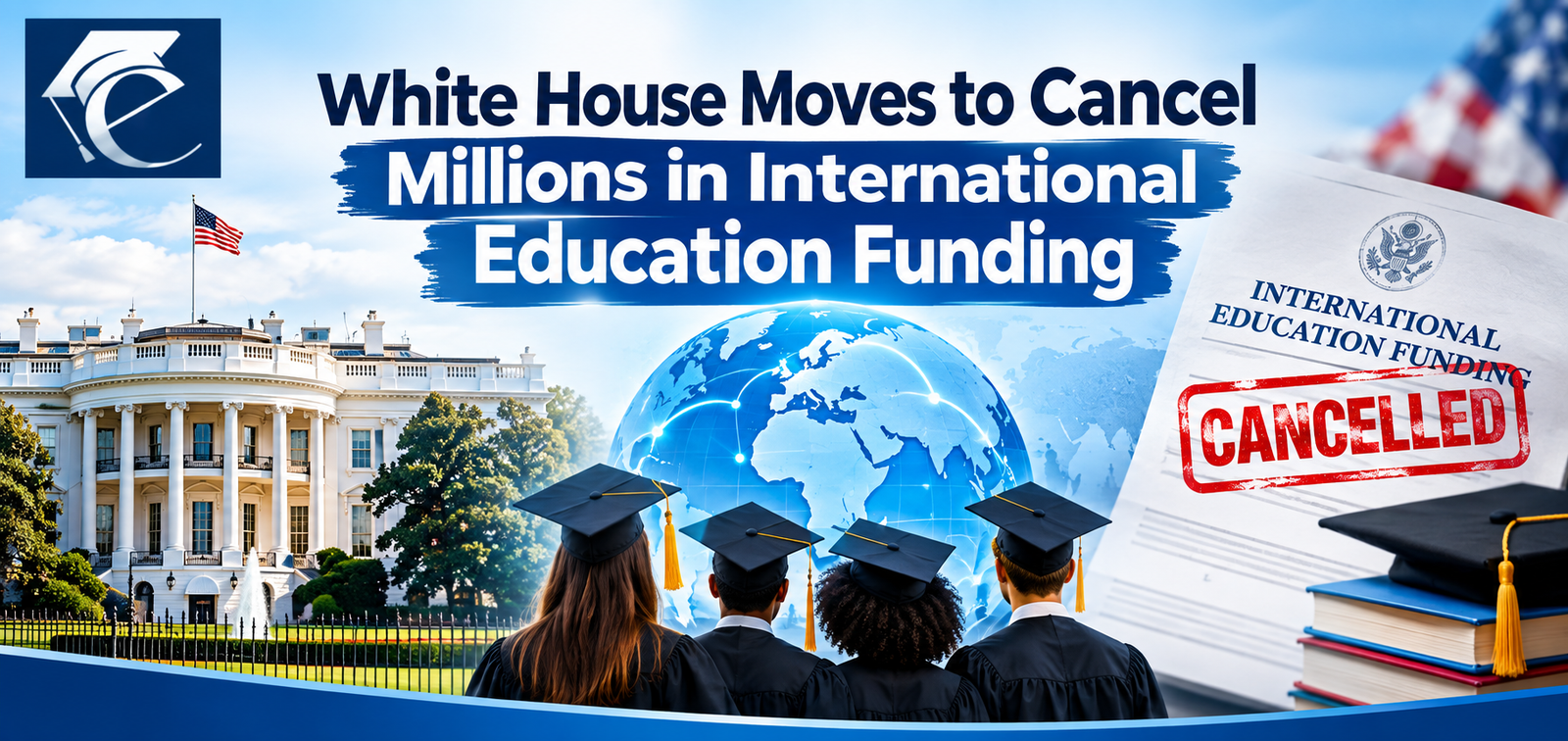
The White House has moved to cancel millions of dollars allocated to education programs that support international academic exchange and migrant student initiatives, sparking debate among lawmakers, educators, and policy experts. The proposed action is part of a broader package of federal spending rescissions totaling approximately $810 million. According to the administration, the measure is intended to eliminate programs it considers unnecessary or misaligned with its priorities.
Among the most notable elements of the package are reductions affecting international education initiatives and migrant student support programs. The development has brought renewed attention to the future of academic exchange programs and the role of federal investment in global education partnerships.
International Education Programs Face Significant Reductions
This proposal from the administration is expected to reduce funding by around $70 million in areas of international education programs. These types of programs usually grant scholarships and grants to assist universities in accommodating international students and scholars, foreign language study programs, and cross-border collaboration on research.
Examples of such programs include exchange programs, professional development programs, and area studies programs conducted at universities. People who favor such programs contend that they increase global awareness, language skills, and international competitiveness of the country.
The proposed international education funding cuts have raised concerns among universities that rely on federal support to maintain globally focused academic programs.
Migrant Student Programs Also Impacted
In addition to international education initiatives, the administration is attempting to undo an allocation of about $25 million in funds to programs for migrant students. The programs help migrant students to succeed in spite of the problems they face due to mobility issues and educational disruption. I
The White House contends that reforms must be made to these programs, and that funds should go elsewhere. But some say that cutting back on the funding could have negative consequences for these groups of students.
As negotiations move forward, the international education funding cuts have come into play in a broader national discussion about federal spending on education.
Lawmakers Challenge the Move
The proposal for rescission has received a fair share of criticism from members of Congress from both ends of the political spectrum. One point that has been made by some members of Congress is that the whole approach used by the administration goes around Congress’ right in terms of making decisions on the expenditure of federal funds.
Some of the members have stated that this act constitutes an overreaching of executive powers, while others have argued that the move is part of the strategy to cut down on the government’s expenses.
The debate surrounding these international education funding cuts highlights ongoing tensions between the executive branch and Congress over budgetary control.
Potential Impact on Higher Education
Universities and educational agencies are carefully observing the situation because of its impact on international engagement programs. Federal money has been used to support language study, international research collaborations, and exchange programs between U.S. universities and institutions worldwide.
Leaders in higher education point out that prolonged uncertainty may influence planning, student enrollment, and sustainability of specific academic programs. Supporters claim that international education helps develop the workforce, build cultural competencies, and advance research innovation.
If the international education funding cuts are adopted, a new approach to funding global learning initiatives will emerge.
Looking Ahead
The attempt by the White House to withdraw millions from the education budget has sparked debates on what will happen to international academic programs in the U.S. in the future. Whereas proponents see it as an important initiative to minimize government spending, opponents see it as one that may undermine educational and research benefits that may serve the country well in the future.
Whatever the decision, the fate of the international education funding cuts will be felt far into the future.