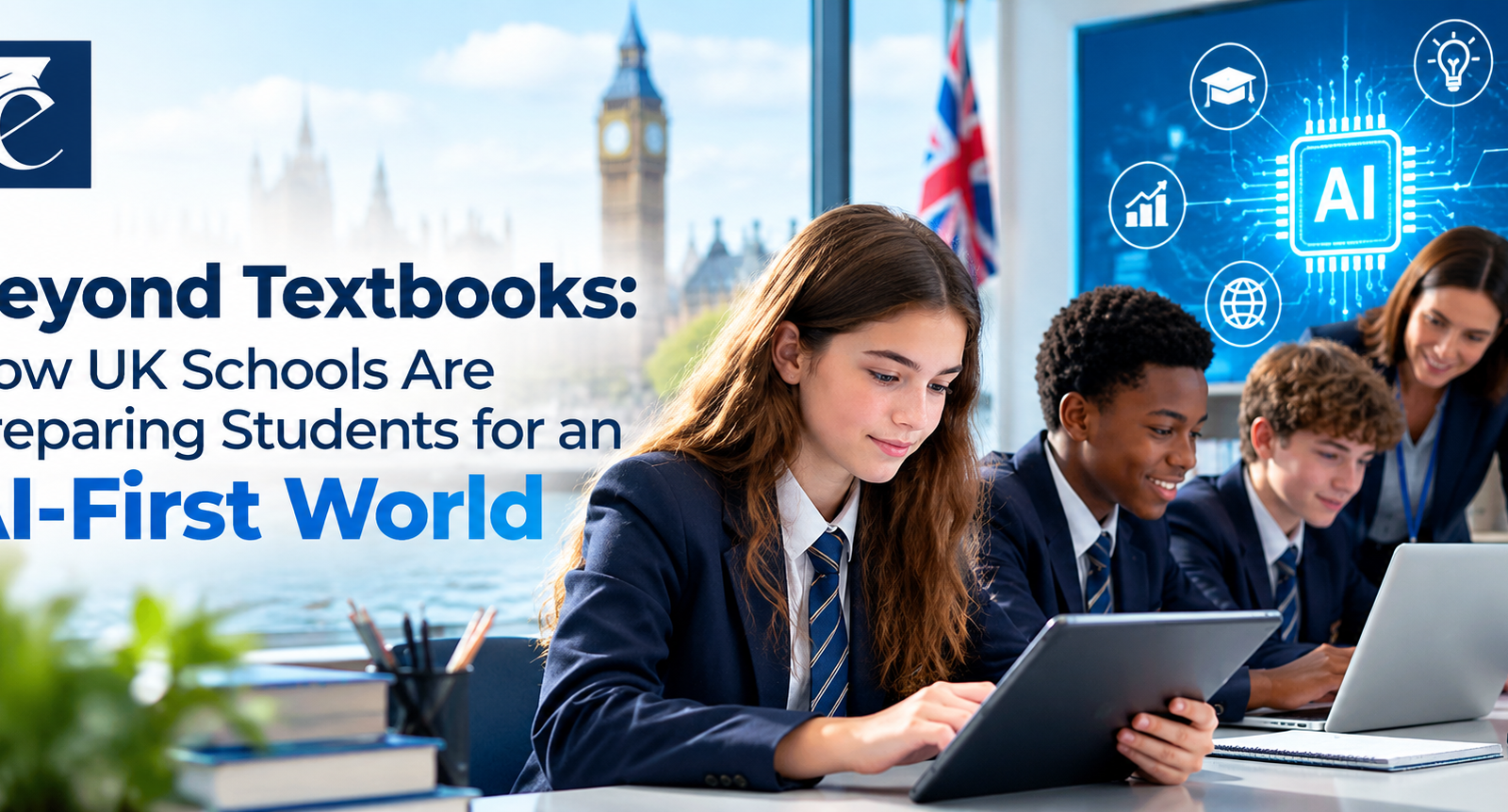

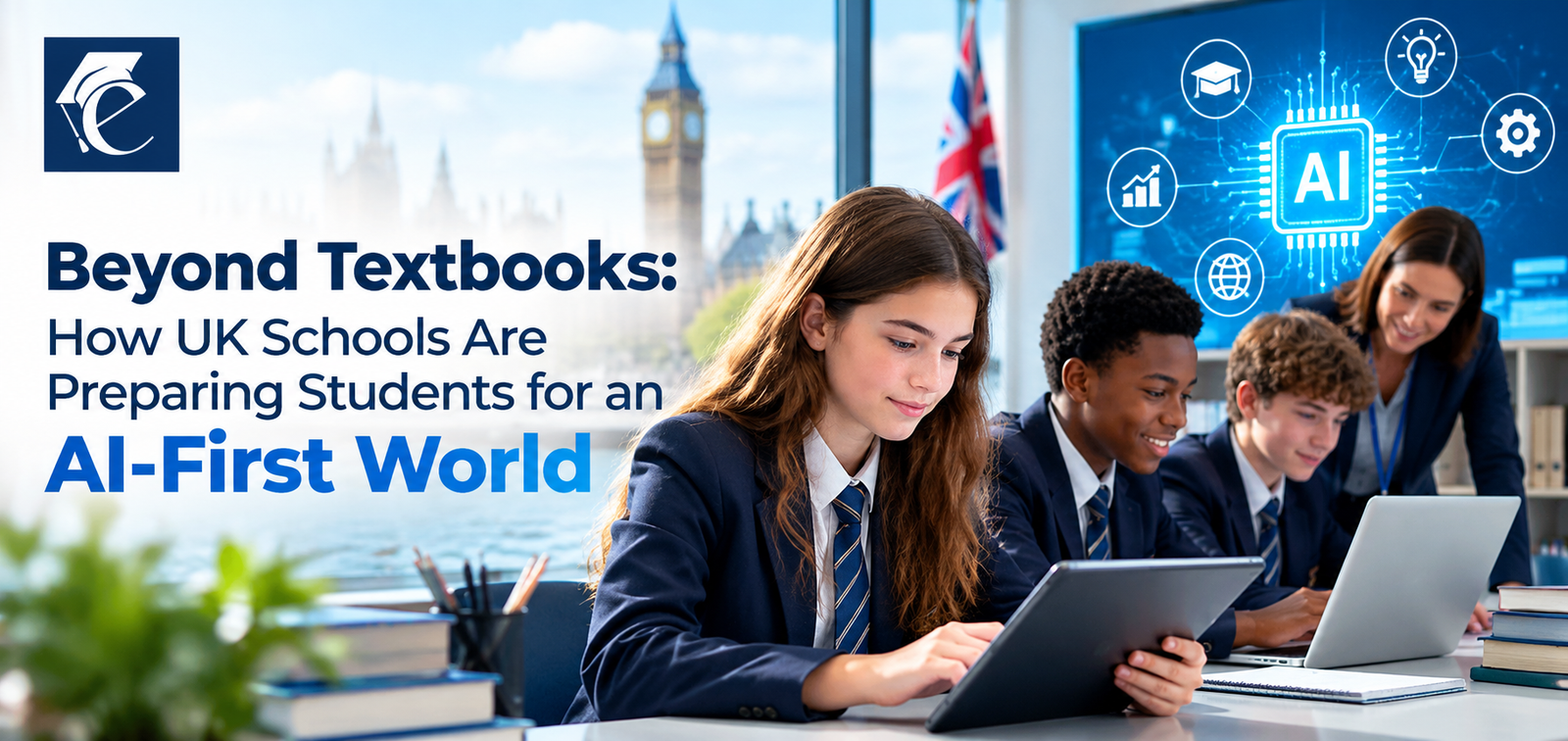
The classroom of the future is no longer a distant concept. Across the United Kingdom, schools are increasingly adapting to a world where artificial intelligence is becoming part of everyday life, work, and communication. From how students learn to how teachers deliver lessons, technological innovation is reshaping education at a remarkable pace. As AI continues to transform industries and redefine workforce expectations, schools are recognizing the need to prepare young people for a future where digital intelligence will play a central role.
No longer is the question one of whether artificial intelligence will impact education; the question is now whether or not our schools can prepare our children for coexisting with artificial intelligence. The result is a push for new educational strategies in teaching, curriculum, and digital literacy. With this in mind, AI in UK schools becomes an increasingly important issue.
The Rise of Artificial Intelligence in Education
AI has been impacting various areas of life. Recommendation engines, virtual assistants, chatbots, and data analysis have become some of the usual elements of today’s world. The generation of students that grows now does so in an environment in which these AI-powered solutions are available; thus, there is a need for educational institutions to help students realize the potential of AI technologies and their problems.
Today, educational authorities do not see artificial intelligence just as an area of study but as a powerful tool that would impact almost any profession. Irrespective of whether students choose medicine, engineering, business, law, media or teaching as their career paths, they will inevitably meet AI solutions in their professional practices.
This reality has accelerated efforts to strengthen AI education in the UK, ensuring that students develop the knowledge and skills needed to engage confidently with emerging technologies.
Moving Beyond Traditional Digital Skills
For several years, digital education was largely limited to computer and internet literacy, along with fundamental knowledge about software programs. However, while those competencies still matter, educational institutions are moving towards a more comprehensive approach to technology-related topics.
Such topics as machine learning, data analytics, automation, and algorithms are becoming part of the curriculum, helping students not only to see how technology operates but also how it affects social aspects, business operations, and people’s lives.
The reason for such a shift is the awareness that success in the future will require more than knowledge of how to work with certain devices. It is also necessary to learn to think critically and evaluate different information and decisions made by machines.
As a result, many initiatives related to AI education in the UK emphasize both technical knowledge and responsible technology use.
Building AI Literacy from an Early Age
The development of AI literacy in education can be one of the most important breakthroughs in modern-day education. Similar to reading, writing, and numeracy, which are considered fundamental skills in education, the importance of AI literacy has also been recognized.
AI literacy means teaching students how artificial intelligence works, where it is used, its limitations, and what kind of impact AI has on society. By gaining knowledge about the basics of artificial intelligence, young people learn how to use technology in a proper way.
Instead of considering AI as something only older students should learn, schools nowadays are starting to introduce young learners to the basics of artificial intelligence. Young learners can discuss some of the simple things related to the usage of AI and automation technologies, while older learners can learn about the more complicated issues connected to machine learning, ethics, and data management.
Strong AI literacy in education will make sure that students will become smart consumers of technology.
Integrating Artificial Intelligence Across Subjects
Artificial intelligence does not remain limited to computer science classroom lectures alone. It is becoming clear that AI is an interdisciplinary subject and there is a need for schools to teach it through this perspective.
For instance, in mathematics, students can be taught data analytics and the statistical models that power machine learning algorithms. In science, students can learn how artificial intelligence contributes to research and environmental monitoring. In social studies and humanities, students might focus on the ethical questions that revolve around automation, privacy, and regulation of technology.
Through such an interdisciplinary approach, it becomes clear to students that AI is not just a singular topic, but a technology that has implications in nearly every area of life today.
Most of the discourse on the subject of UK schools and artificial intelligence focuses on the necessity of making students realize practical applications of the technology they study.
Preparing Students for Future Careers
The foremost reason for emphasizing education in AI is the changing paradigm of work. Modern-day organizations are looking for people who can cope with technological environments and have the ability to solve complex problems and collaborate with machines.
Many future careers will entail people working with artificial intelligence rather than competing against it. Therefore, schools are focusing on instilling those abilities that enhance technological skills. They are creativity, communication skills, critical thinking, emotional intelligence, and problem-solving abilities.
At the same time, students are learning how to code and analyze data and think computationally.
Developing strong AI skills for students has become an important objective for educational institutions seeking to prepare learners for rapidly evolving labor markets.
Supporting Teachers in an AI-Driven Era
Educating students to thrive in an AI-dominated environment will also mean supporting educators.
Educators themselves need to be aware of new technologies if they are going to lead learning processes. Various professional development courses are educating teachers on how to use artificial intelligence in practice and how to teach AI-related concepts to their students.
AI technologies are also being used by many schools to assist in planning lessons, assessing students, performing administrative work, and creating individualized learning experiences.
As discussions around UK schools and artificial intelligence continue to evolve, teacher training remains a critical component of successful implementation.
Ethical Awareness and Responsible Technology Use
Although AI presents great possibilities, it also poses a number of ethical challenges. Privacy, bias, transparency, misinformation, and accountability issues have gained relevance within the scope of education.
Educators are becoming aware of the necessity for their students not only to work with AI tools but also to analyze these tools critically. Students require an opportunity to learn about the role of algorithms in the process of making decisions, as well as the ways in which data is gathered and used by them.
Educating students on ethics helps them become critical digital citizens.
This focus on responsibility is becoming a central element of AI literacy, ensuring that technological progress is accompanied by ethical understanding.
Personalized Learning Opportunities
Artificial intelligence is also revolutionizing student learning methods.
An AI-based learning platform can assess performance, detect strong and weak areas, and suggest personalized learning paths for a student. Such an approach allows learners to advance at their own speed and get specialized help in areas that require further development.
Personalized learning has the ability to increase the effectiveness of education since it is going to make sure that education is provided taking into consideration personal needs rather than general ways.
A lot of proponents of AI education education in the UK see this technology as a means of making education more inclusive.
Encouraging Innovation and Creativity
Although there are fears that automation will make certain jobs redundant, it is becoming clear that creativity is one of the most important skills possessed by humans.
The education system is making sure that learners consider the role of artificial intelligence as something that complements their creativity. Students are being taught how AI can help them in design, content creation, research, and problem-solving while considering the role played by human imagination and ingenuity.
By mixing technical skills with creativity, students will be in a good position to become innovators of technology instead of just consumers of it.
This will allow them to develop their AI skills for students while nurturing an entrepreneurial spirit.
Looking Ahead
The question of How UK schools are preparing students for an AI-first world reflects one of the most important educational challenges of the modern era. The emergence of artificial intelligence is revolutionizing the way people work, communicate, learn, and think by creating both opportunities and challenges.
British schools are adapting to these changes by increasing digital learning, improving technological literacy, teaching children AI-related knowledge, and preparing them for jobs that do not even exist yet. Furthermore, educators are focusing on such human traits as ethics, critical thinking, creativity, and flexibility, which become extremely important in today’s world.
Since technology keeps developing rapidly, it becomes vital not just for young people to know what artificial intelligence is but also how to use it properly and efficiently. Through continuous innovations and smart education practices, British schools are trying to prepare children for the future in which intelligent machines will play a key role.
FAQ
1. How is AI being used in UK schools?
AI in UK schools is being explored for personalised learning, lesson planning, administrative support, tutoring, accessibility tools, and helping students develop digital and AI literacy.
2. Why is AI important for students in UK schools?
AI is becoming an important part of modern workplaces. Introducing students to AI can help them build critical thinking, digital skills, creativity, and an understanding of how AI technologies work.
3. Will AI replace teachers in UK schools?
AI is unlikely to replace teachers. Instead, it can support educators by reducing administrative workloads, providing learning resources, and helping teachers personalise education.
4. What are the benefits of AI in UK schools?
Potential benefits include personalised learning experiences, faster access to educational resources, improved accessibility, greater student engagement, and support for teachers.
5. What are the risks of using AI in schools?
Key concerns include inaccurate information, student privacy, over-reliance on technology, bias, academic integrity, and unequal access to AI tools.
6. How can schools teach students to use AI responsibly?
Schools can teach students to verify AI-generated information, protect personal data, understand bias, acknowledge AI assistance, and use AI as a learning tool rather than a replacement for independent thinking.
7. Does AI affect homework and academic integrity?
Yes. Generative AI can make it easier for students to produce assignments without understanding the material. Schools may therefore need clear policies covering acceptable and unacceptable AI use.
8. What does the future of AI in UK schools look like?
The future is likely to involve greater integration of AI into teaching, learning, assessment, and school administration, alongside stronger emphasis on responsible and ethical use of technology.
9. How can AI help teachers in UK schools?
AI can help teachers create lesson plans, develop learning materials, analyse student progress, generate ideas, and automate routine administrative tasks.
10. Are UK schools prepared for an AI-first education system?
Many UK schools are exploring AI adoption, but readiness varies. Schools need appropriate policies, teacher training, digital infrastructure, and guidance to use AI effectively and responsibly.