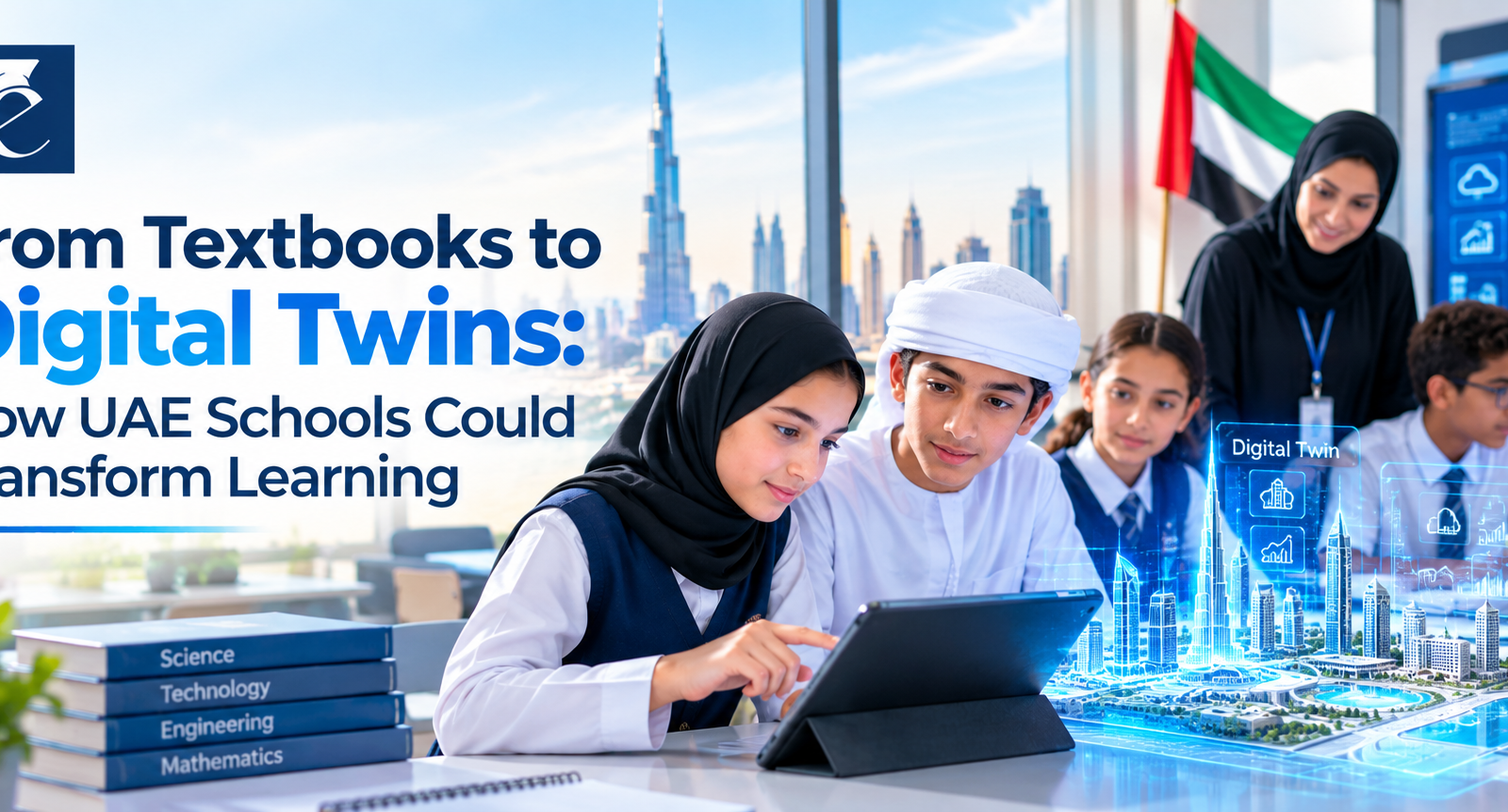

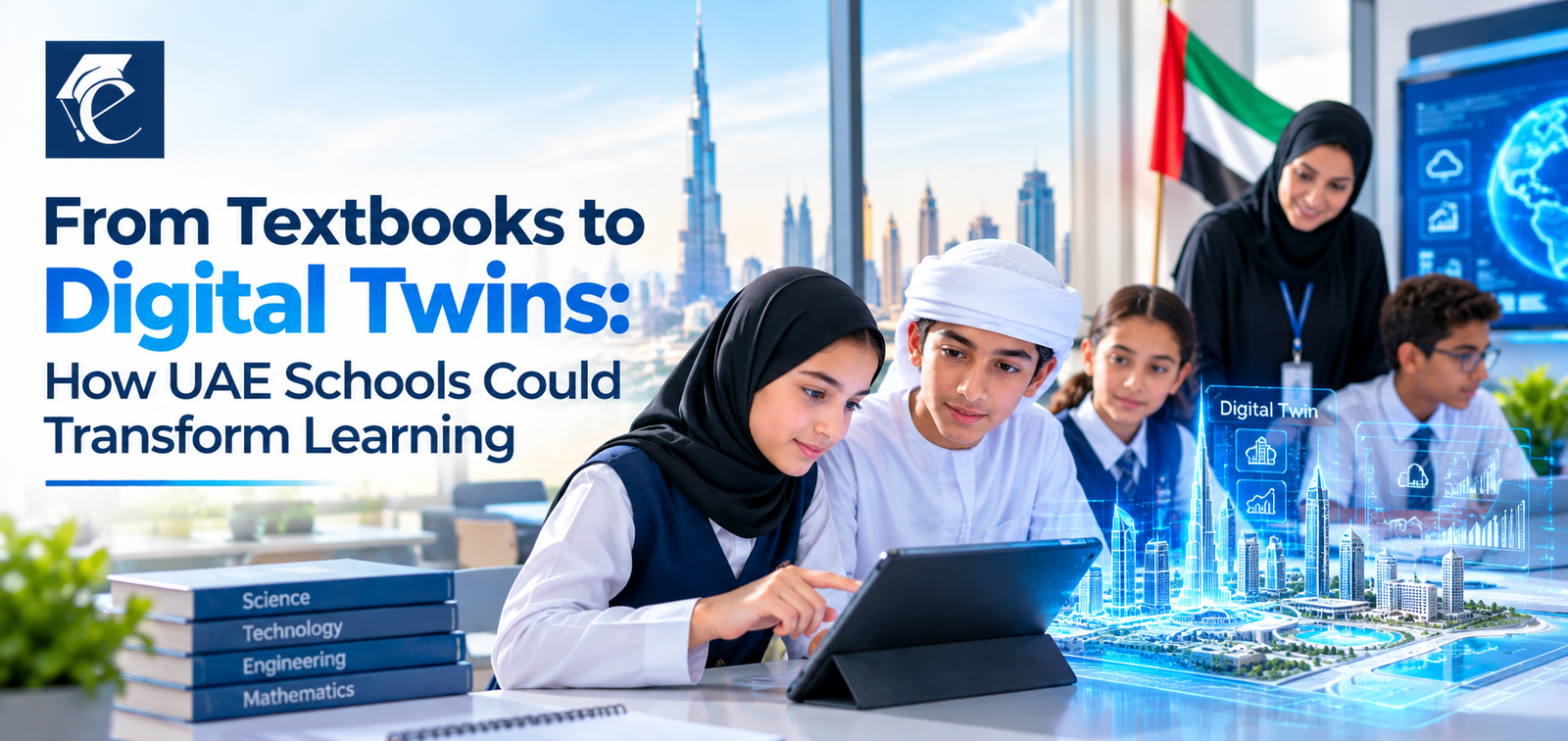
Education has undergone remarkable changes over the past two decades. Traditional classrooms that once relied primarily on textbooks, whiteboards, and printed materials are increasingly embracing advanced technologies designed to enhance learning experiences and prepare students for a rapidly evolving world. In the United Arab Emirates, innovation has become a cornerstone of educational development, with schools continually exploring new ways to integrate emerging technologies into teaching and learning.
Among the most promising innovations on the horizon is the concept of digital twins. Originally developed for industries such as manufacturing, engineering, healthcare, and urban planning, digital twins are now attracting attention within the education sector. Their potential to create highly interactive, data-driven, and personalized learning environments is opening new possibilities for students and educators alike.
As discussions around educational innovation continue to grow, Digital twins in UAE schools are emerging as a concept that could significantly influence the future of teaching, learning, and student engagement.
Understanding Digital Twin Technology
A digital twin is a replica of an actual object, process, system or even environment. The technology makes use of real-time data, simulation, and sophisticated analytics to mirror what occurs in real-world situations.
In industries like aviation and manufacturing, digital twins allow organizations to test scenarios and improve processes in terms of efficiency, predictions, and problem identification. Creating virtual models of real-world objects helps them make informed decisions without putting themselves at risk.
The increased focus on Digital twin technology in education is because of the belief that the same approach can also be applied in this field. Rather than learning about theoretical concepts through reading, students will learn through interacting with actual virtual replicas of real-life situations.
This would revolutionize the field of education in terms of making it highly interactive.
The UAE’s Commitment to Educational Innovation
The United Arab Emirates (UAE) has always placed itself as an innovator in terms of technology and digital transformation. Strategies involving artificial intelligence, smart cities, innovation, and future-ready skills have impacted different sectors, including the educational sector.
Investments made in UAE education technology have enabled educational institutions to embrace technology through the implementation of digital learning platforms, smart classroom technology, virtual reality, robotics, and artificial intelligence. The embrace of these innovations is in line with the future plans that the UAE has for its students.
The use of digital twins in education is a natural progression in the UAE’s innovation path in light of its educational goals and aspirations.
Bringing Complex Subjects to Life
One of the most promising opportunities provided by digital twins is to simplify complicated ideas for people.
Classical methods of education include drawing schemes and studying from textbooks and theory. Even though these are very efficient tools in most cases, they can be problematic since they sometimes make complicated theories hard to imagine.
Using digital twins will allow the student to explore virtual representations of ecosystems, cities, engineering structures, archeological sites or scientific phenomena. Instead of reading about the process and its operation, the student would be able to see it in action.
It will increase engagement and help to understand and remember information better.
As interest in Digital twin technology in education grows, educators are increasingly recognizing its potential to bridge the gap between theory and practical understanding.
Creating Personalized Learning Experiences
Each learner learns in his/her unique way. Some learn visually, some through doing, experimenting or by studying at their own pace.
Digital twins can be used to tailor education in the most personalized way for each individual student, adapting and personalizing his/her educational journey depending on his/her pace of learning and his/her learning preferences.
The information collected through the learning process will enable the educator to pinpoint areas that require more focus and attention.
This level of personalization represents one of the most promising aspects of AI and digital learning in UAE schools, offering opportunities to create more inclusive and effective learning experiences.
Transforming STEM Education
There is potential that science, technology, engineering, and mathematics learning can be positively impacted by the use of digital twins.
For example, engineering students can test out virtual prototypes before creating any physical prototypes. Science students can watch simulations of living things, environmental changes, or chemical reactions. Math students can learn more about complicated data patterns through interactive simulations.
All of these methods could aid in learning how to think critically and solve problems while providing a better understanding of concepts.
With the need for STEM knowledge continuously increasing around the world, it can be beneficial for innovators, engineers, scientists, and entrepreneurs to utilize digital twins.
Supporting Smart Campuses and School Operations
Digital twin technology does not have to be used only for classroom teaching purposes.
Indeed, the schools themselves could benefit from digital twins in improving campus management, resource management, sustainability efforts, and increasing efficiency. Through virtual models of the schools’ buildings, one can track energy use, schedule maintenance, and evaluate infrastructure investments.
This is very much consistent with the larger trend of developing smart cities and the development of UAE education technology.
Enhancing Collaboration and Experiential Learning
Today’s education focuses more and more on collaboration, creativity, and experiential learning. Digital twins can be used to achieve these aims because they allow learners to collaborate in order to accomplish complicated tasks in virtual worlds.
For instance, pupils of various schools may participate in simulations of urban planning, sustainability in the environment, or engineering projects. Using the help of digital twin systems, students will be able to study their problems, propose solutions, and assess results.
Such activities contribute greatly to the development of important abilities.
The integration of such technologies supports the broader vision for the Future of education in UAE, where learning extends beyond traditional classroom boundaries and becomes increasingly interactive and collaborative.
The Role of Artificial Intelligence
Artificial intelligence plays an important part in enhancing the efficiency of digital twins.
AI applications can analyze a lot of information, develop predictive analysis, find patterns, and adjust simulations based on interaction with the users. If used together with digital twins, artificial intelligence is capable of developing an efficient and evolving educational experience along with the learner.
The joint development of such technologies influences the conversation about AI and digital learning in UAE schools, which pay much attention to the creation of intelligent learning ecosystems.
The use of artificial intelligence and digital twins could provide schools with efficient ways of delivering personalized and engaging educational experiences.
Challenges and Considerations
Although there are many benefits that can be derived from digital twin implementation, this process is not without its difficulties.
Schools will have to take into consideration such factors as infrastructure, cost of technology, cyber-security, education of teachers, and data privacy. The success of this process will require proper planning, management, and support both for teachers and students.
The readiness of teachers will be especially crucial in this matter. Teachers should have the skills and confidence in order to use modern technologies appropriately without losing the personal contact with students.
Such steps will help realize the full potential of digital twins in the education system.
Looking Toward the Future
The topic of How digital twins could transform learning in UAE schools is part of a larger discussion about the future of education in UAE as a whole. In light of rapid technological innovation, educational systems need to continuously adapt to equip learners with skills to deal with an increasingly complex reality.
Digital twins provide an exciting glimpse into the possibilities of future education systems. Through the use of simulation, data collection, artificial intelligence, and immersive learning, they can help create a more engaging, personalized, practical, and forward-thinking educational experience.
The increased focus on Digital twins in UAE schools demonstrates the nation’s dedication to finding revolutionary technologies that will enhance its educational system and increase its students’ preparedness for the future.
FAQ
1. What are digital twins in UAE schools?
Digital twins in UAE schools are virtual models of classrooms, campuses, laboratories, or learning environments that can simulate real-world conditions using digital data.
2. How can digital twins improve learning in UAE schools?
They can provide students with interactive simulations, virtual experiments, real-time data, and practical learning experiences beyond traditional textbooks.
3. Why are UAE schools exploring digital twin technology?
Digital twins can support the UAE’s focus on smart education, digital transformation, innovation, and future-ready learning environments.
4. Can digital twins be used for STEM education?
Yes. Students can use digital twins to explore engineering, science, technology, mathematics, architecture, and other subjects through realistic simulations.
5. How can digital twins support teachers?
Teachers can use digital models to demonstrate complex concepts, monitor learning environments, create simulations, and provide more interactive classroom experiences.
6. Can digital twins make schools smarter?
Yes. Digital twins can help schools visualize building performance, energy use, classroom conditions, and other operational data to support smarter decision-making.
7. What is the difference between digital twins and virtual reality in education?
A digital twin represents a real-world environment using connected data and simulations, while virtual reality primarily creates an immersive digital experience for users.
8. Are digital twins suitable for all UAE schools?
Their suitability depends on factors such as infrastructure, technology investment, connectivity, teacher training, curriculum needs, and the school’s digital strategy.
9. What challenges could UAE schools face when adopting digital twins?
Potential challenges include implementation costs, data privacy, cybersecurity, technical infrastructure, staff training, and integrating the technology with existing education systems.
10. Could digital twins replace traditional textbooks in UAE schools?
Digital twins are more likely to complement traditional learning materials than completely replace textbooks, providing students with interactive and practical experiences alongside conventional resources.