
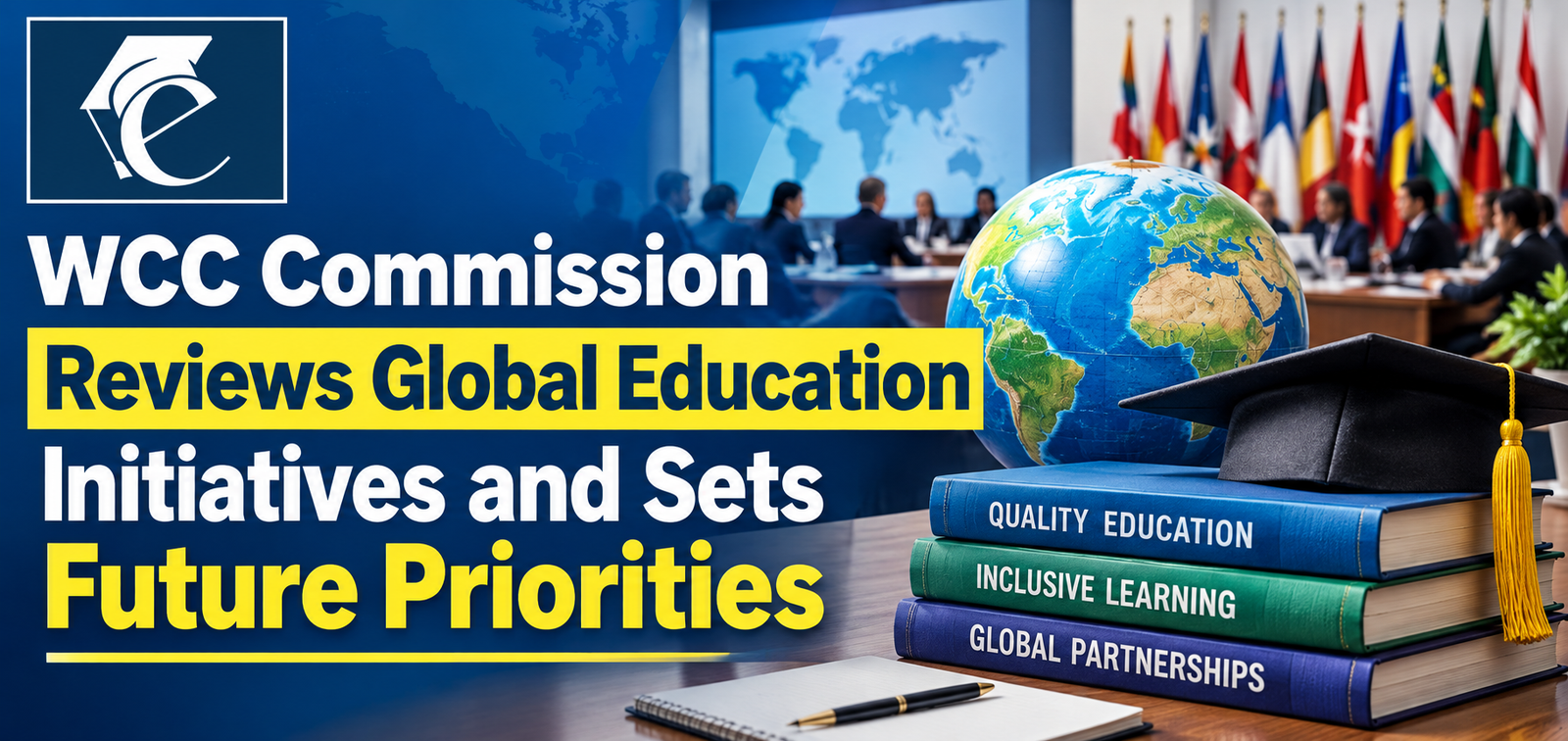
The World Council of Churches (WCC) Commission on Ecumenical Education and Formation has concluded a meeting at the Ecumenical Institute at Bossey, Switzerland, where members reviewed ongoing programmes and identified priorities for strengthening theological education and cooperation among churches worldwide. The meeting took place from October 4 to 9, 2026, under the theme “Ecumenical Formation as Ethos and as Programme.” It also coincided with celebrations marking the institute’s 80th anniversary.
The discussions examined how WCC education initiatives can support churches, theological institutions and emerging leaders through accessible learning opportunities, regional collaboration and deeper engagement with Christian unity, justice and reconciliation.
Regional Programmes Expand International Collaboration
One important aspect of discussion was the establishment of the GETI and RETIs. They provide an opportunity to gather young theologians and participants representing various churches and geographical regions in order to foster discussion and theological reflection.
Dr Sara Gehlin from the Church of Sweden and University College Stockholm described the results of the 2025 Ecumenical Summer Academy, RETI Europe, where the program dealt with issues of ecumenical peace-building amid war time, looking back at the 1925 Stockholm Conference.
The commission considered the North American RETI program which took place in August 2026 in Detroit and Toronto. The Latin American RETI, planned for 2027, was also discussed.
These WCC education initiatives are intended to connect theological learning with the experiences and needs of local churches and communities. Discussions also considered the future of GETI alongside the WCC’s 12th Assembly in 2030, with an emphasis on giving young ecumenists a more active role in dialogue and decision-making.
New Networks to Support Women Theologians
Two initiatives which focused on increasing the opportunities for women in the field of theological studies and leadership were shared by the commission.
The Reverend Tamsyn Kereopa, who is an indigenous Māori theologian and an ordained minister of Aotearoa, New Zealand, and Polynesia, gave information about the development of some projects related to the Global Ecumenical Indigenous Women’s Theological Network. The aim of the project is the overcoming of isolation, absence of mentoring, further studies, and networking for the Indigenous women theologians.
Some of the proposed activities include virtual networking, research, publishing, scholarships, leadership training, storytelling, and intergenerational learning. The launch of the network is scheduled for 2028, and the network should be launched by the Indigenous women.
In addition to that, the project related to the Orthodox Women Scholars Network was shared. It is a joint initiative of the WCC and the Finnish Evangelical Lutheran Mission, and its purpose is to increase academic interaction, research, publication, and dialogues between the women in the Eastern and Oriental Orthodox churches. The launch of the network will take place in March 2027 in Greece, Orthodox Academy of Crete.
Online Learning to Reach Wider Audiences
Another major objective was that of improving the availability of theological knowledge. The commission was pleased with the launch of Ecumenism 101, which is an online educational module aimed at providing basic information on the history, theology, and modern-day difficulties of the ecumenical movement.
This module is designed to provide an opportunity for ecumenical studies not only through the residential academic programmes but also to make them available to churches, institutions and all those who wish to learn about ecumenism. It will be made available on the WCC website.
It is just one of the many steps that the commission is taking to make WCC education initiatives more widely available.
Priorities for the Years Ahead
Another point discussed was the role of the Ecumenical Institute at Bossey, whose mission for the past eight decades has been the promotion of theological studies and the formation of intercultural and interconfessional formation.
In this regard, Rev. Prof. Dr Meehyun Chung, moderator of the commission, stressed the significance of the meeting as well as the chance that commission members had to assess their activities together. She also noted her hope that Bossey students would be more connected with the churches of Switzerland not only from the French-speaking part but also with the theology faculties of universities in Europe.
As for the future, the activities of the commission will influence the setting of priorities up until 2028 and after. In this regard, the further development of WCC education initiatives will continue to concentrate on the development of regional cooperation, networking of scholars and preparation of the future generation to contribute to Christian unity, justice, and reconciliation.