
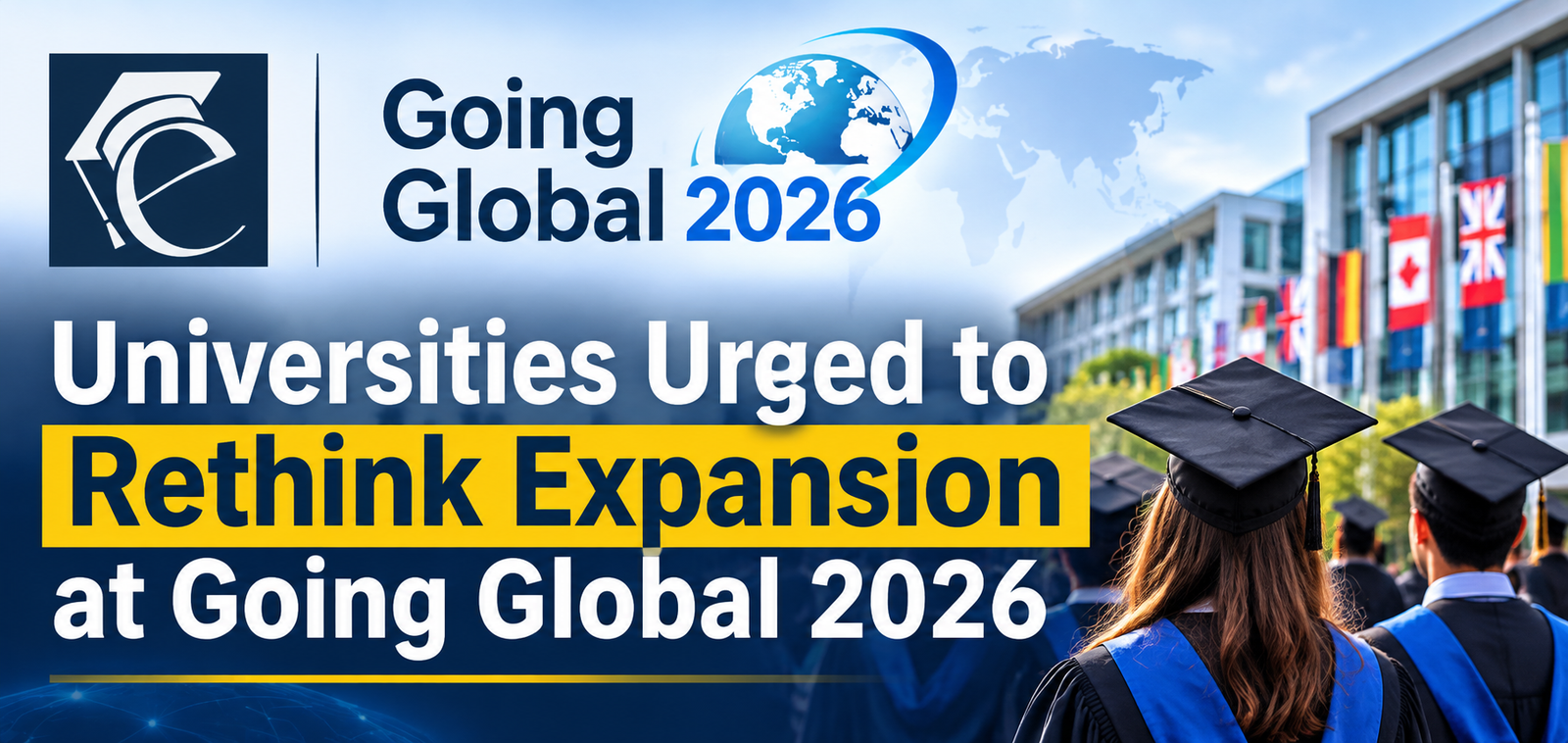
Growth is not the same as progress. That was the central message from higher education leaders at Going Global 2026, held in Istanbul last week. Speakers said universities should look past enrolment figures and ask whether expansion has actually improved teaching and research.
A Sector That Has Grown Fast
The numbers explain why the debate matters. According to UNESCO data cited in the coverage, global higher education enrolment rose from roughly 100 million students in 2000 to 269 million in 2024. That is a huge change in just over two decades, and many of those students are the first in their families to attend university.
Yet panellists at Going Global 2026 argued that bigger systems are not automatically better ones.
More Places, Not Necessarily Better Education
According to Komiljon Karimov, rector of Westminster International University in Tashkent, opening up more slots is essential from both economic and social points of view, especially for first-time entrants. However, there is a boundary he set. Expansion in terms of numbers does not imply better education. Expansion means enlargement of the system, and transformation implies what the system can do.
The most alarming thing is that the future systems will continue growing without transforming sufficiently.
“Addicted to Counting”
A recurring theme at Going Global 2026 was the sector’s habit of treating numbers as proof of success. Mehmet Naci İnci, rector of Boğaziçi University, said higher education is addicted to counting students, cases and agreements, and that institutions have not yet learned to break the habit.
He urged universities to ask harder questions. Has growth made teaching better? Has it made science stronger?
Partnerships That Last
İnci also turned to international collaboration. As universities expand across borders, he argued, the priority should be deeper partnerships rather than a longer list of signed agreements. His strongest partnerships, he said, did not begin with publicity ceremonies. They grew over years, with scientists working on the same problem and supervising doctoral students together, building trust step by step. The results were better courses, stronger labs and young researchers leading their own teams.
Preparing Students for an AI-Shaped Labour Market
Technology and Artificial Intelligence were yet another big theme discussed during Going Global 2026. Lisa Roberts, vice chancellor of the University of Exeter, noted that universities must ensure the relevance of education through the changing world of work because of AI. Institutions, she stated, need to change their thinking and act fast, adding that it is not an easy thing to do.
The same question was posed by Karimov. Today, most programmes have quite rigid curricula, subject disciplines and methods of assessment. The question is whether universities prepare students for the future jobs or for the jobs of past? The graduates should be able to understand new problems, apply judgement and work with technology.
Pressure on Institutions
Karimov made references to the various challenges facing the universities in this regard. The universities are faced with the challenge of having to train more students, retain standards, introduce new technology and even contribute to economic growth. He posed doubts about whether adequate investments have been made towards this end.
What It Means for the Sector
The themes discussed at Going Global 2026 indicate a transition towards a new definition of success. Numbers related to student enrolment and institutional partnerships are easily reported, yet reveal little about the quality of work. The participants demand that there be evidence of increased learning, better research, and the ability of graduates to operate in an ever-changing environment.
The lesson of Going Global 2026 for university administrators is clear yet difficult. Growth can take place, but this growth should be accompanied by transformation of the institution’s practices.