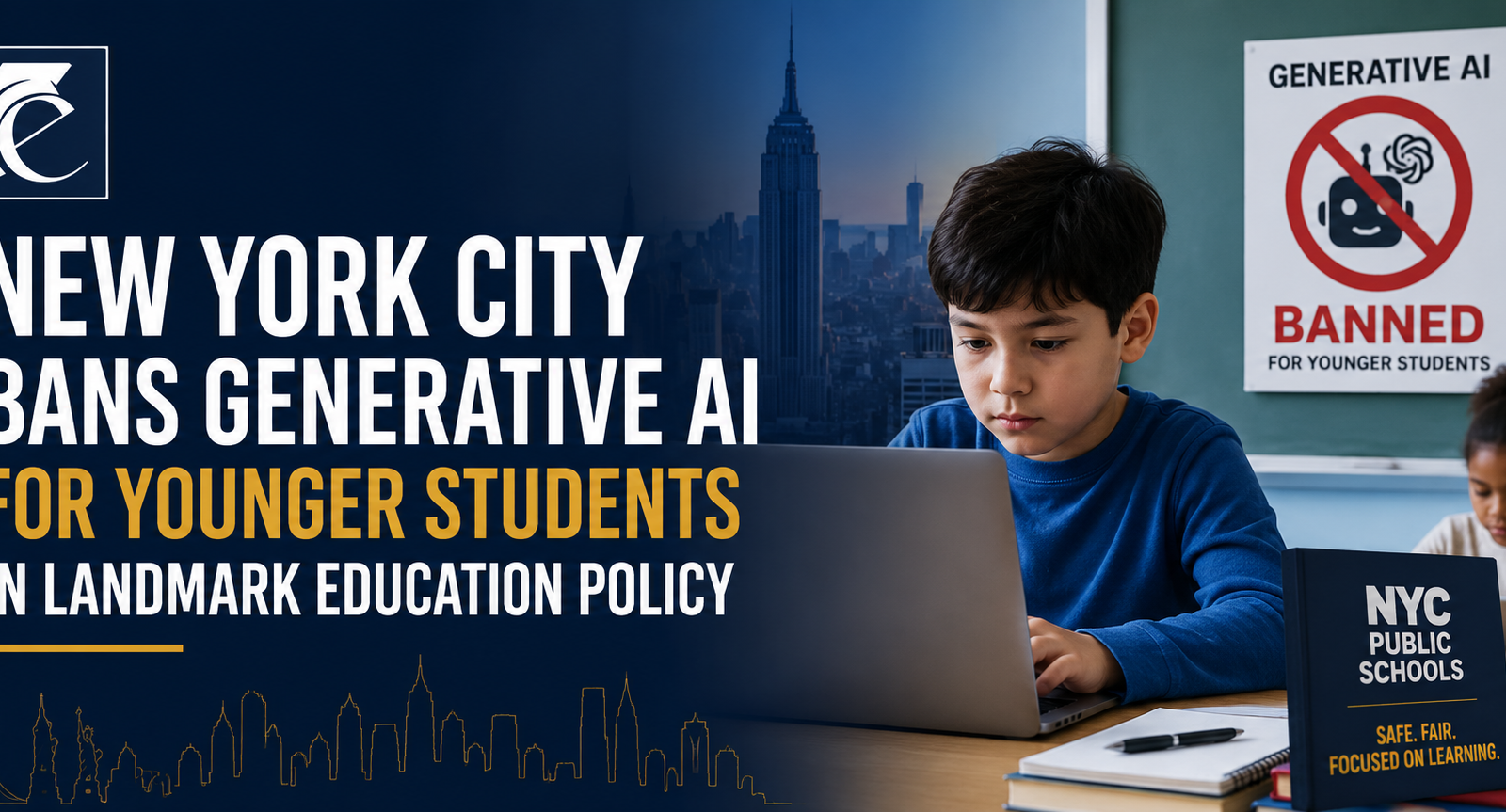

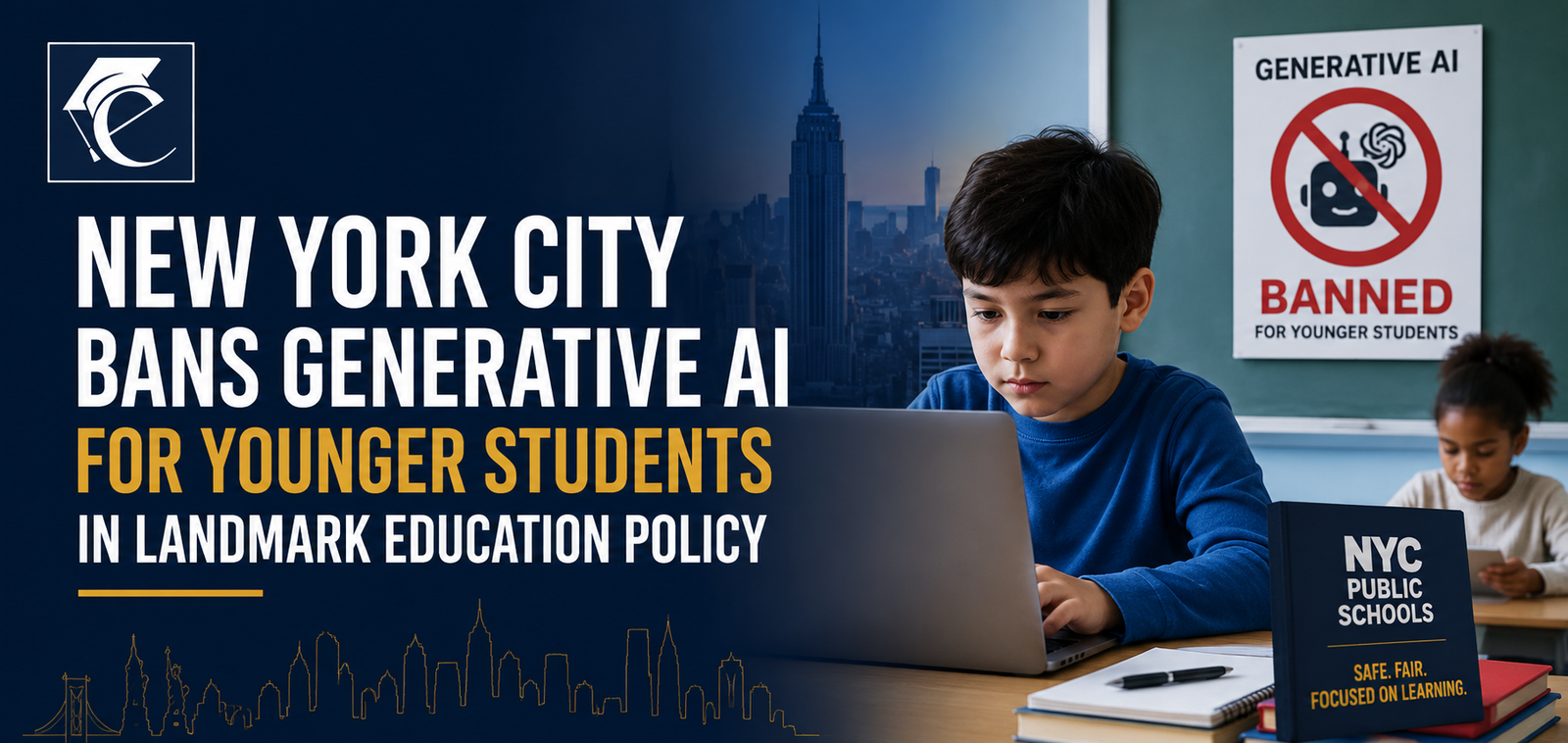
New York City has introduced one of the most restrictive education technology policies in the United States, announcing a one-year Generative AI Ban for public school students through eighth grade. The decision, unveiled by Mayor Zohran Mamdani, will affect approximately 600,000 elementary and middle school students and temporarily remove student access to a wide range of AI-powered educational tools.
The move reflects growing concerns among educators, policymakers, and parents about the impact of artificial intelligence on children’s cognitive development, critical thinking skills, and classroom engagement. While AI continues to transform industries worldwide, New York City officials argue that younger students should prioritize direct interaction with teachers, peers, and traditional learning methods before integrating advanced generative technologies into their education.
A Sweeping New Policy for America’s Largest School District
Under the newly announced Generative AI Ban, all student-facing generative AI software will be prohibited for students from preschool through eighth grade during the 2026–27 academic year. The policy applies to AI chatbots, tutoring tools, writing assistants, and other generative platforms designed for student use.
City officials said that it is the most far-reaching ban on AI that has ever been put into place by a major school district in the United States. The ban is meant to give educators and policymakers an opportunity to evaluate the impact of AI on the educational process.
It is a turning point in the discussion about what direction the schools need to move in.
Why City Leaders Are Restricting AI Access
Mayor Mamdani defended the Generative AI Ban by emphasizing the importance of human-centered learning experiences.
According to city government officials, too much use of AI by kids in the initial years would affect their capacity to think and reason. They have said that effective learning cannot happen without interactions with teachers and other students, but rather through automated machines.
Some of the educational experts associated with the revision of the policy also brought up an issue called “cognitive surrender,” where students use responses from the AI rather than building their analytical skills. Factors such as mental well-being and screen time, along with the improper use of AI-generated content, influenced the policy decision.
High School Students Will Follow a Different Approach
Though the younger generation of learners will be bound by the Generative AI Ban, New York City does not intend to ban AI from its schools entirely.
The students enrolled at the high school level will get the opportunity to study artificial intelligence within supervised learning and designated classes that will include knowledge about the working of AI, ethics, bias, and the role of AI in the job market and society.
It is believed that the older students have the capability to judge AI-generated material and use the technology wisely. Thus, some AI applications might still be accessible to high school learners.
Additional Digital Restrictions Introduced
Generative AI Ban is part of an overall initiative aimed at curtailing the overuse of technology by young students.
Daily usage of screens has been capped at 30 minutes for students of grades three to five and 45 minutes for students of grades six to eight. Students from preschool to second grade will have constraints imposed upon their own device use in classrooms.
Further, New York City has banned AI companion chatbots meant to provide students with emotional and mental health support.
Mixed Reactions from Educators and Experts
This declaration has received positive and negative reactions.
There has been widespread applause from many educationists and organizations for children’s welfare in terms of focusing on decreasing screen dependency and sustaining conventional learning environments. They feel that the Generative AI Ban will ensure that the focus remains on critical thinking and social interaction during their formative years.
But there have been doubts raised as to whether the ban of one year is enough to judge such rapidly changing technology. Some experts believe that a framework needs to be formulated regarding the usage of such technology in classrooms in the future.
The technologists are concerned that reduced exposure to AI can prove detrimental for young students as they will lack knowledge and experience of artificial intelligence in their future careers.
A Defining Moment in the AI-Education Debate
The introduction of the Generative AI Ban in New York City is an important step towards addressing the global debate on artificial intelligence in education. While educators from around the world have been struggling to find the balance between innovative technologies and students’ well-being, the largest school district in the country is choosing a prudent path that puts human interactions and basic knowledge acquisition at the forefront of educational experience.
The policy is to be re-evaluated at the end of 2026-2027 academic year and the results obtained may determine the approach to using artificial intelligence in the educational process in other parts of the United States and beyond. Until then, the experience of New York City remains one of the most closely followed examples.