
Oxford’s cobbled streets were packed on Tuesday night as students and campaigners turned out against a speaker they say has no place on campus. The Nathan Cofnas Oxford protest centred on a talk at Oriel College, and it has reopened a painful argument about free speech, race and the death of a Cambridge professor.
What happened during the night
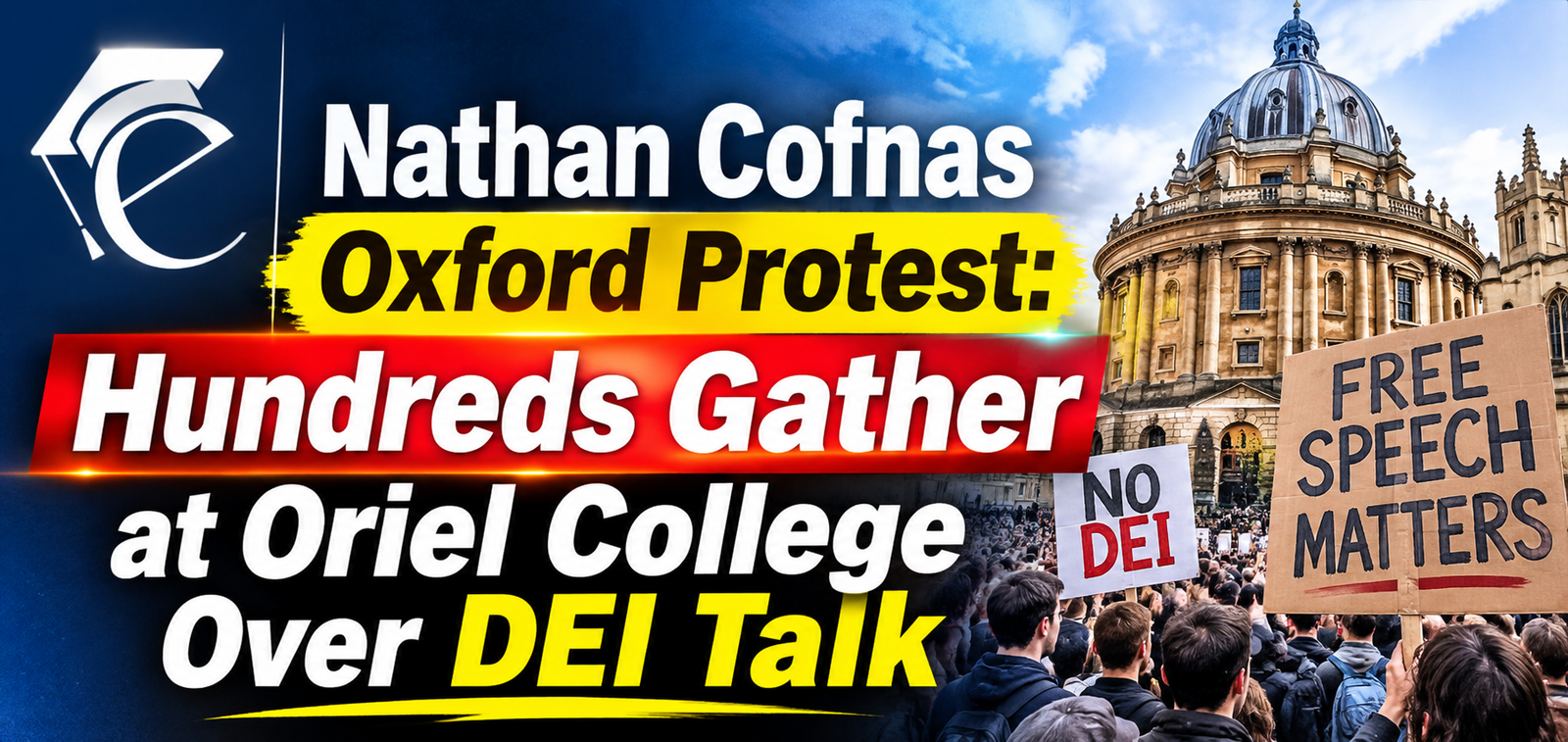
Hundreds of protesters gathered in the streets surrounding Oriel to protest against the scheduled appearance of Nathan Cofnas, who identifies himself as a “race realist.” They blocked the entrance of the college, shouting “Say his name, professor Jason Arday” and holding up placards saying “Remember professor Jason Arday.” Some protesters tried to prevent the entry of people coming for the talk. The talk, organised by Oxford’s Reform Society, was themed as “Is DEI Undermining Higher Education?” This Nathan Cofnas Oxford protest had been in the pipeline for weeks now.
Why there is so much rage
A lot of it comes from the case of Jason Arday. According to Cofnas, this professor plagiarised last July. However, The Guardian says that these allegations remain unproven. Arday, aged 41, was the youngest black professor at Cambridge and is now dead.
There are also other reasons why Nathan Cofnas is despised. Criticised for suggesting that only a few black people would qualify to join the elites of a merit-based society, it is no wonder this Nathan Cofnas Oxford protest generated such rage.
The position of Oriel
According to the college administration, the decision about Nathan Cofnas does not mean taking any side. The college argued that accepting the speaker does not mean endorsing his ideas. The Reform Society underlined that its committee alone decided on the event, and not the college or the whole university.
The opposing view
Not all people agreed with the cancellation of the talk. Soon after Arday’s death, there was a joint appeal letter written by several dozen of Oxford academics in defence of Cofnas. The supporters interpret the situation as a problem of free speech: if the invited person is invited officially, should he be prevented from giving a talk?
Such contradictions are at the core of the Nathan Cofnas Oxford demonstration.
Opposition from the rest of the world
There was much opposition to the event outside Oxford. The Students’ Union of Cambridge signed the open letter calling Oriel either to cancel the talk or to discontinue it. According to Al Jazeera, thousands of people demanded the talk to be cancelled.
There is also an academic context. At Ghent University, Cofnas was banned from teaching for three months but not from researching.
What’s next on the agenda
Oxford’s handling of this incident will surely come under examination, as will the university’s treatment of protests that take place within college grounds compared with those that happen outside them. The Black Lives Matter UK movement claimed that it would continue with its demands after the incident. The Nathan Cofnas Oxford protest is unlikely to be the last.
The verdict
Taking out all the rhetoric, the underlying issue is what the duties of universities to free speech and the safety of their students actually entail. The Nathan Cofnas Oxford protest did not provide an answer, but it demonstrated the sensitivity of the issue.