

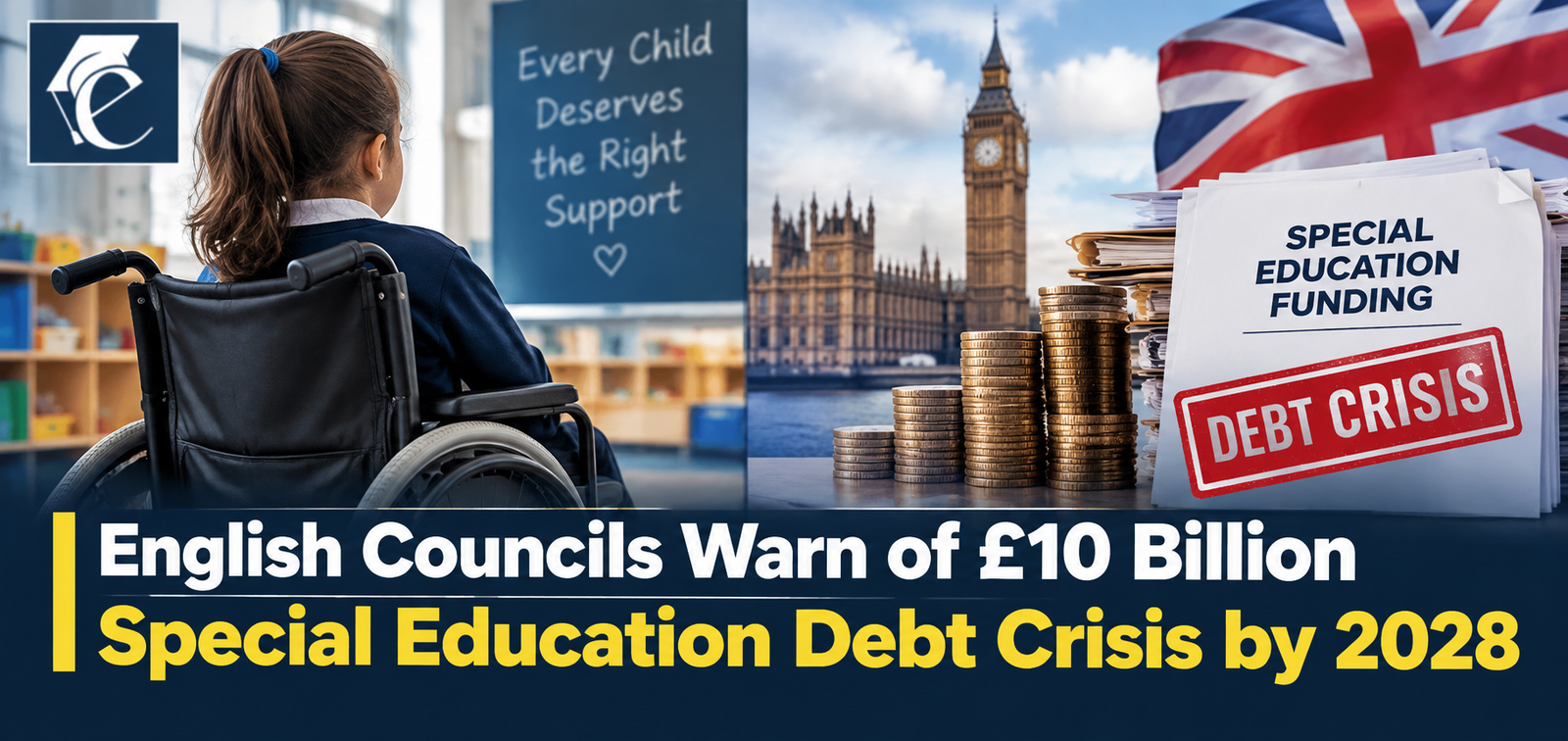
Local authorities across England are warning of a deepening financial crisis in special educational needs and disabilities (SEND) provision, with accumulated debts projected to reach £10 billion by 2028. The growing financial burden has raised concerns about the sustainability of public education services and the ability of councils to provide adequate support to children with additional learning needs.
According to a report published by The Guardian on October 12, the latest forecasts from the County Councils Network (CCN) suggest that councils could rebuild more than £5 billion in historic SEND debts by April 2027 and see the total double within the following year.
The SEND funding crisis in England has intensified as demand for specialist educational support continues to rise, putting pressure on local authority budgets already stretched by competing public service responsibilities.
Rising Demand for Special Educational Needs Support
One of the reasons why there has been an increase in public sector borrowing requirements is the increased demand for Education, Health and Care Plans (EHCPs).
These statutory plans set out how special educational needs that children and young people have will be met in cases where they suffer from conditions like autism, ADHD, speech impediments and learning disabilities.
According to reports, the spike in the number of such applications has been due to the fact that parents, as well as schools, want to ensure that their legal entitlements are protected from any changes the government wants to make to the SEND system.
An EHCP could oblige local authorities to provide educational support to a child through funding and provision of a place at a specialist school, among other things.
It means that the increasing number of applications has become a matter of concern for policy makers.
Councils Demand Government Guarantees
According to the County Councils Network, local authorities should not be blamed for their inability to deal with the debts incurred in the process of fulfilling statutory duties towards children with additional needs.
Speaking on behalf of the network, Linden Kemkaran, who serves as the network’s SEND representative, said that the debts were not due to the irresponsible use of money but the increased demands that had not been properly funded.
The County Councils Network is urging ministers to cover up any future SEND debts, stating that the failure to do so could lead to the collapse of some councils financially.
The current SEND funding crisis in England will also require some hard choices to be made concerning other public services since the education budgets will be strained.
Government Reforms Face Growing Pressure
The government has made recommendations to reform the SEND system which aim to provide adequate support to children without allowing the cost associated with it to rise at a rapid pace. This has led to some concerns being raised by parents and campaign groups regarding the effect that the reform might have on the legal protection of the rights of the child.
It has been suggested by some campaigners that the reforms that the government plans to introduce could limit the ability of the parents to obtain appropriate educational support for their children.
Some campaigners have also suggested that the uncertainty related to the introduction of these reforms has made the parents apply for EHCPs before any changes are introduced. It has been argued by the Department of Education that the reforms that it plans to introduce would make sure that the parents have a means through which they can appeal decisions regarding their children’s education.
Financial Pressures Threaten Public Services
Not only does the proposed debt raise issues in the field of education, but there are further complications that local government will have to navigate when it comes to balancing their spending on children with SEND along with fulfilling other statutory obligations, which become even more difficult with increasing running costs.
Provision such as specialist school places, transport and extra educational help can incur considerable ongoing costs. In cases where mainstream schools are not capable of providing for specific needs, then councils will need to opt for a more costly specialist provision.
The SEND funding crisis in England demonstrates the ramifications of an increasing gap between the demand for public services and the funding to provide those services.
Outlook for Special Education in England
The prediction of a total £10 billion of SEND arrears by 2028 would exert additional pressure on the government to develop a strategic approach to funding and reform. While tackling past arrears might alleviate the problem temporarily, the most recent figures show that problems could resurface again in the short run if underlying fiscal problems persist.
A sustainable solution is likely to go beyond the issue of debt relief and take into consideration factors such as better early intervention, greater capacity of mainstream schools, adequate specialist provisions, among others.
In conclusion, solving the SEND funding crisis in England would require the government to find a balance between managing their budget and protecting the educational rights of children and their families. The choices made in the coming months would affect both the finances of local authorities and the future of special education in England.