
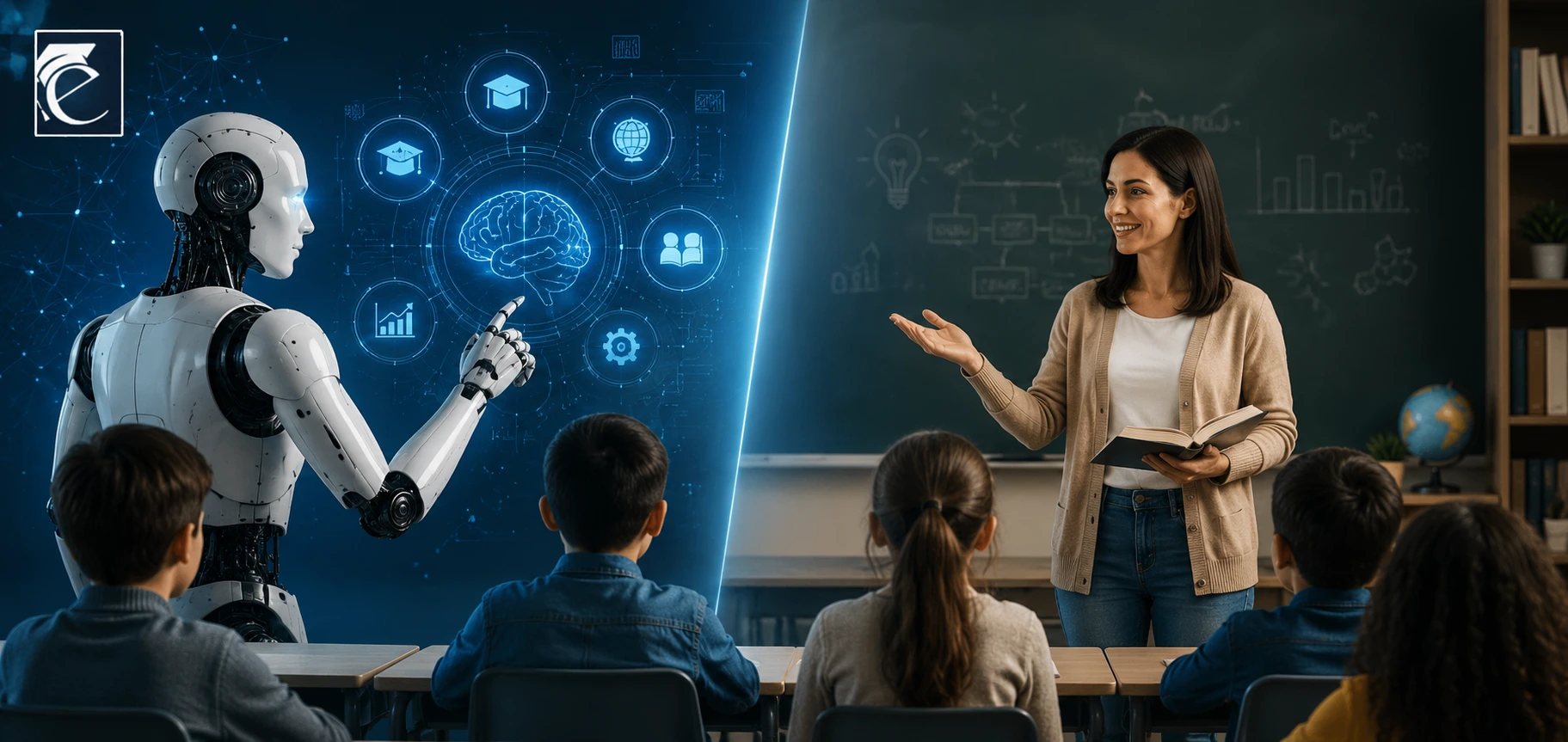
Artificial intelligence has become one of the most influential forces shaping modern education. From intelligent tutoring systems and automated grading to personalized learning platforms and virtual teaching assistants, AI is changing how students learn and how educators teach. As schools and universities continue integrating advanced technologies into classrooms, one question has moved from speculation to serious discussion: Can AI Replace Teachers?
The development of Best AI tools for teachers has led to both excitement and worry. Some think that AI will be able to make learning easier and more efficient; however, other people suggest that education goes way beyond just delivering the information. Learning involves such aspects as empathy, mentoring, creativity, emotional intelligence, and communication, and these skills are not available to technology. Instead of seeing AI and teachers as rivals, it would be more appropriate to consider how these two can work together. Knowing where the strengths of AI and human educators lie will allow creating effective classes for the future
The Rise of Artificial Intelligence in Education
In the past few years, there has been the implementation of AI-based solutions by educational establishments on an unparalleled scale. Through adaptive learning systems, specific areas of weakness can be detected, suggestions for customised lesson plans provided, and immediate feedback offered. Tasks which previously took up many hours now take just minutes, freeing up valuable teaching time.
The Future of AI in education 2026 points toward increasingly intelligent learning ecosystems where technology supports every stage of the educational journey. AI is expected to enhance curriculum planning, automate assessments, monitor student progress, identify at-risk learners, and deliver customized educational experiences based on individual strengths and weaknesses.
Instead of replacing classrooms, AI is steadily becoming an intelligent support system that complements traditional teaching methods.
What AI Does Better Than Humans
There are a number of ways in which artificial intelligence enhances educational efficiency.
Personalized Education
Each individual has unique ways of learning. Using artificial intelligence, educational platforms are able to examine each student’s way of learning, weaknesses, strengths and make personalized learning paths. Thus, each learner gets personalized content without adhering to a standardized educational program.
Instant Assessment
Artificial intelligence can analyze quizzes, assignments and objective tests in just a few seconds. Instant feedback helps students to correct any mistakes before they solidify.
24/7 Availability
Contrary to classrooms where education is offered only at certain times, with AI-powered tutors, it is possible to learn at any time of the day.
Automation of Administration
A lot of time is required by teachers to grade tests, keep attendance, plan lessons among other things. AI relieves teachers from all these duties.
What Human Teachers Do Better
Even with tremendous technology development, teaching is still very human.
Emotional Intelligence
Students need motivation more often than they need instructions. Teachers understand what the learners feel – their anxiety, frustration, lack of self-confidence, or other issues that can get in the way of education. They motivate and give support that no algorithm can do.
Critical Thinking and Discussion
Educating means posing good questions rather than providing the right answers. Human teachers facilitate discussion, curiosity, moral thinking, and various views by adjusting the discussions to the class atmosphere.
Careers in Education and Training
Educating means posing good questions rather than providing the right answers. Human teachers facilitate discussion, curiosity, moral thinking, and various views by adjusting the discussions to the class atmosphere.
Creativity and Inspiration
Teachers motivate students using stories, personal experience, jokes, passion, and random situations. The experience creates lifelong memories, which cannot be created automatically.
Values and Character Building
School teaches responsibility, cooperation, leadership, resilience, integrity, and respect. All these values are developed via relationships and real-life interactions.
AI as a Teaching Assistant Rather Than a Replacement
The strongest educational outcomes emerge when artificial intelligence enhances, rather than replaces, educators.
Teachers can use AI to:
- Generate lesson plans.
- Create quizzes and assessments.
- Produce differentiated learning materials.
- Translate educational content.
- Analyze classroom performance.
- Identify struggling learners.
- Recommend personalized interventions.
This allows teachers to dedicate more time to mentoring, classroom discussions, project-based learning, and student development.
Instead of replacing teachers, AI removes repetitive tasks that often contribute to burnout.
AI Cannot Replace Human Relationships
Everyone knows a teacher who has transformed their life at some point in time.
It could have been a teacher who motivated them despite failing.
It could have been a teacher who recognized their untapped potential.
It could have been someone who simply believed in them when no one else did.
None of this can be programmed.
Learning systems rely on relationships, trust, motivation, and mentorship. AI may pick up the patterns of learning but it definitely lacks the capability to empathize with fear, aspiration, compassion, and human feelings.
The class room is much more than just a medium for transferring knowledge.
The Role of Teachers Is Changing
In the future, the role of teachers will be to spend more time with their students.
Teachers will spend less time doing monotonous administrative tasks and more time working on higher-order thinking.
Educators are moving slowly from being sources of information to becoming learning facilitators and mentors.
As classrooms become increasingly digital, teachers will focus on:
- Personalized mentoring
- Critical thinking
- Project-based learning
- Ethical AI usage
- Collaborative learning
- Creativity
- Social and emotional development
Technology changes the tools of teaching, not its purpose.
AI Ethical Concerns in Education
Although AI brings huge possibilities, there are some important concerns as well.
Data Privacy
Educational AI programs accumulate a considerable amount of students’ data. Institutions need to guarantee that proper data handling procedures and privacy laws are complied with.
Bias in Algorithms
AI learns from existing databases. In case these databases are biased, education recommendations could harm certain categories of learners inadvertently.
Academic Integrity
Tools of generative AI are commonly used for plagiarism, cheating on homework and writing AI-generated essays. Educational institutions need to develop guidelines and foster responsible use of AI tools.
Digital Divide
Not every student has an equal opportunity to gain access to gadgets, internet and AI-based learning programs. It might exacerbate current education inequalities.
Such problems need to be addressed through cooperation between educators, policy-makers and developers of technologies.
The Best AI Tools Supporting Modern Classrooms
There are many intelligent teaching platforms that educators can currently leverage. The Best AI tools for teachers include intelligent assistants for lesson planning, adaptive assessment platforms, AI presentation generators, applications for language learning, automatic grading tools, and intelligent tutoring programs.
They save teachers time and increase engagement and efficiency. Yet, their success largely depends on how well educators incorporate these tools into valuable educational activities.
Educators are key to the success of technology.
AI vs Human Teachers in the Classroom
The discussion surrounding AI vs human teachers in the classroom often presents a false choice.
AI excels at:
- Speed
- Data analysis
- Personalization
- Automation
- Continuous availability
Human teachers excel at:
- Empathy
- Leadership
- Communication
- Inspiration
- Ethical judgment
- Emotional support
- Building classroom culture
Neither replaces the other.
Instead, they address different dimensions of education.
The future classroom is likely to feature both working together, allowing students to benefit from technological efficiency without sacrificing human connection.
Will AI Replace Educators Completely?
Perhaps the most frequently asked question today is: Will AI replace educators completely?
This could not be further from the truth.
AI can automate certain teaching tasks, make the preparation of lessons easier, personalize learning, and increase the efficiency of the education process. Nonetheless, education remains a very human task.
Students do not only learn knowledge but also socialize, work in groups, get motivated, inspired, and experience the world with other people.
The teacher helps the student to develop confidence, resilience, ethics, communication skills, leadership qualities, and emotional development.
These skills are developed through human-to-human interactions, which are impossible for any machine to recreate.
Preparing Teachers for an AI-Driven Future
Professional development has become more important than ever.
Teachers must understand:
- AI-assisted lesson planning
- Prompt engineering
- AI literacy
- Digital ethics
- Responsible technology integration
- Personalized learning strategies
- Data-informed instruction
Educational institutes need to make provision for training teachers continuously so that they can be assured about their capabilities of handling new technologies.
Schools which will perform well will not necessarily be those equipped with the best AI system.
Those will excel that have competent teachers who know how to apply AI effectively and for a specific reason.
Conclusion
Artificial intelligence is undoubtedly transforming education, but transformation should not be mistaken for replacement. AI can analyze data faster, personalize instruction more efficiently, and automate repetitive tasks with remarkable accuracy. Yet education extends beyond delivering information. It is about cultivating curiosity, building confidence, encouraging resilience, and preparing individuals to thrive in society.
The future belongs neither to machines nor to humans alone. It belongs to classrooms where intelligent technology empowers exceptional educators. When teachers are freed from administrative burdens and equipped with powerful AI tools, they can focus on what they do best: inspiring learners, nurturing potential, and creating meaningful educational experiences that last a lifetime.
The debate should no longer ask whether the Future of AI in education 2026 will include teachers or not. Instead, it should explore how teachers and artificial intelligence can work together to build a smarter, more inclusive, and more human-centered future of learning.
Also Read : -Education Excellence Magazine for more information
FAQ
1. Can AI Replace Teachers? Debate: Pros and Cons
AI has transformed education by offering personalized learning, instant feedback, and round-the-clock assistance. It helps students learn at their own pace and reduces teachers’ administrative workload. However, AI cannot replace the empathy, emotional intelligence, creativity, and mentorship that human teachers provide. While AI is a valuable educational tool, it works best alongside teachers rather than replacing them.
2. Should AI Replace Teachers? Debate Points
Arguments Supporting AI
- Provides personalized learning experiences.
- Available 24/7 for student support.
- Automates grading and administrative tasks.
- Offers quick access to educational resources.
- Reduces repetitive teaching work.
Arguments Against AI
- Cannot understand students’ emotions.
- Lacks creativity and critical human judgment.
- Cannot build meaningful teacher-student relationships.
- May increase inequality where technology is limited.
- Raises concerns about privacy and data security.
3. Can AI Replace Teachers? (Essay)
Artificial Intelligence is changing education by making learning more personalized and accessible. AI-powered platforms can recommend lessons, assess student performance, and provide immediate feedback. However, teaching involves much more than delivering information. Teachers inspire students, encourage creativity, build confidence, and support emotional development. They adapt lessons based on classroom dynamics and individual needs in ways AI cannot fully replicate. Therefore, AI should be viewed as a powerful assistant rather than a replacement for teachers. The future of education lies in combining AI technology with human expertise to create better learning experiences.
4. Can AI Replace Teachers in the Future?
AI is expected to become an essential part of education, but it is unlikely to replace teachers completely. Instead, teachers will increasingly use AI to automate routine tasks, personalize instruction, and improve classroom engagement. Human educators will continue to play a vital role in mentoring, motivating, and supporting students’ social and emotional growth.
5. AI vs Teachers Debate
| AI | Human Teachers |
|---|---|
| Available 24/7 | Limited by schedule |
| Provides instant feedback | Offers personalized emotional support |
| Excellent at data analysis | Understands student emotions |
| Automates repetitive tasks | Encourages creativity and critical thinking |
| Consistent performance | Adapts to classroom situations |
| Cannot build relationships | Builds trust and motivation |
Winner: AI and teachers together create the most effective learning environment.
6. Can AI Replace Teachers? (200-Word Essay)
Artificial Intelligence has become an important part of modern education. AI-powered tools can personalize lessons, answer student questions instantly, and provide continuous learning support. These technologies help teachers save time by automating grading, lesson planning, and administrative work.
Despite these advantages, AI cannot fully replace teachers. Education is not only about sharing knowledge but also about inspiring students, developing critical thinking, encouraging teamwork, and supporting emotional well-being. Teachers understand students’ individual personalities, recognize when someone is struggling, and adjust their teaching methods accordingly. They also serve as mentors and role models who help students build confidence and life skills.
AI lacks empathy, moral judgment, and the ability to create meaningful human connections. It cannot replace classroom discussions, collaborative learning, or the encouragement that teachers provide during challenging moments.
The future of education will likely combine AI technology with human teaching. AI can handle repetitive tasks and provide personalized learning resources, while teachers focus on creativity, communication, mentorship, and student development. Rather than replacing teachers, AI will empower them to become more effective educators and improve learning outcomes for students worldwide.
7. Should AI Replace Teachers in the Classroom?
No. AI should support teachers instead of replacing them. Teachers provide emotional guidance, classroom management, motivation, and real-world experiences that AI cannot replicate. The most effective classrooms will use AI as a teaching assistant while teachers lead instruction and student engagement.
8. Five Reasons Why Robots Can't Replace Teachers
- Teachers understand students’ emotions and mental well-being.
- They inspire creativity, curiosity, and innovation.
- Teachers build trust and meaningful relationships.
- They adapt lessons based on classroom interactions.
- They teach ethics, communication, teamwork, and leadership skills that extend beyond textbooks.
9. Will Generative AI Replace Teachers in Higher Education? (Teacher and Student Perceptions)
Current research suggests that most teachers and students do not believe generative AI will replace university instructors entirely. Instead, they view AI as a tool that enhances teaching by assisting with content creation, personalized learning, research support, and administrative tasks. Many also express concerns about academic integrity, overreliance on AI, bias, privacy, and reduced critical thinking. The overall consensus is that generative AI will reshape higher education by changing how teachers work, but human educators will remain essential for mentoring, critical discussion, ethical guidance, and student engagement.