
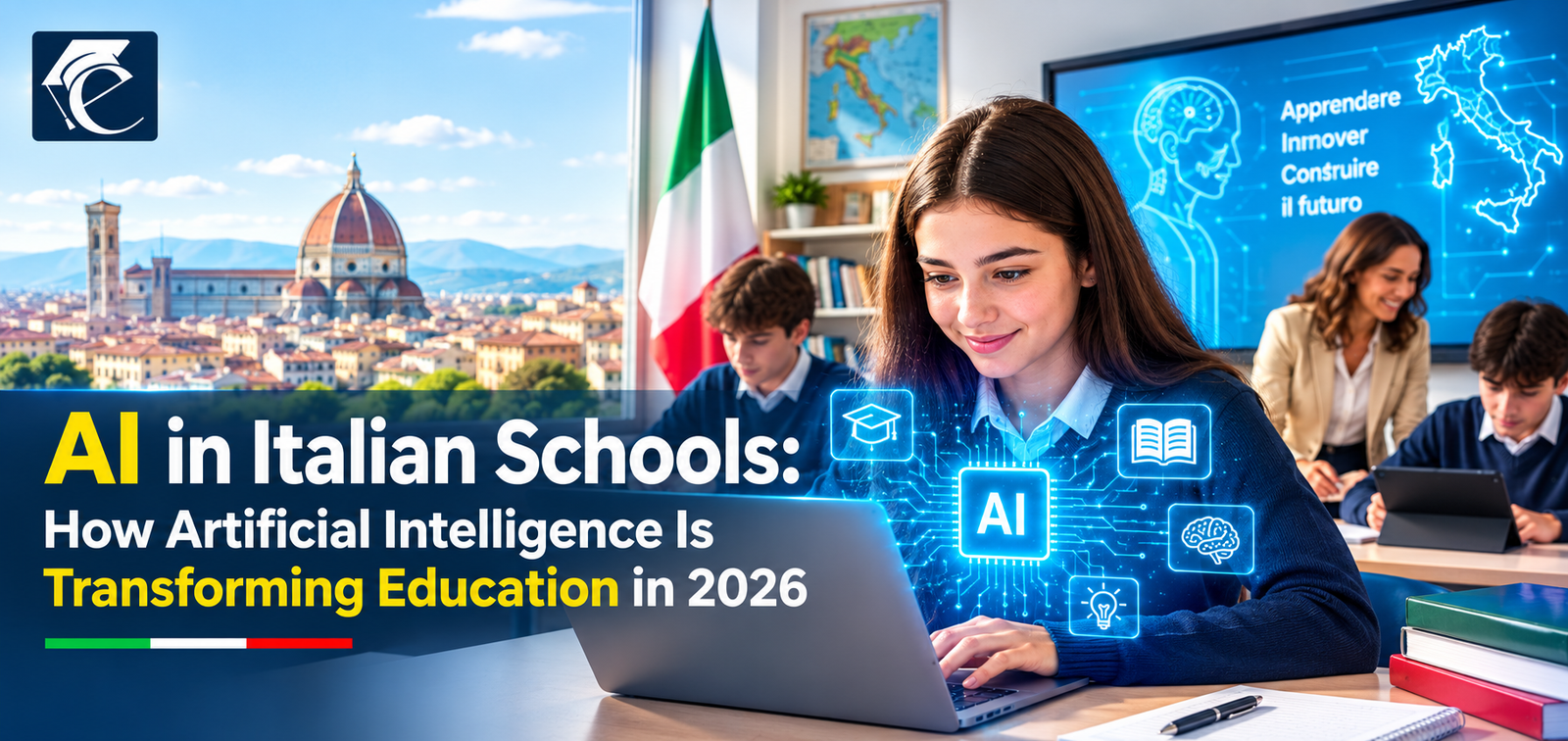
Education has always evolved alongside society, adapting to new technologies, changing workforce demands, and emerging learning methodologies. In recent years, artificial intelligence has become one of the most influential innovations shaping classrooms around the world. Italy is no exception. Schools across the country are exploring intelligent technologies that enhance teaching, improve student engagement, and create more personalized learning experiences.
The growing adoption of AI in Education Italy reflects a broader effort to modernize educational systems and prepare students for an increasingly digital future. Rather than replacing traditional teaching methods, artificial intelligence is helping educators create more dynamic and responsive learning environments that cater to the needs of modern learners.
As educational institutions continue to embrace innovation, artificial intelligence is becoming a valuable partner in improving outcomes for students, teachers, and administrators alike.
Personalized Learning for Every Student
The ability to personalize learning process is one of the most essential benefits of artificial intelligence. People have different capabilities, but regular teaching system implies that educators need to present the same lecture to all students at once. In this way, it is rather hard for them to consider the individual characteristics of learners.
Specialized software is able to evaluate learners’ performance and offer a personalized study program. It can detect what additional actions need to be performed by a certain student in order to improve his or her knowledge. The best students will get the opportunity to learn something new, and the weak ones will get additional support.
Such a personalized learning approach is one of the best proofs of How AI is transforming education in Italian schools in 2026.
Empowering Teachers Through Intelligent Support
Despite all the developments in education, teachers still play a very important role. However, their job involves much more than just teaching in classrooms; they have many administrative tasks, need to grade assignments, prepare lessons and monitor student progress.
Advances in the field of AI in the Classroom Italy assist teachers in easing their work load. With automated grading, monitoring of attendance and intelligent reporting, teachers will be able to devote less time to administration and focus more on students’ development.
Artificial intelligence may also help teachers get insight into the academic performance of their students. With analysis of learning and test results, teachers will be able to notice problems earlier and deal with them before the situation worsens.
Enhancing Student Engagement
Engagement is vital in the modern world when students are used to interactive technology. There is the need for educators to come up with new ways of delivering their content since young students are already familiar with digital technology.
The use of artificial intelligence ensures that there are solutions in the form of adaptive learning, virtual tutor programs, and gamified learning platforms. Students get immediate feedback, customized recommendations, and are able to proceed at their pace.
Learning that is driven by artificial intelligence engages students while making difficult topics easier to understand. Such technologies play a big role in ensuring that the learning process involves students being actively engaged rather than passively receiving information.
Engagement plays a big role in ensuring that educators adopt intelligent educational technologies.
Supporting Inclusion and Accessibility
The modern approach to education includes an effort to offer every learner possible opportunities, regardless of his or her background or special problems. Artificial intelligence is becoming an increasingly important aspect of such an inclusive education system.
Tools for speech recognition, language translation, and specialized learning platforms facilitate the process of overcoming obstacles that would restrict learners’ ability to study. People with special disabilities will have easier access to the material, and students who speak different languages will be able to understand the learning material better.
Such technologies help create a more equal educational environment, making sure that the learning opportunities are available to a larger number of people.
Smarter Decisions Through Data
The amount of information that educational establishments accumulate pertaining to student academic results, attendance, involvement, and other aspects of progress is considerable. The application of artificial intelligence helps to process all the data and utilize it for decision making.
The growing importance of AI in Education Italy assists in recognizing the tendencies, managing resources effectively, and applying certain strategies to achieve better educational results. Predictive analytics allows to foresee any difficulties that may arise and take necessary actions to assist students in their learning.
Applying all the collected data to decision-making processes in an efficient way helps to improve the work of teachers and the overall school performance.
Preparing Students for Future Careers
Future work will be characterized by technology, automation, and digitalization. This is why it is imperative for schools to ensure that students are equipped with the necessary skills amid rapid changes in the economy.
AI has made it possible for teachers to educate students about issues like data analytics, machine learning, programming, and digitalization at much earlier educational levels. It gives students early exposure to technologies that are having increasing effects on various industries.
How AI is transforming education in Italian schools in 2026 Understanding how AI is revolutionizing education in Italian schools in 2026 also entails understanding the fact that it prepares students for future endeavors. Through critical thinking, problem solving, and technological skills, schools are making sure that their students are future-ready.
Balancing Innovation with Responsibility
Although AI has many advantages, proper application is crucial. There are certain things that educational establishments need to take into account concerning such issues as privacy, security, transparency, and ethical use of technology.
The growth of AI in the Classroom Italy entails the need for policies that will guarantee the protection of information of students and the absence of discrimination and liability at the same time. Teachers need to be properly trained in order to fully leverage the advantages of AI technologies without losing the essence of interpersonal communication.
This is very important because technology should improve education, not substitute it.
Looking Ahead
Today, artificial intelligence is becoming a part of our reality and is starting to play a significant role in many aspects of our lives. In the sphere of education, it provides personalized learning, supports teachers, provides accessibility of learning materials, and makes decision-making process based on the use of the data collected.
There is no doubt that schools in Italy continue investing in innovations, and artificial intelligence is expected to become a driving factor in the educational process in the near future. As a result, students will have an opportunity to learn according to their educational needs, and teachers will receive new instruments for their work.
It means that today the world of education undergoes some changes that are connected not only with the use of the technology but also with the creation of a new environment for the learners.
FAQ
1. How is AI being used in Italian schools in 2026?
AI is being used in Italian schools to support personalized learning, assist teachers, create educational content, provide tutoring support, and help students develop digital and AI literacy.
2. What are the benefits of AI in Italian schools?
AI can personalize learning, provide faster feedback, support students with different learning needs, reduce some administrative tasks, and help teachers identify areas where students may need additional support.
3. Are Italian schools using AI to teach students?
Yes. Schools can use AI tools as part of lessons to help students research, practice skills, understand complex topics, and develop responsible technology-use skills.
4. Can AI replace teachers in Italian schools?
No. AI is generally viewed as a support tool rather than a replacement for teachers. Teachers remain important for instruction, assessment, mentoring, classroom management, and human interaction.
5. What challenges does AI create for Italian schools?
Key challenges include academic integrity, student privacy, inaccurate AI-generated information, unequal access to technology, teacher training, and ensuring that students continue to develop independent and critical-thinking skills.
6. How can AI improve personalized learning in Italy?
AI systems can analyze learning patterns and provide customized exercises, explanations, and feedback based on individual student needs and progress.
7. How does AI affect students’ critical-thinking skills?
AI can support critical thinking when students are encouraged to verify information, compare sources, question AI-generated answers, and explain their own reasoning rather than simply copying AI outputs.
8. Do Italian schools have rules for students using AI?
Schools may establish policies governing how students can use AI for assignments, research, and learning. These rules can vary by institution and should align with applicable Italian and European requirements.
9. What role does AI literacy play in Italian education?
AI literacy helps students understand how artificial intelligence works, recognize its limitations, evaluate AI-generated information, protect personal data, and use AI responsibly.
10. What is the future of AI in Italian schools?
The future is likely to involve greater use of AI-assisted learning and teaching tools, alongside stronger emphasis on teacher training, responsible use, privacy, digital skills, and human-centered education.