
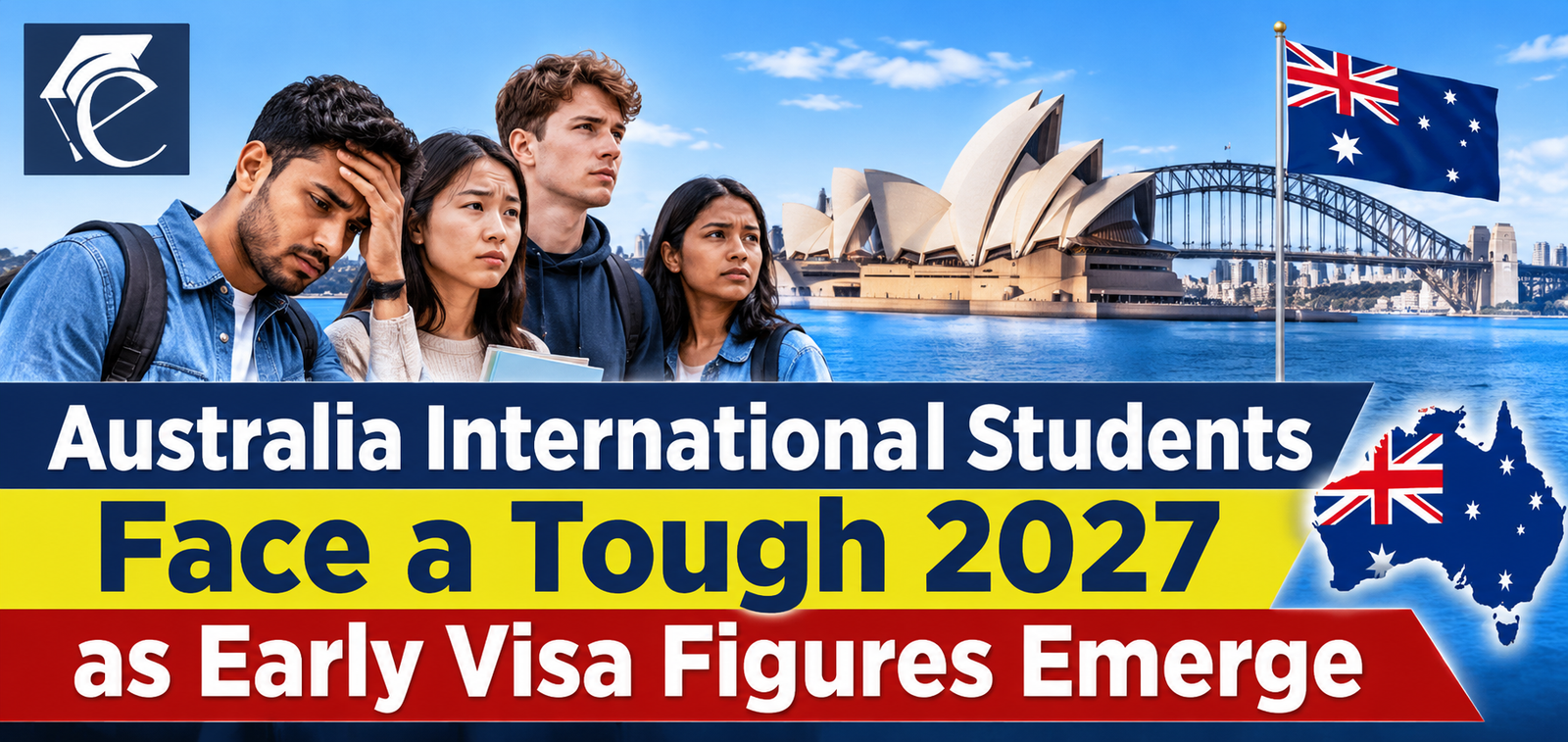
The outlook for Australia international students in 2027 looks difficult, according to early government data. The figures, reported by The PIE News on November 26, show a slow start to recruitment while worries about visa refusals continue to build across the sector.
The Early Numbers
At the time of writing in late November, there were 44,900 international student visa holders among aspiring international students, in comparison to the 2027 target level of 295,000 new commencements. This represents an approximate 15% of the target level based on the data provided in the report by the Department of Education. The government stated in July that the number of 295,000 will remain the same.
It should be noted that this planning level is not an absolute enrollment limit. The mechanism of its work is based on a visa priority approach.
How 2026 Played Out
The year now ending offers a useful comparison. Government data from November 6 showed the sector had reached 83 percent of its 2026 allocation. The split between providers was striking: public universities stood at just 67 percent, while other higher education providers had reached 150 percent.
Phil Honeywood, chief executive of the International Education Association of Australia, said the sector will likely finish 2026 at around 250,000 commencements, well short of the 295,000 level many had hoped for. He suggested that outcome would give the government a convenient headline to counter criticism from the Opposition and One Nation over overseas student numbers.
How the Priority System Works
Under Ministerial Direction 115, offshore student visa applications receive lower processing priority once a provider reaches 80 percent of its indicative allocation. A third tier applies at 115 percent. The effect is to slow applications from providers that recruit heavily.
The early 2027 picture already shows divisions. Public universities have used almost 19 percent of their allocations and all remain at the top priority level. Eight other higher education providers have already dropped to the second tier, and three are listed at the third. For Australia international students planning to start next year, the provider they choose may influence how quickly their visa is handled.
Transfers and Private Providers
The Honeywood forecast is for fewer onshore transfers in 2027 on the basis of a planned transfer visa to come into effect from July 2027. He said that onshore transfers had been important in keeping private higher education providers viable. The private higher education providers claim that there has been an unfair application of the planning level methodology to their offshore recruitment activities.
Visa Refusal Rates Pose a Much Larger Problem
Apart from the planning level issues, the report highlights the wider concern about visa refusal rates in source countries. The government has recently held consultations on proposed student visa settings. Honeywood stated that all providers are extremely worried about the drastic decline in visa approvals irrespective of any issues around the planning level methodology.
Honeywood agreed that the government claims that the matter is being addressed, for instance through the introduction of changes in relation to financial capability. However, his concern was that these types of reforms would take considerable time to introduce. He ended by saying that with very little political support, 2027 will be another incredibly difficult year for the sector.
What to Watch Next
Several developments will show whether the pessimism is justified:
- How quickly active visa numbers grow through the peak recruitment months.
- Whether more providers slip into the second and third priority tiers.
- What changes, if any, come out of the student visa consultation.
- How the new transfer visa affects private providers from July.
Bottom Line
The early data gives little reason for optimism. With only a fraction of the 2027 planning level secured, uneven results across provider types, and refusal rates still a concern, the prospects for Australia international students and the institutions recruiting them depend heavily on policy decisions yet to come.