
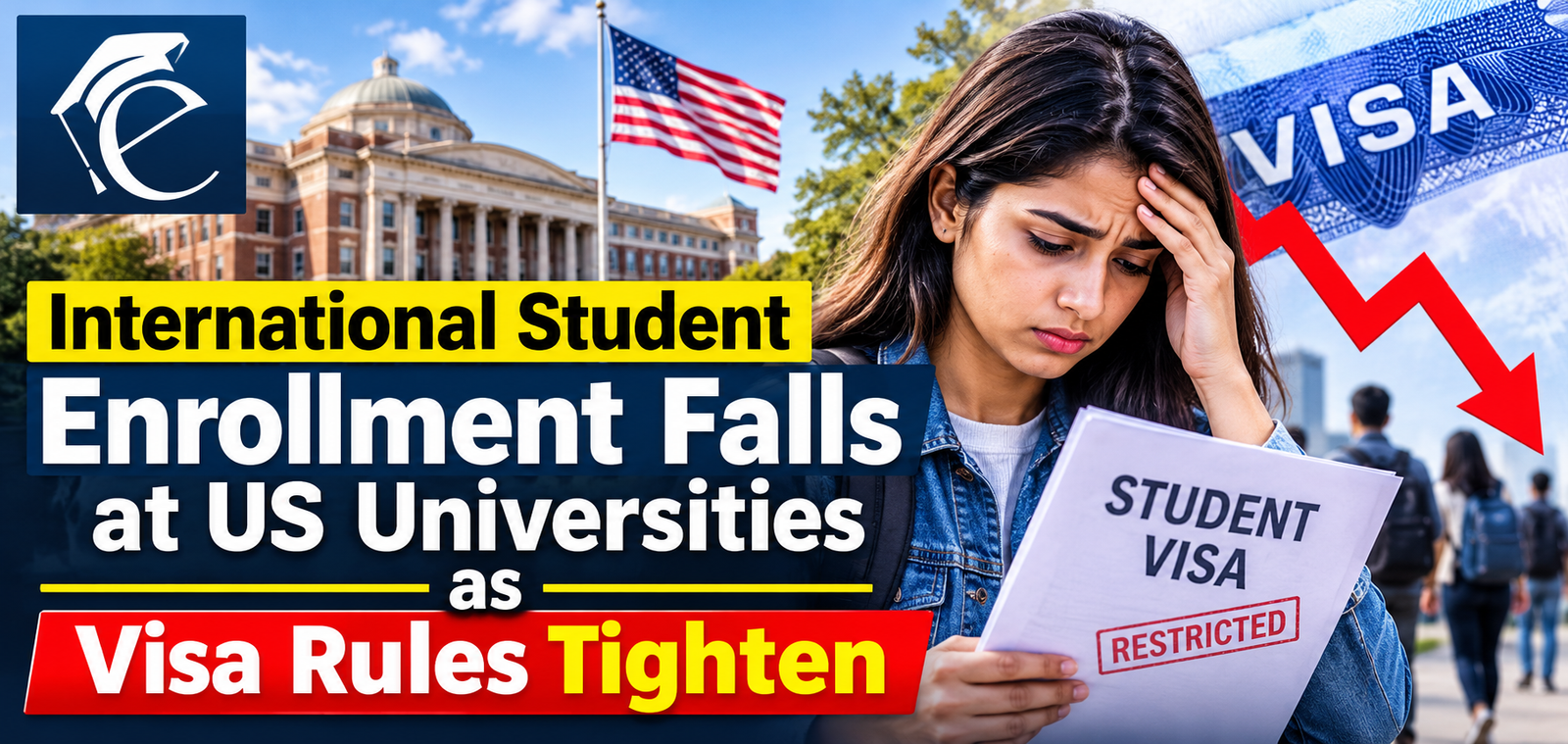
International student enrollment at American universities slipped again this fall, according to a survey the Institute of International Education (IIE) published Monday. Total numbers are down 9% from last year, and the count of students arriving in the U.S. for the first time dropped 15%, the Associated Press reported. The figures land as the Trump administration pushes tougher immigration policies and reworks parts of higher education.
What the survey found
The greatest decrease, however, was seen in the postgraduate sector. International student enrollment in the postgraduate sector dropped by 15% in contrast to the 3% drop in undergraduates. India, which contributes the highest number of students to the USA, also recorded a drop in numbers.
Even the number of those working after completing their education dropped. The number of people using the Optional Practical Training program (OPT), which allows international students to get jobs temporarily in America, decreased by 6%. These decreases were despite the fact that the proposal of charging an additional fee of $70,000 for each student by the Department of Homeland Security has not been decided upon yet. Last year, OPT compensated for the drops in enrollment of international students.
Why students are looking elsewhere
The reasons for this were known clearly by the schools. Out of the institutions polled, 88% pointed out that it was due to problems in the visa process, while 70% complained about travel restrictions. A regulation finalized this summer states that stays will be limited to four years without any permission from the federal government, but a judge has halted the regulation. The DHS Secretary, Markwayne Mullin, states that these reforms plug loopholes related to extended study periods.
Political reasons make up only one part of the equation, as explained by IIE’s Mirka Martel. Tuition increases, along with increasing competition from other nations are important factors in the number of international students. “Uncertainty regarding federal research funding is another worry,” explained Fanta Aw, who is the CEO of NAFSA, adding that some prospective students prefer China. “In addition, it’s no longer safe to send your children to the United States.” That statement was made by Veena Dubal from AAUP.
Budgets under pressure
International students contribute financially to colleges, and when their numbers decrease, this affects college finances in a direct way. According to NAFSA and JB International, international students’ contribution to the U.S. economy has decreased by $2.4 billion due to the pandemic. The experience of Cleveland State University illustrates how drastic such a decrease can be; while it had 1,542 international students in fall 2025, this fall it only had 828 of them, which is a 46% decrease in two years, with less than 50 new international students joining them. Provost Nigamanth Sridhar estimates the financial loss at $2 million to $4 million.
What could come next
As OPT choices shrink, 95% of educational institutions will require international students to move to other nations. Sarah Spreitzer of the American Council on Education does not foresee any significant immigration legislation during Trump’s presidency. She says that the legislative branch may prevent any sudden policy changes following the mid-term elections.
The bottom line
The U.S. remains the world’s top destination for foreign students, but the data points to strain from several directions at once: visas, work options, costs and global competition. Universities will watch whether international student enrollment stabilizes when full figures arrive next year. Anyone planning to study in the U.S. should track the OPT rule and court rulings closely, since both could reshape international student enrollment again.