
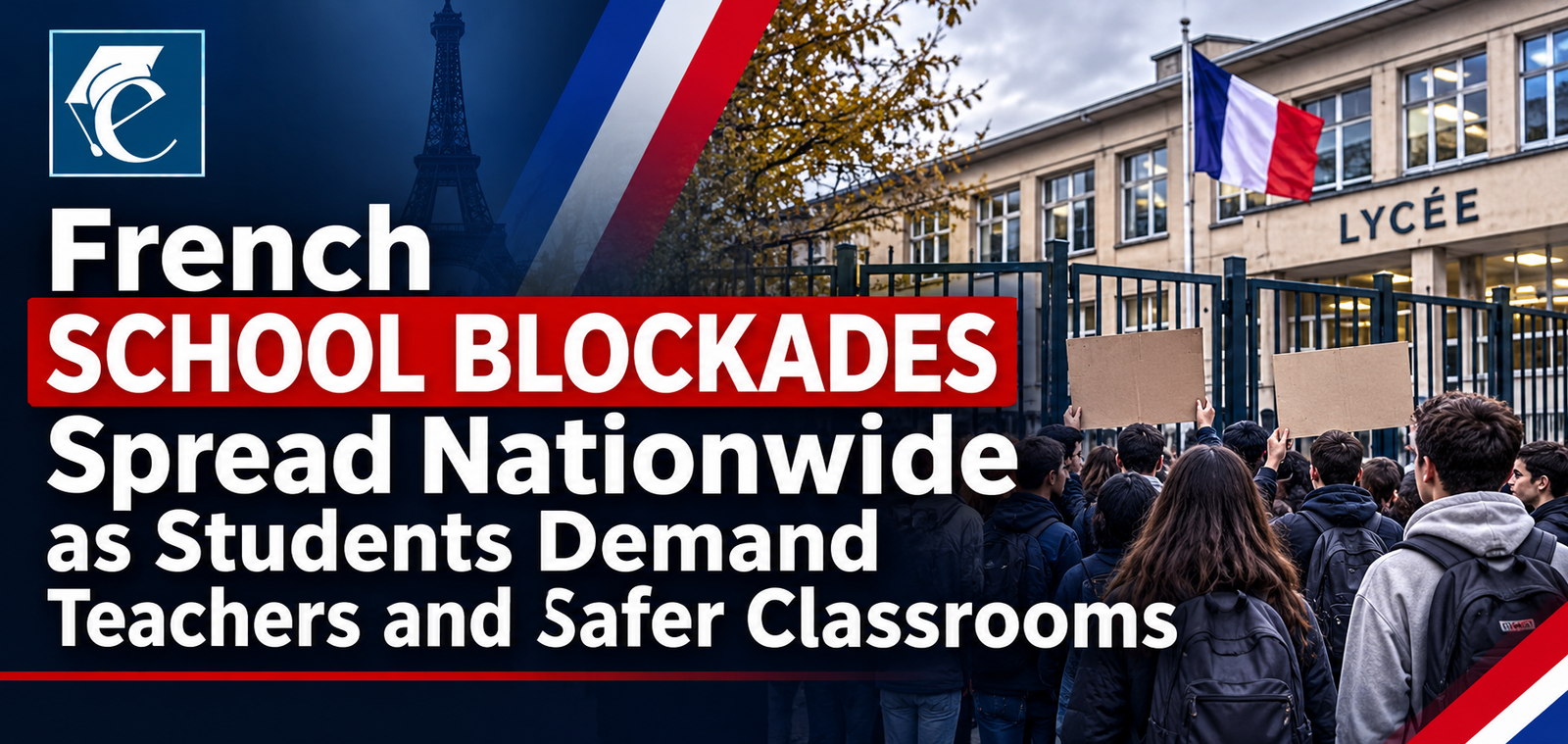
Students in France have spent weeks shutting school gates, and the movement is still going as classes resume after the Toussaint break on November 2. The French school blockades began as a local complaint about missing teachers. They have since grown into a national protest involving high schoolers, university students, teachers and unions.
How it started
The flashpoint was the Antoine de Saint-Exupéry lycée in Créteil, near Paris. Teachers there went on strike on September 17 over a staffing gap of about ten unfilled posts, and students joined them the next day. One former pupil described starting the year with no maths teacher at all.
The idea caught on quickly. By September 28, classes were disrupted at roughly 180 schools, and by October 1 the French school blockades had reached universities too.
What the protesters want
The demands are practical: more teachers and better buildings. Students point to overcrowded classrooms, missed lessons and decaying facilities. Some reports also link the anger to stifling, poorly ventilated rooms during this summer’s heatwaves.
The government’s emergency answer was an offer of 3,000 substitute teachers. Student and teacher unions rejected it as too small and called a nationwide day of action instead. That rejection has kept the French school blockades alive.
Clashes and injuries
The protests haven’t stayed peaceful. On October 13, Interior Minister Laurent Nuñez told the Senate that more than 200 high school students, nearly 900 police officers and gendarmes, and 147 Education Ministry staff had been injured since the movement began. French media have also reported fires at lycées in Nantes and Bordeaux.
In Paris on October 17, the Gilets Jaunes (Yellow Vests) joined students for a weekend of action. Photographers recorded clashes with police, burning vehicles and looted shops. Some US outlets have cited more than 700 secondary schools disrupted and about 5,000 arrests, but counts vary by source and should be treated with caution.
Political fallout
The politics are sharp. According to Public Sénat, Matignon blames La France insoumise and other far-left groups for driving the unrest, while the left and the education unions back the students. Student unions say the cause is underfunding, not party politics. Paris alone saw about 56,000 people take to the streets, though that count includes teachers, college students and other education workers as well as pupils.
For President Emmanuel Macron’s government, the French school blockades are now both a public order problem and an argument about school funding.
What to watch next
The return from the Toussaint holidays is the first real test of whether the movement keeps its momentum. If unions press ahead with fresh national action days, the French school blockades could return to hundreds of campuses. Whether ministers go beyond the substitute-teacher offer will probably decide how long this lasts. Until then, parents, students and visitors in French cities should expect further disruption.