
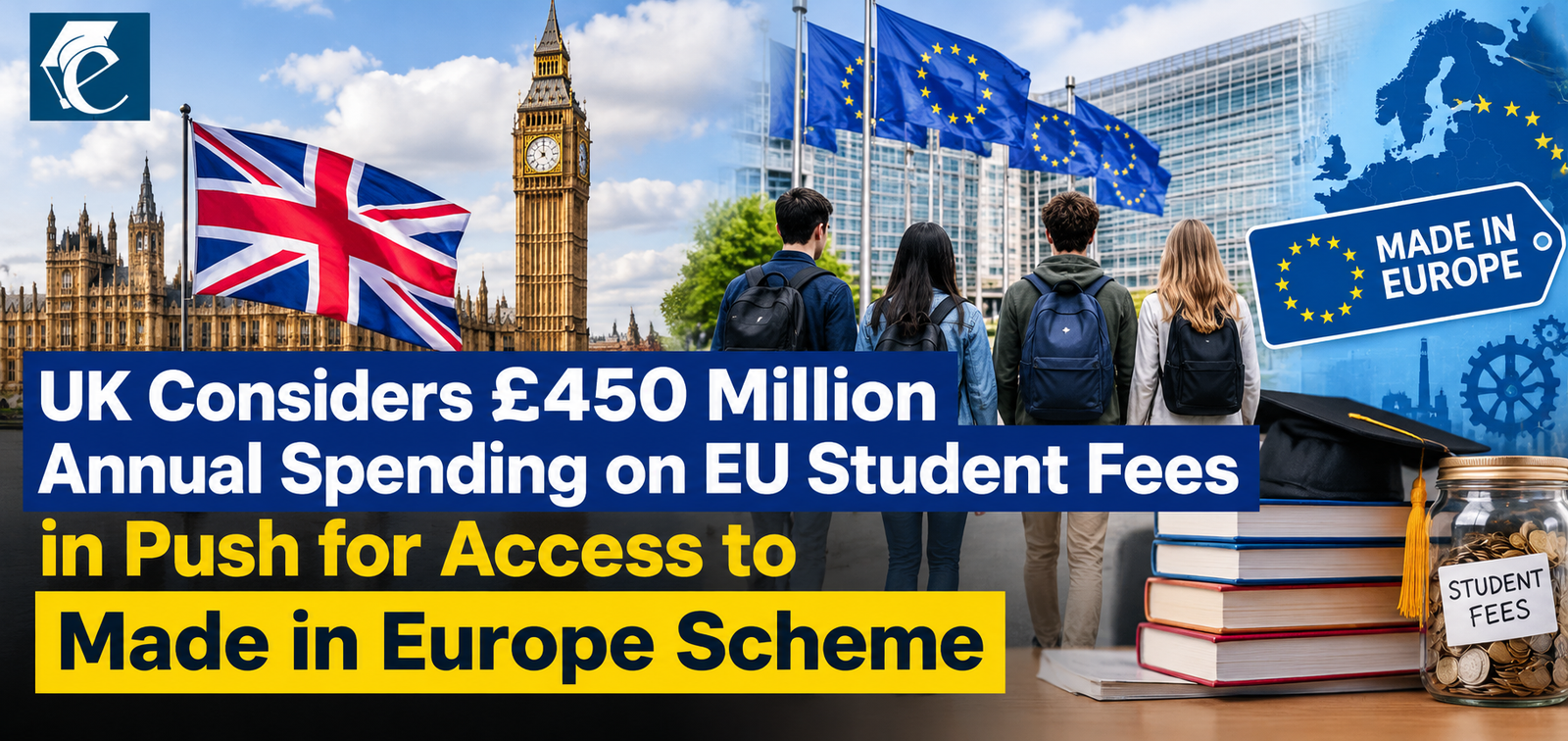
Ministers are weighing a hefty price tag to win favour in Brussels: as much as £450 million a year to bring down EU student fees, according to government sources cited by The Guardian on 1 November. The idea is tied to a bigger prize. Britain wants its manufacturers included in the EU’s planned “Made in Europe” industrial scheme, and the talks are building toward a UK-EU summit on 20 November.
What’s on the table
Under the plan, students from EU countries would pay the same tuition as home students instead of international rates. The gap is huge. Some UK universities charge international students upwards of £60,000 a year, while home students pay a little over £9,000. Cutting EU student fees to the domestic level would be a big change for anyone in Europe thinking about a British degree.
Universities would lose income, though, so the government is looking at making up the difference. Treasury officials have reportedly run several scenarios, and the £450 million figure is the most expensive one. It assumes strong demand and the deepest possible cuts to EU student fees, so the real bill could come in far lower. Mark Corver of Campus Numerics has estimated the sector would lose roughly £140 million in year one and about £400 million across a standard three-year degree.
What Britain wants in return
Ministers aren’t offering this for nothing. They want UK manufacturers treated like European firms under the Made in Europe programme, which is linked to the EU’s Industrial Accelerator Act and aims to favour European producers in public procurement and industrial investment. As things stand, Britain falls outside the definition of a “European” business, which worries both the government and the car industry.
France had been a major obstacle, but it has reportedly softened. Paris might accept British manufacturers if the UK agrees to dynamically align some trade measures with EU rules. That would be awkward for Britain’s independent trade policy, especially on tariffs for Chinese electric vehicles, where London and Brussels take different lines.
The summit
Prime Minister Andy Burnham is expected to use the 20 November meeting to make the case for closer ties with Europe. Progress has reportedly been made elsewhere, on emissions trading, agricultural trade and a youth mobility scheme that would let up to 80,000 young Europeans live, work and study in Britain (the EU originally wanted a higher number). Talks also cover UK access to security databases, including Eurodac, which holds asylum seekers’ fingerprints, and the Schengen Information System II, which tracks missing people, fugitives and stolen property.
The politics
Not everyone will be comfortable with the spending. British graduates are still unhappy about loan repayments and the cost of higher education, and spending public money on EU student fees may be a hard sell. Former Chancellor Rachel Reeves has backed closer economic links with Europe, arguing geography and economics make it sensible, but she’s also stressed that the public needs to see real benefits.
With the summit approaching, EU student fees and industrial access remain the two biggest unresolved questions.