
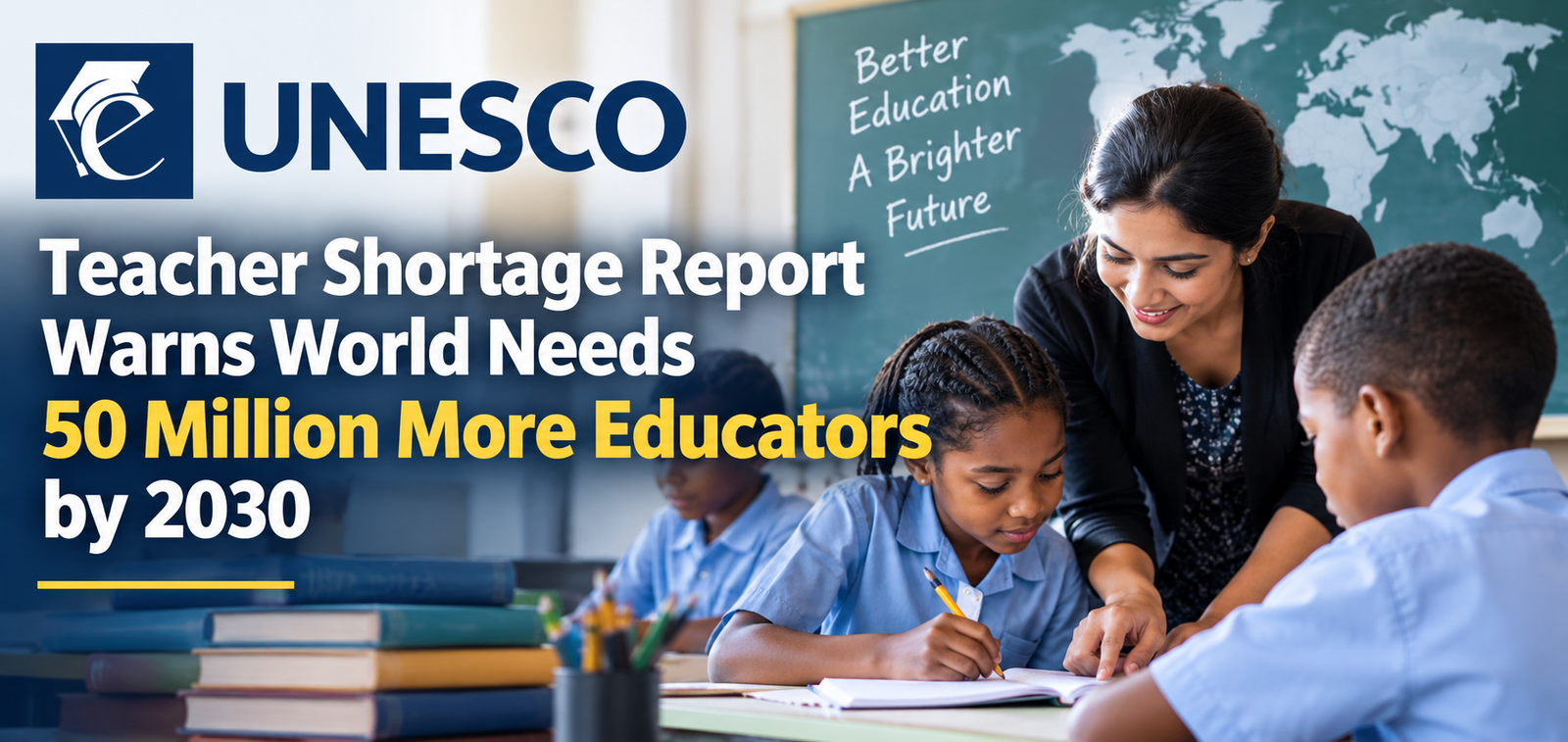
The latest UNESCO teacher shortage report has revealed a pressing challenge facing education systems worldwide: the need for an additional 50 million teachers by 2030. Released on World Teachers’ Day, the report highlights a growing gap between the number of educators currently in classrooms and the workforce required to ensure quality education for all learners.
According to UNESCO, the world currently has approximately 107 million teachers. However, achieving universal access to pre-primary, primary, and secondary education will require a substantial increase in teacher recruitment and retention efforts over the coming years. The findings underscore the urgent need for governments and educational institutions to prioritize investments in the teaching profession.
Why the Shortage Is Increasing
An important finding of the UNESCO teacher shortage report is that teacher turnover has become one of the main hurdles in achieving future educational objectives. Over 50% of the extra teachers needed by 2030 will be needed merely to substitute for teachers who quit the profession rather than fill vacant jobs.
There are a number of factors that cause teachers to quit the teaching profession, some of which include increased workload, restricted career advancement, bureaucracy, and remuneration issues. The above-mentioned factors make it hard for most educational systems to retain their experienced staff members and recruit new teachers.
Teacher shortages are not confined to developing nations. Recruitment and retention challenges are also being faced in various other regions, among them Europe, North America, Africa, and Asia.
Heavy Workloads Continue to Affect Educators
The UNESCO teacher shortage report also helps us understand the realities of the teaching profession. Apart from delivering instruction in the classroom, teachers have to spend considerable time in lesson preparation, marking assignments, doing administrative work, and developing students.
In most countries, the demands for teachers include more than just teaching inside classrooms. The issue of remuneration and lack of recognition of the profession are other problems that have led to fewer people willing to join the teaching profession in some regions.
According to education experts, if something is not done about these challenges, there may be a huge gap between teacher supply and demand in the coming years.
Impact on Students and Learning Outcomes
As mentioned in the UNESCO teacher shortage report, the repercussions are more than just the problem of inadequate supply of personnel. Teacher shortages can cause classroom overcrowding, less attention given to each student, and added stress for the teaching faculty.
There are already problems with education systems being able to achieve the appropriate teacher-to-pupil ratio. This is especially problematic in areas where there is rapid growth due to increasing pupil population.
According to scholars, there are many ways through which teacher shortages impact learning, education, and economic development. With a lack of qualified personnel in the classrooms, it becomes difficult to develop the required skills among pupils.
UNESCO Calls for Stronger Policy Action
In an attempt to solve the challenges identified in the UNESCO teacher shortage report, the organization is calling for the improvement of government policies that will favor recruitment and retention of teachers. These range from improving salary packages, working conditions, professional development programs, and career advancement opportunities.
The reduction of excessive paperwork in order to allow teachers to concentrate on teaching is also part of the recommendations provided in the report. Involvement of teachers in the process of formulating education policies is also important.
According to UNESCO, this is crucial to enhance the attractiveness of the profession and therefore ensure future supply of teachers.
Looking Ahead
The findings of the UNESCO teacher shortage report indicate that teachers will continue to be the backbone of all successful education systems. As countries seek to achieve their education objectives by 2030, it is clear that there is a need to overcome workforce problems if the goal of making quality education accessible to all learners is to be realized.
Considering that there is a need for millions more teachers in the coming years, the report makes it clear how essential it is to coordinate efforts on the part of the government, institutions, and policymakers. Investing in teachers is investing not just in education but in the future development of societies around the world.