
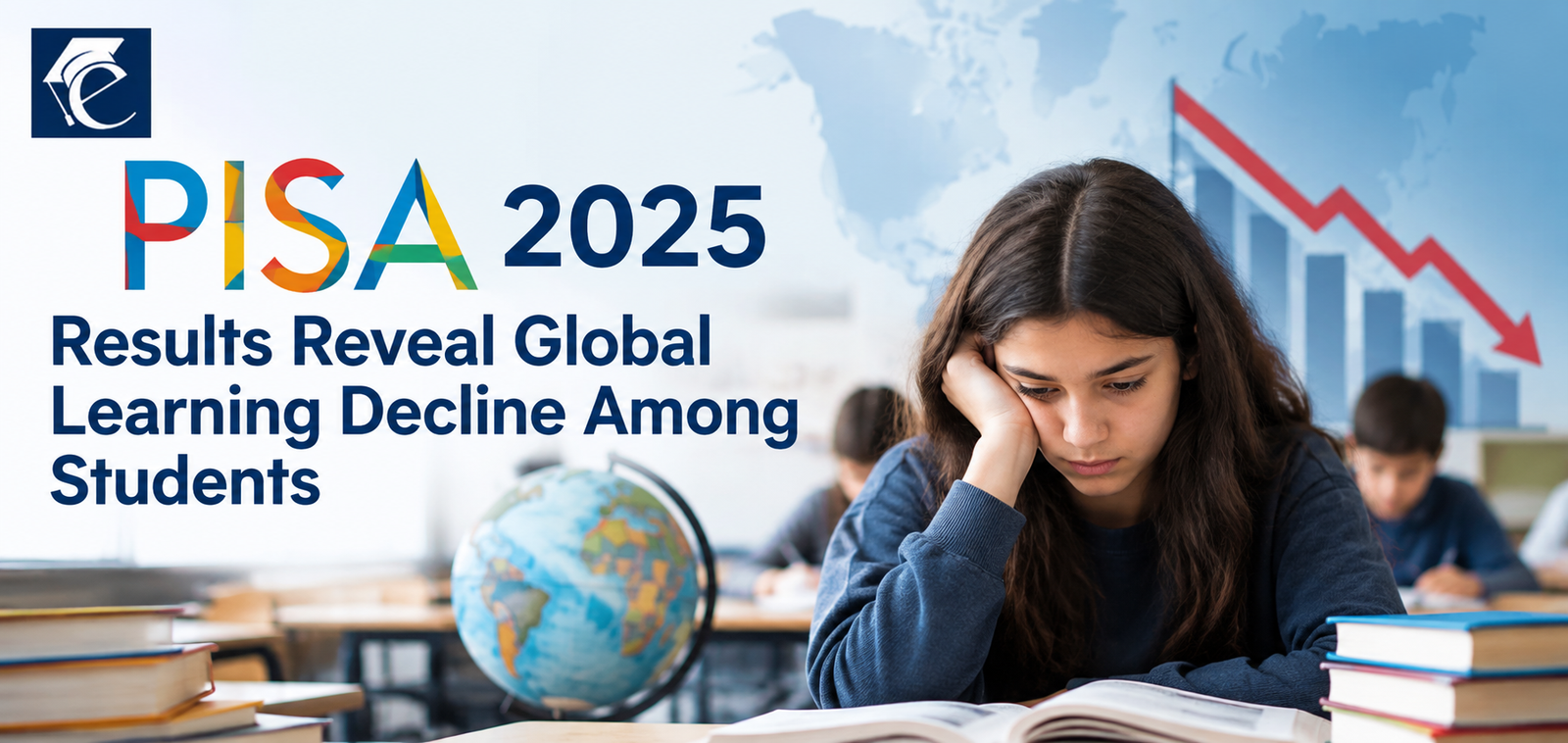
The latest PISA 2025 results have raised concerns among educators and policymakers worldwide, revealing a significant decline in student performance across reading, mathematics, and science. Conducted by the Organisation for Economic Co-operation and Development (OECD), the Programme for International Student Assessment (PISA) evaluates the abilities of 15-year-old students across dozens of countries and serves as one of the most influential indicators of educational outcomes globally. The findings suggest that many education systems are still struggling to recover from disruptions experienced over the past decade.
Reading Suffers the Sharpest Decline
Out of all subjects tested, the greatest decrease in performance was registered in reading. According to the PISA 2025 study, the average score in reading fell by 28 points in the period between 2015 and 2025 in the countries belonging to the Organization for Economic Cooperation and Development. According to experts, this fall equates to roughly one and a half years of lost education. Scholars have found out that nowadays it becomes harder for students to deal with complicated literature that requires analysis, critical thinking, and synthesis.
These results have raised serious questions about the change in reading habits in the age of technology.
Mathematics Scores Continue to Fall
Mathematics achievement has also declined according to the results of the PISA 2025 test. There has been a decrease in mathematics test scores by an average of 22 points in the last decade among OECD countries. Although some East Asian educational systems were still high performing in mathematics, most countries recorded their lowest mathematics scores in years.
Experts in the field have noted that poor performance in mathematics can affect the competitiveness, innovation, and future success of nations in the global market environment.
Science Remains Relatively Stable
Unlike reading and math, the scores for science were quite stable from 2022 through 2025. In spite of having seen drops previously in prior testing periods, the current scores show that there has been a stagnation, rather than any continued drops, in this area. However, it is not necessarily an indication of improvements because many countries continue to perform worse than pre-pandemic levels.
There are broader challenges within the education system regarding this particular finding in science.
What Is Driving the Decline?
There are a number of elements thought to be impacting the trends identified in the PISA 2025 study. The impact of disruption during the pandemic period is still evident, particularly in terms of learning being interrupted among children at important stages in their development. Additionally, classroom distractions, absence, and more time spent in front of screens have been proposed as possibilities.
Moreover, there is evidence of falling student motivation and the willingness to work on difficult tasks. Some people suggest that there has been an increase in the tendency of the students to find easy solutions.
A Growing Skills Gap
The most alarming conclusion that can be made based on the findings of the PISA 2025 assessment is the ever-growing disparity between good and poor performers. In many countries, a considerable number of adolescents could not demonstrate minimum levels of proficiency in reading, mathematics, and science. The statistics provided by the OECD show that almost one out of five students is having difficulties with all three of these subjects.
Another important aspect indicated by the findings is the persistent influence of socioeconomic factors on academic performance. It becomes increasingly difficult for disadvantaged students to succeed.
Implications for Education Systems
It is expected that the results of the PISA 2025 will have an impact on debates regarding the future of education policy worldwide. There could be more pressure on governments and educational systems to enhance the development of literacy and numeracy skills, to create a proper environment for learning, and to close gaps in knowledge accumulated during the last decade.
According to many scholars, schools should pay attention not only to the academic recovery of children but also to the development of their critical thinking skills, problem-solving skills, and resilience because of the ongoing changes brought by technology and artificial intelligence.
Looking Ahead
PISA 2025 results provide a wake-up call that the issue of educational recovery continues to be a global issue. Although there are countries that are performing very well, the downward trend in reading and mathematics shows that investment is required in terms of teaching and learning. As the results are being analyzed by policy makers, more attention will be paid on how education can prepare youths for the future.