

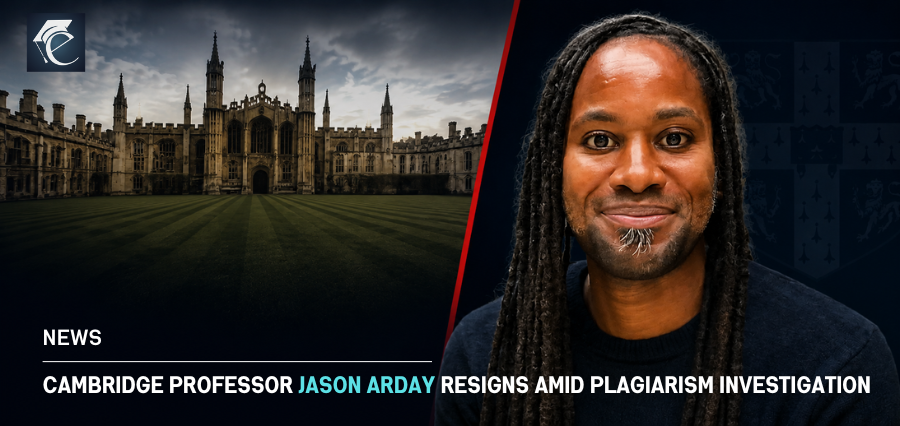
The Jason Arday resignation has become one of the most talked-about developments in UK higher education after the University of Cambridge professor announced he was stepping down with immediate effect. Arday’s resignation follows the university’s decision to launch a formal investigation into new information concerning his academic qualifications, honorary appointments, and separate allegations of academic misconduct. While acknowledging errors in parts of his academic work, Arday has strongly denied accusations that he deliberately misrepresented his achievements or engaged in intentional deception
Why Jason Arday Resigned
The Jason Arday resignation came just hours after the University of Cambridge confirmed it had opened a formal inquiry into fresh information relating to his academic credentials and honorary appointments. The university also stated that separate complaints concerning alleged research misconduct were continuing under its established policies.
In his press statement, Arday explained that his choice was not based on any admission of guilt but a reaction to the tremendous personal price that he had paid for the ordeal. Arday explained that being made the youngest Black Professor at Cambridge University in 2023 was the greatest moment in his professional life but the constant public spotlight had now reached a stage where “the personal cost becomes too great.”
According to Arday, his resignation is not a sign of accepting the accusations or a lack of confidence in academic research. Rather, he wants some time to think about himself, his family and his future before getting back into academia
Plagiarism Allegations at the Centre of the Case
The Jason Arday resignation follows months of scrutiny over allegations that portions of his PhD thesis and earlier academic publications contained plagiarised material.
The claims of plagiarism first surfaced from Nathan Cofnas, a researcher in America whose views on race have been quite controversial himself. Cofnas alleged that software used for detecting plagiarism showed many sections of Arday’s work to be plagiarized versions of other sources with very little editing at times.
Arday has admitted the existence of errors in some of his earlier academic writings, but he firmly denies any allegation that he had committed any deliberate act of plagiarism or deceitful activity. Arday has argued that the mistake of incorrect citations is not to be considered as deceitfulness.
Arday Defends His Record
Despite the Jason Arday resignation, the professor has firmly defended both his academic integrity and personal reputation.
In a series of recent interviews, Arday has asserted that he was subject to a systematic attack on his role at Cambridge aimed at his dismissal from it. Arday contended that the criticism against him was racist in nature, and that it was part of wider controversies concerning DEI initiatives in higher education.
Arday further mentioned that he had autism, and that this played a role in some of the errors in citation in his academic papers early on in his career. Arday claimed that through a similar scrutiny process, one might find similar errors in the works of other academics.
Addressing the public criticism, Arday contended that although he accepts his mistakes, he does not want to be “liar” or “fantasist.”
Questions Over Charity and Running Achievements
The Jason Arday resignation also comes after media reports questioned several claims Arday had previously made regarding his fundraising and endurance running accomplishments.
The controversial claims included assertions that he ran 30 marathons in 35 days, ran 300 miles in three days as part of a charity run, and ran 600 miles on a treadmill in six days and raised in excess of £5 million for various charities.
Arday went on to explain that the fundraising total came about through collaboration with others over about two decades, not as part of one single venture. He further admitted that the treadmill record had actually been set in 12 days and not six, adding that extra rest days had become necessary due to the exhaustion experienced from previous long-distance runs.
But he argued that the rest of his running feats were true and added that it was unreasonable to expect anyone to have proof of all their accomplishments in life.
Cambridge Continues Its Investigation
However, in spite of the Jason Arday resignation being the end of his career at the university, it is important to note that the investigations by the university are still going on.
According to the university statement, the inquiry will focus on the recent information about Arday’s academic qualifications and honorary positions while research misconduct complaints will be handled separately. It was stated that all conclusions would be based on due process and employment law.
Another institution associated with Arday, Jesus College, has made an announcement about carrying out its own independent inquiry along with the university investigation.
Looking Ahead
The controversy caused by the Jason Arday resignation has brought back the question of academic integrity, plagiarism rules, institutional accountability and the challenges that high-profile academics have to go through. Though the results of the investigation will reveal whether any kind of misconduct took place or not, this incident has become a central theme for discussion in the context of public opinion, diversity at the university level and obligations of an academic leader.
While the investigation process at Cambridge University goes on, its result will definitely define the topic of the next discussion..