Education begins with an act of trust. A family places a child in the care of a school believing that knowledge will be shared with wisdom, discipline will be guided by empathy, and ambition will be tempered with humanity. The finest educators understand that teaching is not simply an intellectual exchange but a deeply ethical undertaking. Within every lesson lies an opportunity to cultivate curiosity, integrity, and the quiet confidence that allows young minds to explore ideas freely. When education is shaped by compassion as much as by scholarship, classrooms become spaces where thinking deepens, character strengthens, and the promise of each learner is carefully nurtured.
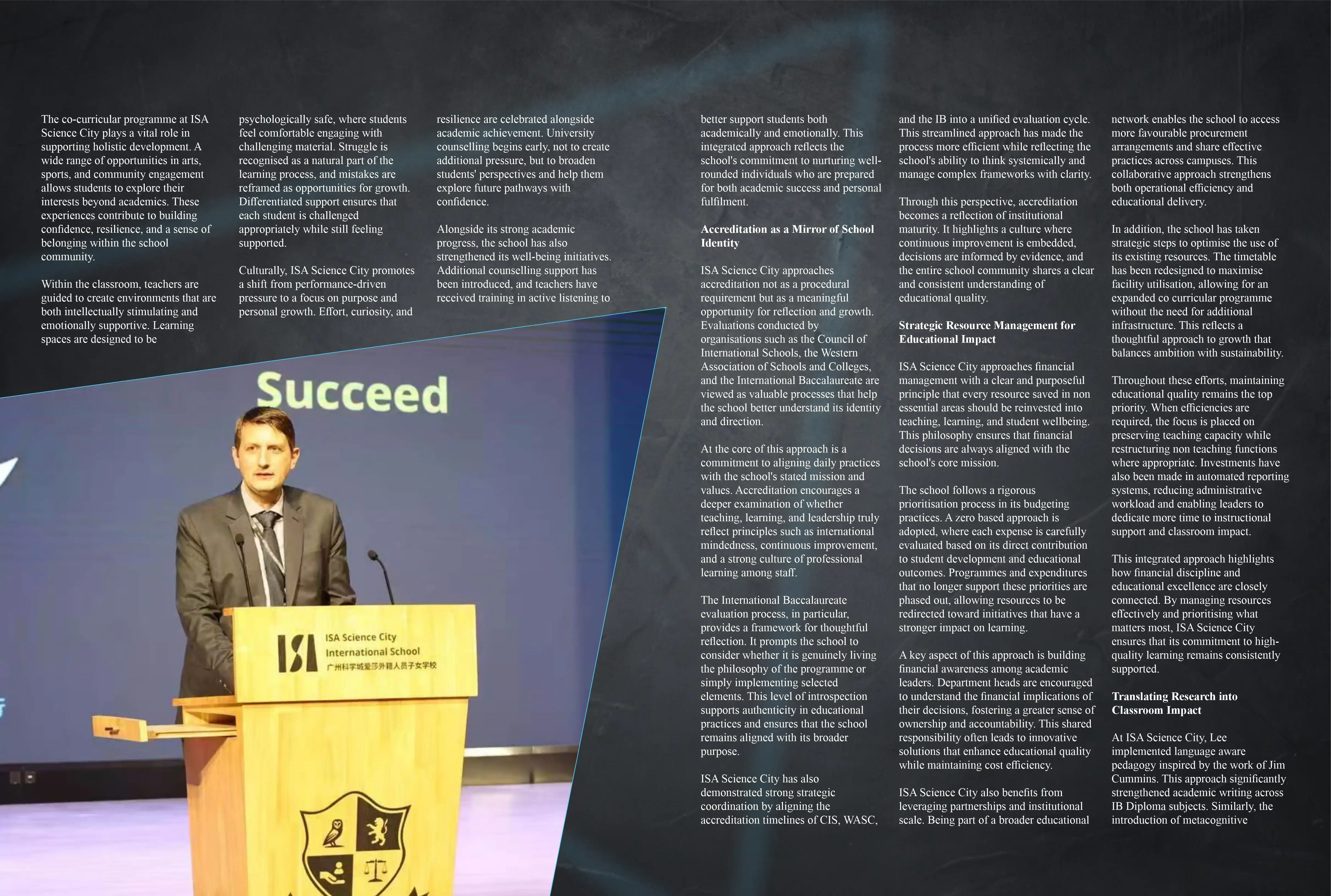
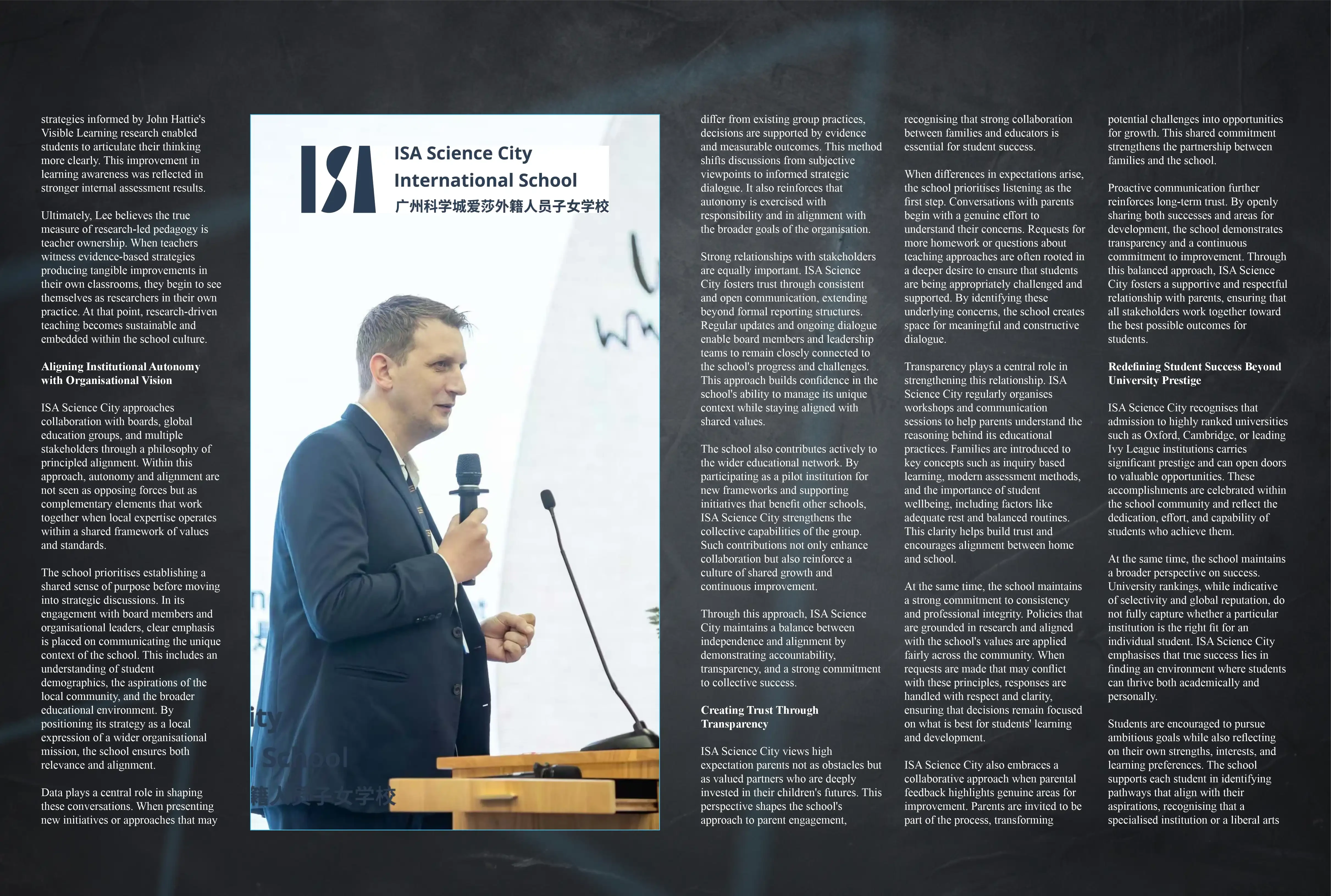
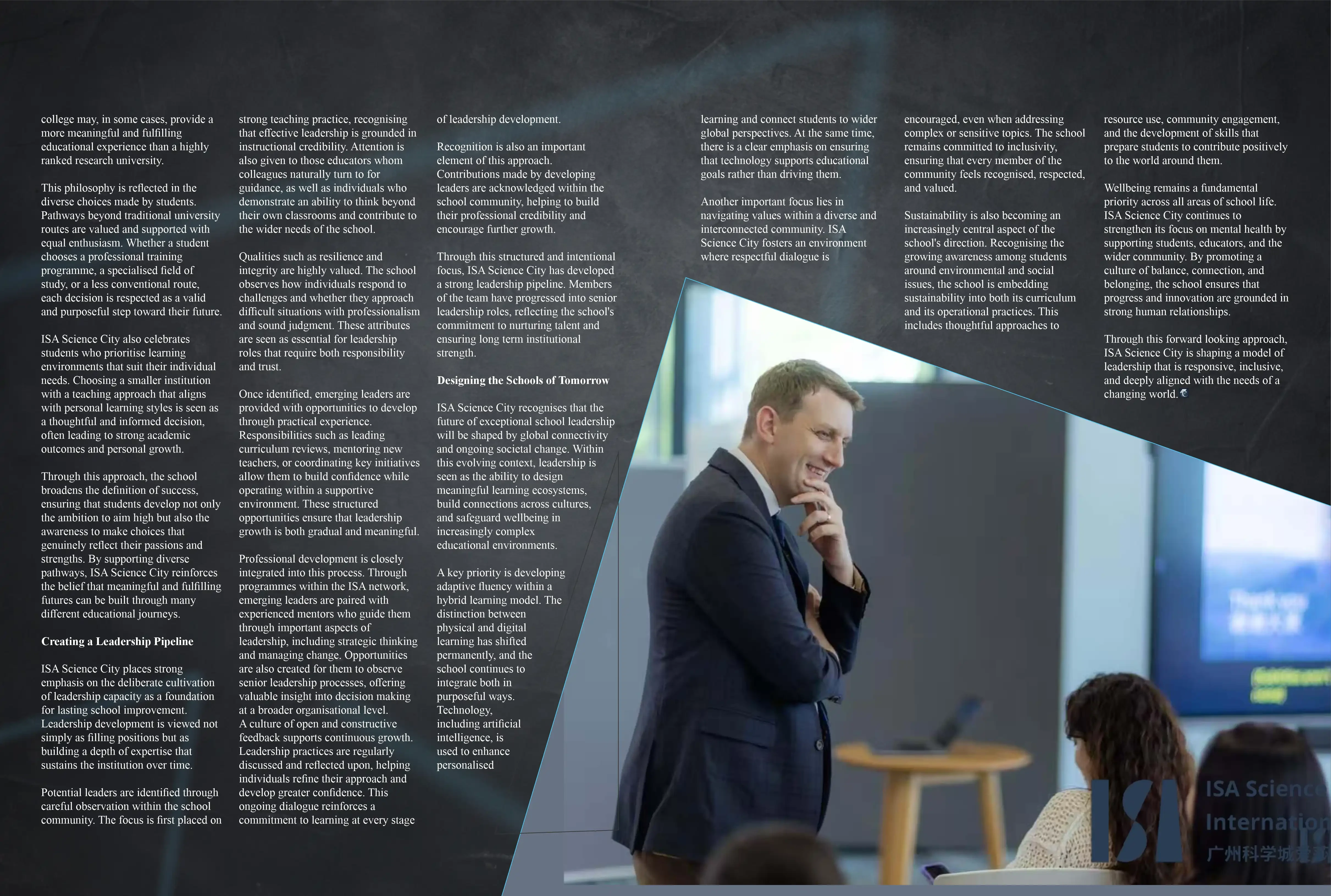
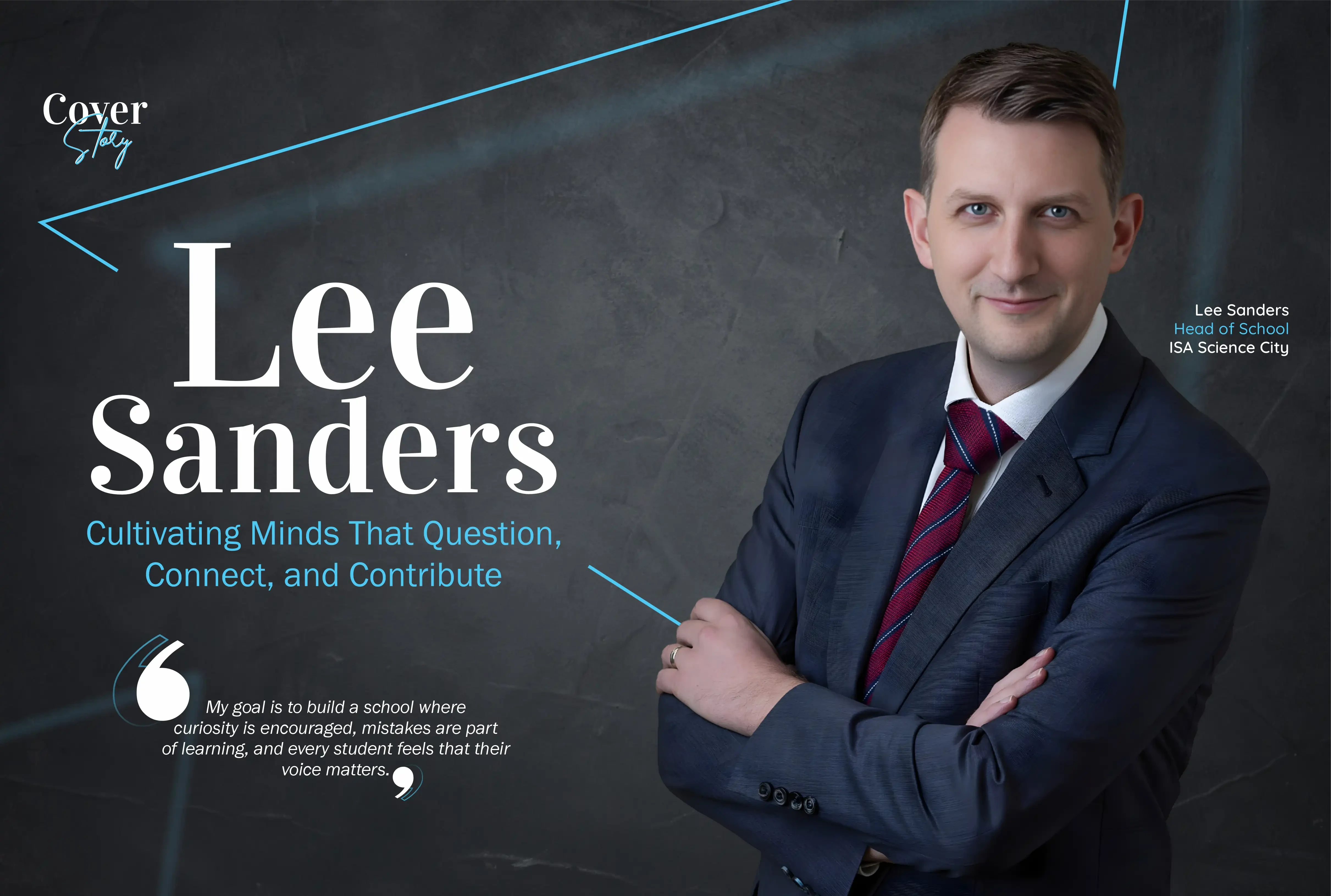
Lee Sanders carries this philosophy into the heart of his leadership at ISA Science City. As Head of School, he has built an environment where academic ambition is balanced by thoughtful care for the whole student. His approach blends rigorous scholarship with inquiry, ensuring that students not only master knowledge but also learn to question, connect, and reflect.
Lee explains that academic excellence is often defined too narrowly by examination results or university placements. His experience working across both the British system and the IB continuum reshaped his understanding of what true excellence looks like in practice. For Lee, excellence is not limited to outcomes but lies in cultivating enduring intellectual habits and transferable competencies in students.
Lee believes the British system offers valuable strengths, particularly in its emphasis on depth, specialisation, and disciplinary rigour. The clear progression within individual subjects provides students with a strong academic foundation. However, Lee also notes that this approach can sometimes isolate subjects from one another and create a definition of success that is tied too closely to examination results.
The IB philosophy introduced Lee to a broader perspective. It emphasises connections between disciplines and encourages students to think critically across subject boundaries. Lee often reflects on how, in traditional structures, teachers from different subjects may unknowingly teach the same skills separately. The IB framework, through its Core components and interdisciplinary units, encourages a more integrated way of thinking and learning.
Through these experiences, Lee came to view academic excellence as a balance between depth and connection. He emphasises the importance of vertical and horizontal coherence in education. Students need clear progression of skills while also being encouraged to see links between different disciplines. Lee also highlights the significance of language aware pedagogy, particularly in bilingual environments such as China, where academic language development strongly influences both cognitive growth and student wellbeing.
Metacognition is another cornerstone of Lee’s philosophy. He believes that students must learn how to evaluate their own work, recognise areas for improvement, and embrace the process of refining their thinking.
At ISA Science City, Lee applied this philosophy by embedding the inquiry driven approach of the IB while maintaining the academic rigour that families expected. As a result, students became more confident in defending their ideas, engaging in ethical discussions, and tackling unfamiliar challenges with curiosity. Alongside these deeper intellectual skills, the school also saw measurable improvements in IBDP scores.
ISA Science City has gained recognition for delivering rapid improvements in IBDP performance through a structured and intentional approach focused on diagnosis, clarity, and empowering its teaching community.
The school began its academic turnaround with a strong emphasis on careful diagnosis. When its first graduating class performed below the global average, the leadership team did not rush into immediate reforms. Instead, time was invested in observing classrooms to better understand the student learning experience. Assessment data was closely analysed, student work was reviewed in depth, and curriculum plans were examined to identify gaps in both teaching practices and learning outcomes.
Following this, ISA Science City established clear instructional expectations across the school. A focused framework was introduced, built around a few high-impact practices. Teachers aligned their lessons with clear learning intentions, incorporated frequent formative checks for understanding, and emphasised structured academic writing to encourage deeper thinking rather than over-reliance on digital devices.
Professional development became a cornerstone of the school’s improvement strategy. Rather than relying on broad centralised training sessions, departments were given dedicated time to focus on subject-specific enhancements. Middle leaders were equipped with instructional coaching skills, enabling ongoing, practical support for teachers within their departments. This approach ensured that professional learning remained directly connected to classroom impact.
Students were also encouraged to take greater ownership of their learning. The school implemented strategies to help students better understand IB assessment expectations, interpret command terms, and manage their time effectively. Regular low stakes assessments were introduced, allowing students to gradually build both competence and confidence in their abilities.
In addition, ISA Science City made deliberate decisions around resource management to support teaching and learning. Non-essential meetings were reduced, and greater emphasis was placed on protecting time for lesson planning and assessment. This reinforced a strong institutional focus on academic priorities.
Within just two years of implementing these changes, ISA Science City achieved a significant transformation, improving from below the world average to an impressive IBDP average score of 37.

ISA Science City has gained recognition for delivering rapid improvements in IBDP performance through a structured and intentional approach focused on diagnosis, clarity, and empowering its teaching community.
The school began its academic turnaround with a strong emphasis on careful diagnosis. When its first graduating class performed below the global average, the leadership team did not rush into immediate reforms. Instead, time was invested in observing classrooms to better understand the student learning experience. Assessment data was closely analysed, student work was reviewed in depth, and curriculum plans were examined to identify gaps in both teaching practices and learning outcomes.
Following this, ISA Science City established clear instructional expectations across the school. A focused framework was introduced, built around a few high-impact practices. Teachers aligned their lessons with clear learning intentions, incorporated frequent formative checks for understanding, and emphasised structured academic writing to encourage deeper thinking rather than over-reliance on digital devices.
Professional development became a cornerstone of the school’s improvement strategy. Rather than relying on broad centralised training sessions, departments were given dedicated time to focus on subject-specific enhancements. Middle leaders were equipped with instructional coaching skills, enabling ongoing, practical support for teachers within their departments. This approach ensured that professional learning remained directly connected to classroom impact.
Students were also encouraged to take greater ownership of their learning. The school implemented strategies to help students better understand IB assessment expectations, interpret command terms, and manage their time effectively. Regular low stakes assessments were introduced, allowing students to gradually build both competence and confidence in their abilities.
In addition, ISA Science City made deliberate decisions around resource management to support teaching and learning. Non-essential meetings were reduced, and greater emphasis was placed on protecting time for lesson planning and assessment. This reinforced a strong institutional focus on academic priorities.
Within just two years of implementing these changes, ISA Science City achieved a significant transformation, improving from below the world average to an impressive IBDP average score of 37.
For Lee, character education is as essential as academic achievement. He believes that moral and civic development should never be treated as an afterthought or limited to occasional assemblies. Instead, it must be intentionally designed, taught, and recognised with the same seriousness as academic subjects.
Lee’s framework for character development is built around four pillars which include intellectual, performance, civic, and moral character. These elements are integrated into the very structure of the school rather than existing as separate initiatives.
In classrooms, ethical and civic questions are embedded within the curriculum. Students are encouraged to reflect on complex questions such as responsibility, integrity, and leadership. In science lessons, students explore issues related to environmental stewardship. In humanities subjects, they examine the principles of ethical leadership and social responsibility.
Lee also ensures that student growth in character is formally recognised. House systems reward behaviours connected to the school’s character framework, and report cards include character rubrics alongside academic evaluations. Lee believes that sustained recognition of positive behaviours gradually shapes lasting habits.
Experiential learning further deepens this development. Student leaders at ISA Science City manage real budgets and participate in meaningful decision-making processes. Service projects connect with the school’s charity initiatives, allowing students to engage directly with communities and reflect on their responsibilities as global citizens.
Pastoral care forms the foundation of this approach. Lee emphasises that every student should be known personally by at least one adult mentor within the school. When conflicts arise, restorative practices guide resolution. These approaches encourage accountability and empathy while strengthening relationships within the community.
ISA Science City challenges the common belief that high academic expectations come at the cost of student wellbeing. Instead, the school embraces the philosophy that wellbeing is essential for sustained academic success and forms the foundation for meaningful learning.
This balance is achieved through thoughtful and intentional structural design. The school carefully reviews students’ weekly schedules to ensure there is adequate time for rest, relationships, and physical activity. Assignment deadlines are coordinated across departments to prevent excessive workload and reduce stress. In addition, a mobile device free environment has been introduced to encourage genuine face to face interactions, strengthening social connections among students.
The co-curricular programme at ISA Science City plays a vital role in supporting holistic development. A wide range of opportunities in arts, sports, and community engagement allows students to explore their interests beyond academics. These experiences contribute to building confidence, resilience, and a sense of belonging within the school community.
Within the classroom, teachers are guided to create environments that are both intellectually stimulating and emotionally supportive. Learning spaces are designed to be psychologically safe, where students feel comfortable engaging with challenging material. Struggle is recognised as a natural part of the learning process, and mistakes are reframed as opportunities for growth. Differentiated support ensures that each student is challenged appropriately while still feeling supported.
Culturally, ISA Science City promotes a shift from performance-driven pressure to a focus on purpose and personal growth. Effort, curiosity, and resilience are celebrated alongside academic achievement. University counselling begins early, not to create additional pressure, but to broaden students’ perspectives and help them explore future pathways with confidence.
Alongside its strong academic progress, the school has also strengthened its well-being initiatives. Additional counselling support has been introduced, and teachers have received training in active listening to better support students both academically and emotionally. This integrated approach reflects the school’s commitment to nurturing well-rounded individuals who are prepared for both academic success and personal fulfilment.
ISA Science City approaches accreditation not as a procedural requirement but as a meaningful opportunity for reflection and growth. Evaluations conducted by organisations such as the Council of International Schools, the Western Association of Schools and Colleges, and the International Baccalaureate are viewed as valuable processes that help the school better understand its identity and direction.
At the core of this approach is a commitment to aligning daily practices with the school’s stated mission and values. Accreditation encourages a deeper examination of whether teaching, learning, and leadership truly reflect principles such as international mindedness, continuous improvement, and a strong culture of professional learning among staff.
The International Baccalaureate evaluation process, in particular, provides a framework for thoughtful reflection. It prompts the school to consider whether it is genuinely living the philosophy of the programme or simply implementing selected elements. This level of introspection supports authenticity in educational practices and ensures that the school remains aligned with its broader purpose.
ISA Science City has also demonstrated strong strategic coordination by aligning the accreditation timelines of CIS, WASC, and the IB into a unified evaluation cycle. This streamlined approach has made the process more efficient while reflecting the school’s ability to think systemically and manage complex frameworks with clarity.
Through this perspective, accreditation becomes a reflection of institutional maturity. It highlights a culture where continuous improvement is embedded, decisions are informed by evidence, and the entire school community shares a clear and consistent understanding of educational quality.
ISA Science City approaches financial management with a clear and purposeful principle that every resource saved in non essential areas should be reinvested into teaching, learning, and student wellbeing. This philosophy ensures that financial decisions are always aligned with the school’s core mission.
The school follows a rigorous prioritisation process in its budgeting practices. A zero based approach is adopted, where each expense is carefully evaluated based on its direct contribution to student development and educational outcomes. Programmes and expenditures that no longer support these priorities are phased out, allowing resources to be redirected toward initiatives that have a stronger impact on learning.
A key aspect of this approach is building financial awareness among academic leaders. Department heads are encouraged to understand the financial implications of their decisions, fostering a greater sense of ownership and accountability. This shared responsibility often leads to innovative solutions that enhance educational quality while maintaining cost efficiency.
ISA Science City also benefits from leveraging partnerships and institutional scale. Being part of a broader educational network enables the school to access more favourable procurement arrangements and share effective practices across campuses. This collaborative approach strengthens both operational efficiency and educational delivery.
In addition, the school has taken strategic steps to optimise the use of its existing resources. The timetable has been redesigned to maximise facility utilisation, allowing for an expanded co curricular programme without the need for additional infrastructure. This reflects a thoughtful approach to growth that balances ambition with sustainability.
Throughout these efforts, maintaining educational quality remains the top priority. When efficiencies are required, the focus is placed on preserving teaching capacity while restructuring non teaching functions where appropriate. Investments have also been made in automated reporting systems, reducing administrative workload and enabling leaders to dedicate more time to instructional support and classroom impact.
This integrated approach highlights how financial discipline and educational excellence are closely connected. By managing resources effectively and prioritising what matters most, ISA Science City ensures that its commitment to high-quality learning remains consistently supported.
At ISA Science City, Lee implemented language aware pedagogy inspired by the work of Jim Cummins. This approach significantly strengthened academic writing across IB Diploma subjects. Similarly, the introduction of metacognitive strategies informed by John Hattie’s Visible Learning research enabled students to articulate their thinking more clearly. This improvement in learning awareness was reflected in stronger internal assessment results.
Ultimately, Lee believes the true measure of research-led pedagogy is teacher ownership. When teachers witness evidence-based strategies producing tangible improvements in their own classrooms, they begin to see themselves as researchers in their own practice. At that point, research-driven teaching becomes sustainable and embedded within the school culture.
ISA Science City approaches collaboration with boards, global education groups, and multiple stakeholders through a philosophy of principled alignment. Within this approach, autonomy and alignment are not seen as opposing forces but as complementary elements that work together when local expertise operates within a shared framework of values and standards.
The school prioritises establishing a shared sense of purpose before moving into strategic discussions. In its engagement with board members and organisational leaders, clear emphasis is placed on communicating the unique context of the school. This includes an understanding of student demographics, the aspirations of the local community, and the broader educational environment. By positioning its strategy as a local expression of a wider organisational mission, the school ensures both relevance and alignment.
Data plays a central role in shaping these conversations. When presenting new initiatives or approaches that may differ from existing group practices, decisions are supported by evidence and measurable outcomes. This method shifts discussions from subjective viewpoints to informed strategic dialogue. It also reinforces that autonomy is exercised with responsibility and in alignment with the broader goals of the organisation.
Strong relationships with stakeholders are equally important. ISA Science City fosters trust through consistent and open communication, extending beyond formal reporting structures. Regular updates and ongoing dialogue enable board members and leadership teams to remain closely connected to the school’s progress and challenges. This approach builds confidence in the school’s ability to manage its unique context while staying aligned with shared values.
The school also contributes actively to the wider educational network. By participating as a pilot institution for new frameworks and supporting initiatives that benefit other schools, ISA Science City strengthens the collective capabilities of the group. Such contributions not only enhance collaboration but also reinforce a culture of shared growth and continuous improvement.
Through this approach, ISA Science City maintains a balance between independence and alignment by demonstrating accountability, transparency, and a strong commitment to collective success.
ISA Science City views high expectation parents not as obstacles but as valued partners who are deeply invested in their children’s futures. This perspective shapes the school’s approach to parent engagement, recognising that strong collaboration between families and educators is essential for student success.
When differences in expectations arise, the school prioritises listening as the first step. Conversations with parents begin with a genuine effort to understand their concerns. Requests for more homework or questions about teaching approaches are often rooted in a deeper desire to ensure that students are being appropriately challenged and supported. By identifying these underlying concerns, the school creates space for meaningful and constructive dialogue.
Transparency plays a central role in strengthening this relationship. ISA Science City regularly organises workshops and communication sessions to help parents understand the reasoning behind its educational practices. Families are introduced to key concepts such as inquiry based learning, modern assessment methods, and the importance of student wellbeing, including factors like adequate rest and balanced routines. This clarity helps build trust and encourages alignment between home and school.
At the same time, the school maintains a strong commitment to consistency and professional integrity. Policies that are grounded in research and aligned with the school’s values are applied fairly across the community. When requests are made that may conflict with these principles, responses are handled with respect and clarity, ensuring that decisions remain focused on what is best for students’ learning and development.
ISA Science City also embraces a collaborative approach when parental feedback highlights genuine areas for improvement. Parents are invited to be part of the process, transforming potential challenges into opportunities for growth. This shared commitment strengthens the partnership between families and the school.
Proactive communication further reinforces long-term trust. By openly sharing both successes and areas for development, the school demonstrates transparency and a continuous commitment to improvement. Through this balanced approach, ISA Science City fosters a supportive and respectful relationship with parents, ensuring that all stakeholders work together toward the best possible outcomes for students.
ISA Science City recognises that admission to highly ranked universities such as Oxford, Cambridge, or leading Ivy League institutions carries significant prestige and can open doors to valuable opportunities. These accomplishments are celebrated within the school community and reflect the dedication, effort, and capability of students who achieve them.
At the same time, the school maintains a broader perspective on success. University rankings, while indicative of selectivity and global reputation, do not fully capture whether a particular institution is the right fit for an individual student. ISA Science City emphasises that true success lies in finding an environment where students can thrive both academically and personally.
Students are encouraged to pursue ambitious goals while also reflecting on their own strengths, interests, and learning preferences. The school supports each student in identifying pathways that align with their aspirations, recognising that a specialised institution or a liberal arts college may, in some cases, provide a more meaningful and fulfilling educational experience than a highly ranked research university.
This philosophy is reflected in the diverse choices made by students. Pathways beyond traditional university routes are valued and supported with equal enthusiasm. Whether a student chooses a professional training programme, a specialised field of study, or a less conventional route, each decision is respected as a valid and purposeful step toward their future.
ISA Science City also celebrates students who prioritise learning environments that suit their individual needs. Choosing a smaller institution with a teaching approach that aligns with personal learning styles is seen as a thoughtful and informed decision, often leading to strong academic outcomes and personal growth.
Through this approach, the school broadens the definition of success, ensuring that students develop not only the ambition to aim high but also the awareness to make choices that genuinely reflect their passions and strengths. By supporting diverse pathways, ISA Science City reinforces the belief that meaningful and fulfilling futures can be built through many different educational journeys.
ISA Science City places strong emphasis on the deliberate cultivation of leadership capacity as a foundation for lasting school improvement. Leadership development is viewed not simply as filling positions but as building a depth of expertise that sustains the institution over time.
Potential leaders are identified through careful observation within the school community. The focus is first placed on strong teaching practice, recognising that effective leadership is grounded in instructional credibility. Attention is also given to those educators whom colleagues naturally turn to for guidance, as well as individuals who demonstrate an ability to think beyond their own classrooms and contribute to the wider needs of the school.
Qualities such as resilience and integrity are highly valued. The school observes how individuals respond to challenges and whether they approach difficult situations with professionalism and sound judgment. These attributes are seen as essential for leadership roles that require both responsibility and trust.
Once identified, emerging leaders are provided with opportunities to develop through practical experience. Responsibilities such as leading curriculum reviews, mentoring new teachers, or coordinating key initiatives allow them to build confidence while operating within a supportive environment. These structured opportunities ensure that leadership growth is both gradual and meaningful.
Professional development is closely integrated into this process. Through programmes within the ISA network, emerging leaders are paired with experienced mentors who guide them through important aspects of leadership, including strategic thinking and managing change. Opportunities are also created for them to observe senior leadership processes, offering valuable insight into decision making at a broader organisational level.
A culture of open and constructive feedback supports continuous growth. Leadership practices are regularly discussed and reflected upon, helping individuals refine their approach and develop greater confidence. This ongoing dialogue reinforces a commitment to learning at every stage of leadership development.
Recognition is also an important element of this approach. Contributions made by developing leaders are acknowledged within the school community, helping to build their professional credibility and encourage further growth.
Through this structured and intentional focus, ISA Science City has developed a strong leadership pipeline. Members of the team have progressed into senior leadership roles, reflecting the school’s commitment to nurturing talent and ensuring long term institutional strength.
ISA Science City recognises that the future of exceptional school leadership will be shaped by global connectivity and ongoing societal change. Within this evolving context, leadership is seen as the ability to design meaningful learning ecosystems, build connections across cultures, and safeguard wellbeing in increasingly complex educational environments.
A key priority is developing adaptive fluency within a hybrid learning model. The distinction between physical and digital learning has shifted permanently, and the school continues to integrate both in purposeful ways. Technology, including artificial intelligence, is used to enhance personalised learning and connect students to wider global perspectives. At the same time, there is a clear emphasis on ensuring that technology supports educational goals rather than driving them.
Another important focus lies in navigating values within a diverse and interconnected community. ISA Science City fosters an environment where respectful dialogue is encouraged, even when addressing complex or sensitive topics. The school remains committed to inclusivity, ensuring that every member of the community feels recognised, respected, and valued.
Sustainability is also becoming an increasingly central aspect of the school’s direction. Recognising the growing awareness among students around environmental and social issues, the school is embedding sustainability into both its curriculum and its operational practices. This includes thoughtful approaches to resource use, community engagement, and the development of skills that prepare students to contribute positively to the world around them.
Wellbeing remains a fundamental priority across all areas of school life. ISA Science City continues to strengthen its focus on mental health by supporting students, educators, and the wider community. By promoting a culture of balance, connection, and belonging, the school ensures that progress and innovation are grounded in strong human relationships.
Through this forward looking approach, ISA Science City is shaping a model of leadership that is responsive, inclusive, and deeply aligned with the needs of a changing world.
Also Read :- Education Excellence Magazine for more information