
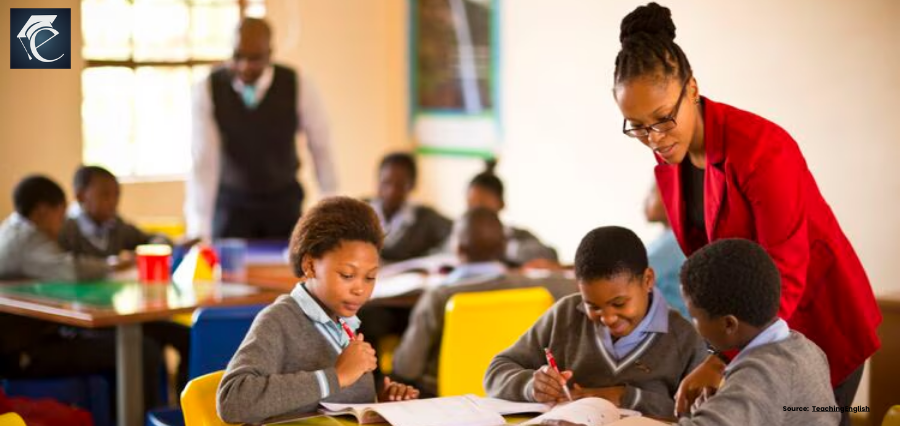
Inclusive Education in South Africa is more than a policy; it is a moral imperative. It demands that every child — regardless of ability, background, or circumstance — is welcomed, supported, and enabled to thrive within the mainstream education system. In South Africa, a country still grappling with the legacy of inequality, inclusive education represents both a promise and a challenge. Two decades after the government committed to transforming the education system into one that accommodates all learners, the question remains: How far have we come, and how far do we still need to go?
The foundation for inclusive education in South Africa was laid with the
publication of Education White Paper 6 in 2001, titled Special Needs
Education: Building an Inclusive Education and Training System. This policy
envisioned a shift from segregated special needs education toward a system that
recognizes and accommodates learner diversity within ordinary schools.
At its heart, the policy recognized that barriers to learning are not
only physical or cognitive — they are also deeply systemic. Poverty, language,
trauma, inaccessible infrastructure, and rigid curricula all contribute to the
exclusion of learners. The goal was clear: create a system that does not merely
tolerate difference but embraces it.
Since the introduction of White Paper 6, there have been measurable
signs of progress. Some schools have undergone transformation to become
full-service schools, equipped to support learners with a variety of needs.
Special schools have been repositioned as resource centers, helping support the
mainstream system. Teacher training for inclusive practices has been introduced
in some pre-service and in-service programmes.
There has also been a broader societal shift in how learning barriers
are perceived. The language of inclusion is becoming more common in classrooms
and staffrooms, reflecting a growing awareness that every child has the right
to quality education — not just those who fit the traditional mold of a
"typical" learner.
Yet, despite these developments, inclusive education in South Africa
remains more aspirational than operational in many schools. The systemic
challenges are complex and far-reaching.
Many public schools still lack basic infrastructure, let alone the facilities required to support learners with disabilities. Wheelchair ramps, accessible toilets, learning aids, and sensory rooms are rare exceptions rather than standard provisions.
While some teachers have received training, many
still feel ill-equipped to address the diverse needs of their learners. Without
consistent, high-quality professional development, inclusive education remains
a theory rather than a practice.
South African classrooms are often overcrowded,
leaving little room for differentiated instruction or individualized support.
In such environments, learners who require extra attention can easily fall
through the cracks.
While White Paper 6 laid a strong foundation, its
implementation has been uneven and underfunded. A lack of clear guidelines,
accountability measures, and monitoring has slowed progress across provinces.
Perhaps most insidious are the attitudinal barriers
that persist among educators, learners, and even parents. Disability,
neurodiversity, and learning differences are still stigmatized in many
communities, leading to exclusion, bullying, and low expectations.
Behind every policy shortcoming is a child who loses out. Learners with
disabilities are often placed in special schools far from home — if they’re
placed at all. Children with learning difficulties may be labeled as “lazy” or
“troublesome” instead of being supported. And those facing language barriers or
trauma-related challenges often become silent participants in their own
education.
These are not isolated incidents. They represent a broader failure to
create an education system that sees every learner as capable, valuable, and
worthy of investment.
If inclusive education is to be realized in South Africa, it will
require more than policy statements — it will demand bold action, cross-sector
collaboration, and political will.
Schools must be physically accessible and equipped to
support all learners. This includes adaptive technology, transport solutions,
and classroom materials that cater to varied needs.
Teachers are the cornerstone of inclusive education.
Comprehensive training on inclusive pedagogy, classroom management, and
differentiation should be embedded into teacher education programmes — not
treated as an optional add-on.
The number and capacity of full-service schools must
increase to ensure that learners across all districts can access quality
education without needing to relocate or compromise their needs.
Ongoing campaigns are needed to shift public
perceptions around disability, neurodiversity, and learner differences.
Inclusion must be framed as a strength, not a burden.
Provinces and school districts must be held
accountable for implementing inclusive education policies. This includes
tracking funding, monitoring learner outcomes, and involving communities in the
process.
Finally, learners themselves must be part of the conversation. Their experiences, insights, and needs should guide decisions at every level.
Conclusion
Inclusive education is not a favour we extend to the few — it is a right
that belongs to all. South Africa has the policies, the vision, and the moral
foundation for a truly inclusive system. What is needed now is commitment,
urgency, and a belief that no child is too different to belong.
Also Read :- Education Excellence Magazine For more information