
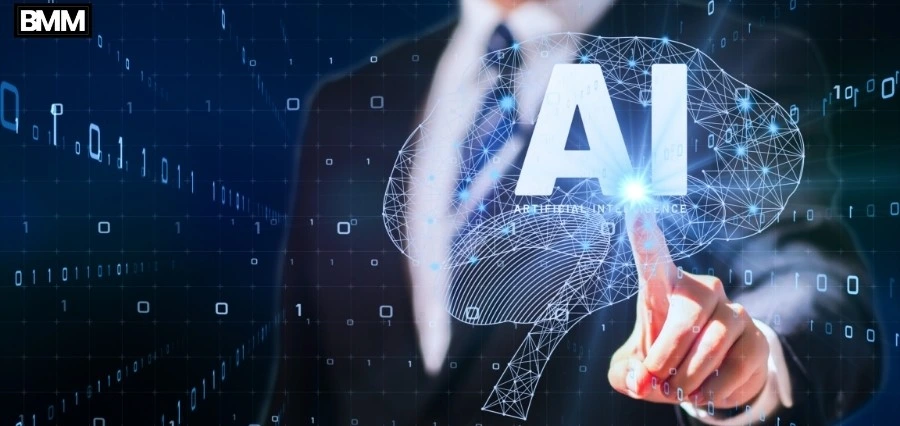
AI has become an inseparable component of modern-day education. With its capabilities that range from tutoring and testing to creating content and doing research, AI is redefining the way students learn and teachers teach. At the same time, the possibilities of using artificial intelligence raise substantial questions related to integrity and fair treatment in educational settings. Modern universities, colleges, and other educational institutions have to take advantage of innovations without giving up their values.
The discussion around AI academic integrity has been taking place at educational institutions recently, and maintaining AI Academic Integrity hasbecome one of the major concerns of educational managers. The question is not whether to use AI in education anymore, but rather how to do it correctly.
The Rise of AI in Modern Education
Learning has been revolutionized by artificial intelligence through personalization and greater accessibility of education. Intelligent tutoring systems accommodate individual learning styles; grading has been automated; and research tools that leverage AI make it easy for students to find the appropriate information.
Additionally, the emergence of Generative AI in education brings about unprecedented possibilities. Students have access to an essay generator, a research paper summarizer, presentation creation, as well as coding aid within seconds. Such possibilities increase students’ efficiency and serve as good learning tools, but raise the issue of drawing the line between learning aids and the actual authoring process. Educational institutions need to reconsider their requirements in such an educational environment where AI is easily accessible to almost all students
Understanding the Integrity Challenge
Academic integrity has been concerned with plagiarism, cheating, and citing rules. The development of artificial intelligence introduces some new challenges that are beyond the scope of current policies. For instance, what if a student uses AI tools to create their assignment and then edits it? What if artificial intelligence helps the student in brainstorming, improving grammar, and organizing research? Such scenarios make it clear why educational institutions should not depend solely on the definitions of academic misconduct.
Instead of banning artificial intelligence, educational institutions have to come up with practical rules that will help differentiate between the appropriate and inappropriate use of technology.
Healthcare providers need to understand and decipher intricate emotions and physical symptoms, thereby making decisions that extend beyond analytics. The human element will ensure that their importance persists regardless of technological development.
The Risks of Unregulated AI Adoption
There are different challenges that arise due to the lack of governance in AI technology.
Firstly, AI technology poses a threat to the development of critical thinking since students will complete their tasks without having a good grasp of the subject matter because of depending on the generated response from the AI platform. In such a case, there might be a reduction in critical reasoning, creativity, problem-solving skills, and research skills.
Secondly, another problem with AI in education relates to reliability in the process of assessment. Since the use of AI in assignments makes them hard to assess, there is a need for instructors to change the mode of assessing students through group discussions, presentations, teamwork, practical, among others.
Thirdly, privacy issues are of great importance. This is because many AI technologies collect user inputs that might be personal and confidential information.
Why Universities Need Clear AI Governance
As AI becomes embedded within teaching and learning, every institution requires a well-defined AI Policy for Universities that reflects both technological realities and academic values.
Such policies should clearly explain:
- Acceptable and unacceptable AI use.
- Disclosure requirements for AI-assisted work.
- Expectations regarding originality and independent thinking.
- Faculty responsibilities when designing AI-aware assessments.
- Student responsibilities for verifying AI-generated information.
An effective AI Policy for Universities must not stifle innovation but foster transparency to let both students and educators know when the use of AI is a form of improvement and where its ethical limits are breached.
Such governance also helps avoid ambiguity through consistent treatment of identical cases.
Promoting Ethical AI Adoption
The future of education relies not only on technology but also on its ethical implementation. Ethical AI in Education means that the educational institution must consider innovation alongside the principles of equality, transparency, accountability, and human-centeredness.
Firstly, the teacher should promote the idea that AI is just an assistant for brainstorming, explanation, resource recommendations, and constructive criticism but the students are still responsible for analysis, argumentation, and their own work.
Secondly, faculty members should take responsibility too. Professional development can help teachers comprehend the power and potential of AI and redesign the assessment system.
Rethinking Assessment for the AI Era
Standard tests and written tasks are being developed due to technology. It is becoming clear that the measurement of learning needs something more than the assessment of final output.
An authentic assessment that stresses presentations, oral tests, group projects, journals, case studies, and problem-solving helps to assess real knowledge and minimize the possibilities of improper use of AI.
This type of testing not only prepares students for professional world but also values other qualities such as collaboration, communicative skills, adaptability, and critical thinking.
It is better to consider the existence of AI in education and keep on assessing the unique human abilities.
Building Responsible Digital Citizens
Preparation for the future goes beyond the teaching of academic disciplines in schools and colleges. Educational institutions should train responsible digital citizens who can use emerging technologies responsibly. It is necessary for students to comprehend the positive as well as negative implications of AI technology. It is necessary for students to critically analyze AI-created content, detect
misinformation, source verification, secure personal information, and identify possible bias in intelligent systems.
Incorporating digital ethics in the curriculum will ensure that the future professionals will be prepared not just technologically but ethically as well to be able to use technology effectively.
This way of education will foster public trust as well as prepare the future professionals to lead responsibly in the age of AI.
Looking Ahead
There is still a lot more for AI to revolutionize about education and these effects are going to go beyond the current classroom setup. Success will not belong to schools that use the latest and greatest in technology but to schools that set frameworks for innovative uses of technology that do not harm the learning process.
The future of Generative AI in education rests on the right equilibrium between technological aid and independent intellectual growth. Similarly, the future of Ethical AI in education should continue to rest on collective effort of educators, students, technology companies and institution administrators.
Academic integrity has always grown along with education itself. Artificial Intelligence is the next step in this evolution. With proper policy making, ethics, assessment and digital literacy, AI can safely be integrated into education without violating its core values.
Also Read : -Education Excellence Magazine for more information
FAQ
How can universities use AI while maintaining academic integrity?
Universities can use AI responsibly by establishing clear academic integrity policies that define acceptable and unacceptable AI use. Students should use AI as a learning assistant for brainstorming, research support, grammar improvement, and feedback rather than generating complete assignments for submission. Institutions can promote ethical AI use through digital literacy training, transparent citation practices, AI-aware assessment methods, and faculty guidance. By combining responsible AI policies with critical thinking and original student work, higher education institutions can benefit from AI while preserving academic honesty, fairness, and learning outcomes.
What are some examples of AI and academic integrity?
AI and academic integrity go hand in hand when AI is used responsibly. Ethical examples include using AI to brainstorm ideas, improve grammar, summarize research articles, generate study quizzes, or explain difficult concepts while creating original work. Unethical examples include submitting AI-generated assignments as your own, using AI during exams without permission, fabricating references, or copying AI-generated content without proper citation. The key principle is transparency—students should follow their institution’s AI policies, verify AI-generated information, and ensure their final work reflects their own understanding and critical thinking.
What are the ethical issues of AI in 2026?
In 2026, the biggest ethical issues surrounding AI include data privacy, algorithmic bias, misinformation, lack of transparency, copyright concerns, and the misuse of AI-generated content in education and research. Organizations and educational institutions are also focusing on responsible AI use, ensuring human oversight, protecting sensitive data, and promoting fairness and accountability. Following ethical AI guidelines helps users benefit from AI while maintaining trust, accuracy, and academic integrity.
How does AI affect academic integrity in education?
AI affects academic integrity by changing how students learn, research, and complete assignments. When used responsibly, AI can support learning by explaining concepts, improving writing, and providing personalized study assistance. However, misuse—such as submitting AI-generated work as original, fabricating citations, or using AI during assessments without permission—can violate academic integrity policies. Educational institutions are increasingly adopting AI guidelines that encourage transparency, critical thinking, and proper attribution to ensure AI enhances learning rather than replacing genuine student effort.
What are the risks of AI in education?
AI in education offers many benefits, but it also comes with risks such as plagiarism, inaccurate or fabricated information, algorithmic bias, data privacy concerns, and overreliance on AI tools that can reduce critical thinking and problem-solving skills. Without clear policies, students may misuse AI for assignments or exams, leading to academic integrity issues. Schools and universities can reduce these risks by implementing responsible AI guidelines, teaching AI literacy, and encouraging students to use AI as a learning aid rather than a replacement for original work.
What is the major risk related to academic integrity when using AI?
The major risk of using AI in academic work is presenting AI-generated content as original work without proper disclosure or permission. This can lead to plagiarism, fabricated citations, inaccurate information, and a loss of critical thinking skills. To maintain academic integrity, students should use AI as a learning support tool, verify all AI-generated content, follow their institution’s AI policies, and clearly acknowledge AI assistance when required.
What is the biggest ethical challenge in AI today?
The biggest ethical challenge in AI today is balancing innovation with responsible use. As AI becomes more powerful, concerns about bias, privacy, misinformation, transparency, copyright, and accountability continue to grow. In education, one of the primary challenges is ensuring AI supports learning without compromising academic integrity. Clear AI policies, human oversight, and ethical guidelines are essential to building trust and ensuring AI is used fairly and responsibly.
What are 5 disadvantages of AI in education?
Five common disadvantages of AI in education are: (1) increased risk of plagiarism and academic misconduct, (2) inaccurate or fabricated information (AI hallucinations), (3) reduced critical thinking and problem-solving due to overreliance on AI, (4) data privacy and security concerns when using AI platforms, and (5) algorithmic bias that can produce unfair or misleading results. These challenges can be minimized by teaching AI literacy, verifying AI-generated content, and following clear academic integrity and responsible AI policies.
How can students maintain academic integrity when using AI?
Students can maintain academic integrity by using AI as a learning aid rather than a substitute for their own work. They should create original content, verify AI-generated information, cite AI assistance when required, avoid copying AI responses directly, and follow their institution’s academic integrity and AI-use policies. Combining AI with critical thinking, independent research, and honest attribution ensures ethical learning and protects academic credibility.
What are the 4 major risks of AI?
The four major risks of AI are bias and discrimination, data privacy and security breaches, misinformation and inaccurate content, and misuse of AI for unethical purposes, such as plagiarism or fraud. In education, these risks can affect academic integrity if AI-generated work is submitted as original or contains fabricated information. Responsible AI use, human oversight, and clear ethical guidelines help reduce these risks while maximizing AI’s benefits.
Is artificial intelligence an ethical issue?
Yes, artificial intelligence is an ethical issue because its use raises important questions about privacy, fairness, transparency, accountability, and the responsible use of data. In education, AI also creates ethical concerns around academic integrity, including plagiarism, unauthorized AI assistance, and fabricated information. While AI itself is not unethical, how people develop, deploy, and use AI determines whether it supports ethical practices or creates risks. Clear policies, human oversight, and responsible AI use are essential for maintaining trust and integrity.
What 5 jobs will AI not replace?
AI is unlikely to fully replace jobs that depend on human creativity, emotional intelligence, ethical judgment, and hands-on expertise. Five professions expected to remain highly valuable are teachers and educators, doctors and healthcare professionals, psychologists and mental health counselors, business leaders and executives, and skilled tradespeople such as electricians and plumbers. Rather than replacing these roles, AI is expected to support professionals by automating routine tasks and improving productivity, allowing them to focus on work that requires uniquely human skills.