

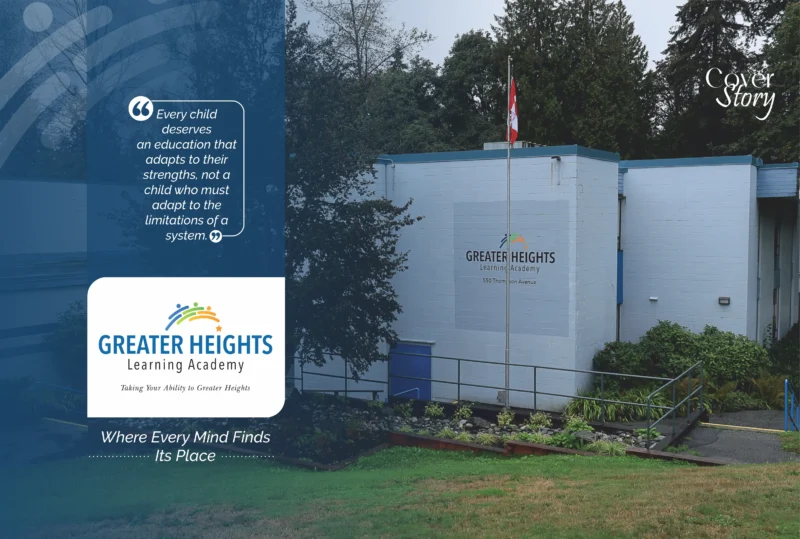
For many neurodiverse students, the greatest obstacle in education is not a lack of ability but a lack of understanding. Too often, they enter classrooms carrying extraordinary potential, only to find themselves measured against expectations that were never designed with their unique ways of thinking, communicating, and learning in mind. Over time, the struggle is not merely academic; it becomes deeply personal. Confidence can give way to self-doubt, curiosity can be replaced by frustration, and the excitement of discovery can be overshadowed by the feeling of constantly trying to fit into a system that was not built for them. Yet beneath every challenge lies untapped potential waiting for the right environment to bring it to life.
Greater Heights Learning Academy was founded on the belief that every child deserves more than accommodation; they deserve to be understood, valued, and empowered. Serving neurodiverse students from Kindergarten through Grade 12, the academy has created an educational experience where individuality is not simply accepted but celebrated.
Reimagining Education for Every Learner
Greater Heights Learning Academy, formerly known as the Mediated Learning Academy, was founded by Kathleen Jeffrey and Ingrid Jeffrey to address a critical gap between traditional educational models and the individualized needs of neurodiverse learners. In many conventional classroom settings, students who process information differently often encounter limited specialized resources, large class sizes, and an educational approach that prioritizes standardized outcomes over individual capability.
The academy was established to address several important challenges. One of the most significant was the need to create emotionally safe learning environments where students can develop confidence without fear of stigma, exclusion, or academic anxiety. Another priority was eliminating the separation between education and therapeutic support. Rather than requiring families to coordinate external services outside school hours, GHLA integrates speech-language pathologists, occupational therapists, physiotherapists, and counsellors directly into the school environment, allowing professionals and educators to work collaboratively in supporting each student’s development.
The academy also embraces the philosophy of Mediated Learning Experience, which focuses on teaching students how to learn rather than simply delivering curriculum content. This approach promotes cognitive independence, critical thinking, and the development of personalized social skills. Recognizing that success looks different for every learner, GHLA further supports students through flexible graduation pathways, including both Dogwood and Evergreen programs, ensuring that educational journeys align with individual strengths, abilities, and aspirations.
Where Strengths Shape the Learning Journey
At Greater Heights Learning Academy, celebrating each child’s unique strengths influences every aspect of the educational experience. Daily learning plans are carefully designed around individual abilities and interests, allowing teachers to build lessons that connect with the ways students learn best. Whether incorporating visual arts into academic subjects, providing hands-on learning opportunities, or adapting instructional methods, the goal is to create meaningful and engaging learning experiences.
Students are encouraged to progress at a pace that suits their individual needs, ensuring they are neither rushed nor held back. Traditional assessments are complemented by alternative methods such as presentations, model building, and oral demonstrations, enabling students to showcase their understanding through their preferred modes of expression.
The academy’s integrated therapeutic model further strengthens this approach. Speech-language pathologists and occupational therapists work closely alongside educators within classrooms and through individualized support sessions. Challenges are addressed in real time, while students’ personal interests and strengths are used to build confidence and reduce anxiety. Movement breaks, sensory supports, and self-regulation strategies are seamlessly incorporated into the school day, recognizing these tools as essential components of successful learning.
Equally important is the intentional design of the learning environment itself. Small class sizes, adaptable seating arrangements, sensory-friendly spaces, and low-stimulation classrooms create settings where students can remain focused, comfortable, and engaged. Through this strengths-based philosophy, students are empowered not only to achieve academic success but also to develop independence, confidence, and a deeper understanding of their own learning processes.
A Personalized Path to Potential
At GHLA, Individualized Education Plans serve as dynamic roadmaps that guide each student’s educational journey. Rather than functioning as static documents, IEPs provide a personalized framework that aligns teaching strategies, accommodations, therapeutic supports, and long-term goals with the unique needs of every learner.
These plans outline specific accommodations such as assistive technologies, modified timelines, and distraction-reduced learning environments, ensuring that barriers to learning are minimized. By creating conditions that allow students to fully demonstrate their abilities, the academy helps each learner reach their highest potential.
Every IEP includes clearly defined academic, social, and emotional goals tailored to the student’s developmental stage. Progress is continuously monitored by educators and specialists, allowing strategies to evolve as students grow, master new skills, and encounter new challenges. This data-informed approach ensures that support remains relevant and effective throughout the student’s educational experience.
The IEP also serves as a unifying framework for the student’s entire support network. Teachers, educational assistants, therapists, and specialists work from a shared set of objectives, ensuring consistency across all aspects of the school day. Therapeutic strategies related to communication, sensory regulation, social development, and academic achievement are reinforced throughout the learning environment, creating a coordinated and comprehensive system of support.
For older students, IEPs play an important role in future planning. They help map educational pathways toward either a British Columbia Dogwood Diploma or an Evergreen School Completion Certificate while incorporating independent living skills, transition planning, and life-skills development where appropriate. Through this individualized and future-focused approach, GHLA ensures that every student is equipped not only for graduation but also for meaningful success beyond the classroom.
Growing With Every Stage of the Journey
Greater Heights Learning Academy’s educational approach evolves alongside its students, shifting from foundational sensory regulation and early learning skills in childhood to self-advocacy, independence, and transition planning in the senior years.
During the primary years, the focus is placed on sensory and emotional regulation, play-based communication, and early cognitive mediation. Students learn to identify sensory triggers, develop self-regulation techniques, and engage with therapeutic supports that are integrated into play and social interaction. Teachers guide learning through hands-on experiences that make foundational concepts accessible and meaningful.
As students enter the intermediate years, the emphasis moves toward developing academic identity. Learners are encouraged to understand how they think and learn best, whether through visual, auditory, or hands-on approaches. Assistive technologies such as speech-to-text tools, audiobooks, and graphic organizers are introduced to remove learning barriers, while social development focuses on perspective-taking, empathy, and relationship building.
Secondary students begin cultivating self-advocacy and independence. They participate in their own educational planning, learn executive functioning skills such as organization and time management, and explore academic pathways aligned with their strengths and future goals.
In the senior years, preparation for adulthood becomes a central focus. Practical life skills, including budgeting, cooking, transportation navigation, and digital citizenship, are integrated into the curriculum. The academy also collaborates closely with families to facilitate post-secondary planning, vocational placements, and adult support services, ensuring students are prepared for successful transitions beyond graduation.
A Classroom Designed for Connection
Small class sizes are a defining element of the GHLA model and have a profound impact on student confidence, engagement, and academic achievement. By reducing the sensory and social demands often present in larger classrooms, the academy creates an environment where neurodiverse learners can move from feeling overwhelmed to feeling genuinely engaged.
This approach helps rebuild confidence by creating a space where students feel safe to make mistakes, ask questions, and attempt challenging tasks. Individual accomplishments are acknowledged consistently, helping students replace school-related anxiety with a growing sense of competence and belonging.
Engagement is strengthened through personalized instruction and interest-led learning. With fewer students in each classroom, teachers can respond more effectively to individual needs and adapt lessons to align with students’ passions and motivations. Reduced sensory distractions also allow students to maintain focus for longer periods and participate more fully in classroom activities.
Academically, smaller class sizes enable immediate intervention when misunderstandings arise. Teachers can address challenges in real time, while integrated specialists provide targeted support without disrupting the flow of learning. This allows the academy to prioritize mastery and deep understanding rather than simply completing curriculum requirements.
The Power of Collaborative Care
The integration of occupational therapists, speech-language pathologists, physiotherapists, counsellors, and music therapists directly into the school environment transforms therapy from an isolated service into a seamless part of everyday learning.
This multidisciplinary approach allows support to occur in real time. When challenges arise, specialists and educators collaborate immediately to provide appropriate strategies, accommodations, or tools that help students remain engaged and successful. Sensory regulation supports and coping strategies can be implemented proactively before difficulties escalate.
Because therapeutic skills are practiced consistently throughout the school day, students are able to generalize and master communication, motor, social, and emotional skills more effectively than they might in isolated clinical settings. Counsellors, music therapists, and speech-language pathologists also collaborate on social-emotional programming, helping students build resilience, confidence, and meaningful peer relationships.
The approach extends beyond direct student support. Daily collaboration among educators and specialists ensures that therapeutic goals and educational objectives remain aligned, creating comprehensive and individualized support systems for every learner.
Creating a Culture of Emotional Safety
At GHLA, emotional safety is viewed as a prerequisite for learning. The academy strives to create an environment where students feel secure, valued, and free from the fear of judgment, comparison, or sensory overload.
This begins with predictability and structure. Visual schedules, clear routines, and advance preparation for changes help reduce uncertainty and anxiety. Students are supported through proactive co-regulation rather than punitive discipline, with dedicated sensory spaces and trained staff available to help students regulate emotions before challenges escalate.
The academy also separates performance from self-worth. Mistakes are treated as natural parts of the learning process, and feedback emphasizes effort, creativity, and growth rather than solely focusing on outcomes. Integrated counselling and restorative practices help students develop emotional awareness, coping skills, and healthy peer relationships, fostering confidence and long-term wellbeing.
Teaching Beyond One Size Fits All
Greater Heights Learning Academy balances evidence-based practices with individualized learning by treating proven educational frameworks as adaptable tools rather than rigid prescriptions.
Universal Design for Learning principles provide a flexible structure that allows students to engage with content, process information, and demonstrate knowledge in ways that align with their strengths. Therapeutic frameworks and clinical strategies are integrated directly into classroom experiences, ensuring that research-based practices support real-world learning outcomes. For students pursuing the British Columbia Dogwood Diploma, educators maintain academic rigor through evidence-based accommodations that remove barriers without lowering
expectations. For those following the Evergreen pathway, programming shifts toward research-supported life skills, vocational training, and functional independence. This balance allows every student to benefit from best practices while receiving an educational experience tailored to their unique needs
Technology as a Tool for Independence
Technology at GHLA serves both as an assistive bridge and as a platform for future skill development. Assistive technologies such as speech-to-text software, screen readers, digital organizers, and alternative communication applications help students overcome mechanical barriers and access learning more independently.
Beyond accessibility, technology also prepares students for future opportunities. Coding and STEM education introduce learners to structured problem-solving environments that reward logical thinking, persistence, and creativity. Students develop resilience through debugging and troubleshooting, learning that challenges are opportunities for growth rather than obstacles to success.
Creativity as a Language of Expression
Greater Heights Learning Academy believes that the arts and music education are an important part of a student’s development. For many neurodiverse learners, creative expression offers an alternative route for communication, self-discovery and emotional processing.
Visual arts, music and applied creative activities provide students with opportunities to express ideas, emotions and experiences that may be difficult to communicate by traditional means. These activities also aid neurological development by helping to strengthen fine motor skills, sensory integration, auditory processing and coordination. Participation in collaborative artistic experiences promotes social connections and a sense of belonging; the open-endedness of creative work encourages risk-taking, autonomy and self-confidence. The academy offers meaningful opportunities for self-expression to help students develop personally and academically
Honoring Individual Paths to Success
At Greater Heights Learning Academy, success is not measured by any one definition of achievement, but rather by individual growth. For some students, success might mean getting a university degree in mathematics and becoming an actuary. For some it might be finding good work, or becoming self-sufficient or learning basic life skills. Each accomplishment is appreciated and celebrated as each is a reflection of a student’s own journey and potential.
Shaping the Future of Neurodiverse Education
Looking ahead, GHLA envisions a future where education is not only inclusive, but also embodies genuine cognitive and systemic accessibility. The academy argues that education systems should be designed from the outset to cater to different ways of thinking and learning, rather than forcing students into rigid structures.
Central to this vision is the continued development of the academy’s integrated clinical-educational model, in which therapists and educators work side by side within daily learning environments. GHLA hopes to demonstrate the effectiveness of this approach to contribute to broader educational innovation and inspire systemic change that benefits neurodiverse learners far beyond its own classrooms.
“Every child deserves an education that adapts to their strengths, not a child who must adapt to the limitations of a system.”
“We do not define success by a single destination; we define it by each student’s growth, confidence, and ability to thrive.”
“When students feel safe, understood, and valued, learning becomes a possibility rather than a struggle.”
Also check out other editions of Education Excellence Magazine