

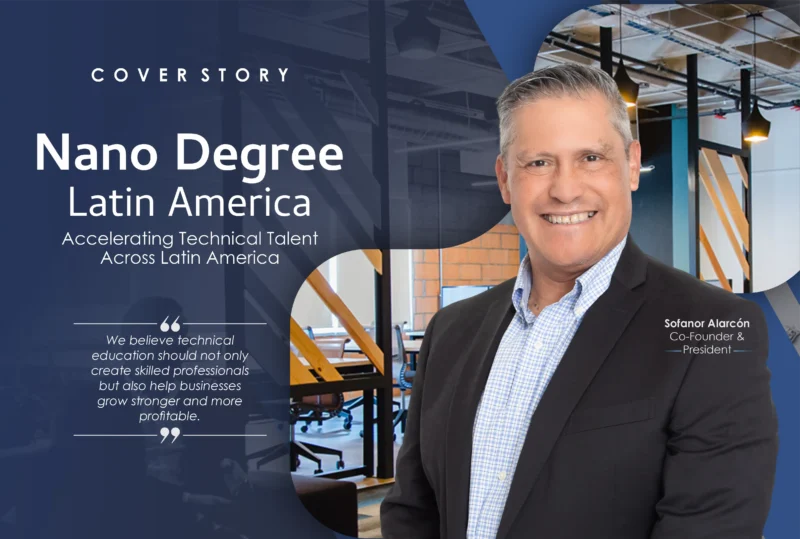
Behind every functioning hospital, commercial tower, industrial facility, and climate-controlled environment lies a workforce whose expertise often goes unnoticed. HVAC, Refrigeration, and MEP systems are the silent engines that keep industries operating efficiently, safely, and sustainably. Yet as these sectors continue to expand across Latin America, one challenge has become increasingly impossible to ignore: the growing shortage of properly trained technical professionals. Many companies possess the infrastructure, the demand, and the ambition to grow, but struggle to find skilled personnel capable of meeting modern industry standards. The need for technical education is no longer simply about learning a trade.
Recognizing this critical gap, Nano Degree Latin America was founded with a mission that extends beyond traditional technical training. The organization specializes in workforce development for the HVAC, Refrigeration, and MEP industries through certification programs, digital education, consulting, and operational support.
A New Vision for Technical Education
Nano Degree Latin America was founded with a vision that extended far beyond conventional technical education. Rather than positioning itself solely as a training provider, the company set out to become a long-term growth partner for HVAC and MEP businesses across Latin America. This vision emerged from a critical industry gap: while demand for skilled professionals in HVAC, Refrigeration, and MEP sectors continued to rise rapidly, existing educational systems were meeting only a fraction of that demand.
According to the company, traditional training institutions were covering barely five percent of the workforce needs required by the industry. This imbalance created not only a shortage of qualified technicians but also a major operational challenge for businesses attempting to scale. Nano Degree Latin America recognized that solving this issue would require more than technical lessons; it would require a transformation in how companies train, develop, and manage talent.
The Hidden Cost of Missed Opportunities
One of the company’s strongest consulting philosophies revolves around a powerful idea: the true cost for businesses is often not consulting fees, but missed opportunities. Nano Degree Latin America believes that many HVAC companies operate far below their real potential due to inefficiencies, underdeveloped staff capabilities, and outdated operational systems.
The numbers reveal the scale of the problem. Across Latin America, the average annual billing productivity per HVAC technician is approximately $35,000. By comparison, technicians in the United States generate nearly $400,000 annually. For Nano Degree Latin America, this gap represents far more than a regional disparity; it represents untapped economic potential.
Through a combination of consulting, operational restructuring, and workforce training, the company has helped businesses significantly narrow this productivity gap. In many cases, organizations have managed to increase technician productivity and annual billing by more than $150,000 per technician. By focusing on both technical excellence and operational efficiency, the company helps businesses transform lost opportunities into measurable financial growth.
Where Strategy Meets Workforce Development
At the core of Nano Degree Latin America’s approach is the belief that training should never exist separately from business strategy. The company sees workforce development as a technical, operational, and financial strategy simultaneously.
Rather than training only field technicians, Nano Degree Latin America works with entire organizations—from technical teams to leadership and operational departments. The company emphasizes that continuous coaching and education are essential to improving labor productivity and increasing annual revenue.
This integrated model ensures that companies are not simply developing technical skills in isolation, but are creating stronger organizational ecosystems capable of sustaining long-term growth. By aligning training with measurable business outcomes, the company enables HVAC and MEP organizations to strengthen profitability while building more capable teams.
Accelerating Technical Excellence Across Latin America
The company’s HVAC Technician Training and Certification Program has become one of its most impactful initiatives. Designed to accelerate workforce readiness, the program challenges traditional educational timelines and methods.
According to Nano Degree Latin America, nearly 95 percent of HVAC personnel in Latin America are self-taught. While many technicians possess practical experience, the absence of structured technical foundations often limits productivity and consistency. The certification program addresses this issue by combining technical education with practical application in a highly focused format.
The results have been transformative for participating companies. Business owners reported productivity increases of at least 100 percent after employees completed certification. Even more significantly, the program has allowed companies to recruit engineering graduates from unrelated disciplines and transform them into capable HVAC service engineers within six months.
Under conventional educational pathways, reaching similar competency levels could take more than two years. Nano Degree Latin America’s model dramatically shortens this timeline, allowing companies to respond more effectively to growing market demand.
Digital Learning as a Catalyst for Growth
The expansion of digital education has played a major role in the company’s regional impact. Through more than 60 on-demand training courses with 24/7 access, Nano Degree Latin America has made technical education more accessible than ever before.
For professionals, the impact has often been life-changing. Many technicians who completed the programs experienced income increases exceeding 50 percent. Certifications offered through the platform have also positioned graduates within one of the most in-demand industries globally, particularly in Mexico and broader Latin America.
For businesses, the advantages have been equally significant. Companies implementing the programs have reported higher revenues, improved operational efficiency, and major reductions in rework—a persistent issue among contractors throughout the region. By allowing employees to learn flexibly while remaining active in the workforce, digital education has become a practical solution to one of the industry’s most pressing workforce shortages.
The Financial Side of Technical Excellence
While technical expertise is critical, Nano Degree Latin America argues that financial education is equally important for long-term business sustainability. The company believes many technically strong businesses struggle because they fail to understand profitability, pricing, and financial management.
Their philosophy can be summarized in a simple but powerful question: what is the value of delivering excellent projects every day if the company still fails to generate sufficient financial returns?
According to the organization, more than 85 percent of HVAC companies in the region face this exact problem. Many businesses deliver high-quality work but lack the financial systems necessary to ensure healthy margins and long-term stability.
For this reason, Nano Degree Latin America integrates financial awareness into its broader consulting and development approach. The company believes that sustainable success requires balancing technical excellence with strong operational and financial decision-making.
Confronting Resistance to Training
Despite the clear need for skilled labor, one of the industry’s greatest barriers remains resistance to training itself. Nano Degree Latin America identifies this as one of the most difficult cultural and operational challenges within the HVAC and MEP sectors.
Some employees resist training due to fear of change or lack of motivation, while many employers hesitate to invest in workforce development because they fear trained employees may eventually leave the company. Nano Degree Latin America challenges this mindset directly.
The company frequently references a classic leadership perspective: the greater risk is not training employees and having them leave, but failing to train them and having them stay. Overcoming this resistance has not been easy, but Nano Degree Latin America continues to advocate for a long-term investment mindset centered on education, development, and organizational growth.
Measuring Progress to Drive Performance
Accountability and performance measurement are two more aspects that play an important role in the firm’s approach. Nano Degree Latin America offers organizations an opportunity to get access to the program administrator and follow the progress, results, and achievements of their employees on a real-time basis.
Thus, training programs become measurable rather than abstract. Organizations can measure employee engagement, assess skill development, and track certifications.
At the same time, the company is convinced that measurable performance is very important for any improvement to be achieved. With accountability introduced to employee development, firms will be able to create competent teams.
Preparing for the Industry’s Future
Moving forward, Nano Degree Latin America envisions that the importance of field technicians and technical specialists will only increase in the coming five years. The rising global demand for HVAC, Refrigeration, and MEP will remain one of the most pressing issues in today’s world.
Since the expansion of infrastructure, sustainability efforts, and climate management technologies is ongoing on a global scale, the necessity for skilled professionals will continue to rise. This is another reason why Nano Degree Latin America sees great opportunities for the region.
The other factor that Nano Degree Latin America considers crucial for its future is the changing nature of education itself. Although modern technologies have allowed professionals from all around the globe to receive additional training at a much lower price and within a much shorter timeframe, the issue of artificial intelligence and intellectual property theft should not be overlooked.
Investing in Emerging Talent
One of the most impressive cases of transformation that the company has is that of CSI HVAC based in Monterrey, Mexico. CSI has been working with Nano Degree Latin America for quite some time now in recruiting young graduates who are being continually developed via various programs.
Their productivity within six months is nothing short of impressive, having reached five to six times that of untrained workers. This clearly shows how well a well-planned education program and coaching can help enhance a person’s professional capabilities and productivity.
A New Era of Workforce Growth
Looking into the future of Nano Degree Latin America, its mission will continue to broaden even further. At the moment, the firm is engaged in creating a program known as Business Membership that is intended to allow HVAC, Refrigeration, and MEP companies to train their entire personnel in an efficient and cost-effective manner.
The firm considers investments in workforce development as being more rewarding than the expenses associated with such investment programs. By means of consulting, certification, operational advice, and online learning, Nano Degree Latin America wants to change the future of the technical companies operating within this region.
For Nano Degree Latin America, the future of the industry will not lie in technology or infrastructure but in the people themselves.
“We believe technical education should not only create skilled professionals but also help businesses grow stronger and more profitable.”
“Our mission is to close the workforce gap in the HVAC, Refrigeration, and MEP industries through accessible, practical, and results-driven education.”
“For us, training is not an isolated activity. It is a business strategy capable of transforming productivity, performance, and long-term growth.”
Also check out other editions of Education Excellence Magazine